According to scientists' forecasts, there is a high probability that the space telescope poses a real threat to people on Earth, writes Focus.
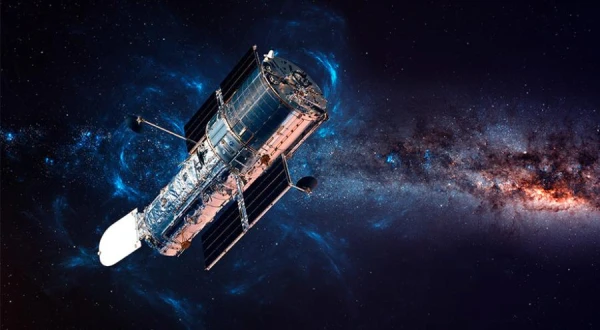
The Hubble Space Telescope has made significant contributions to our understanding of the universe over its 36 years of operation in low Earth orbit. Traveling around the Earth at a speed of 28,163 km/h, it has covered more than 6 billion kilometers in space during these years. Data from the Hubble Telescope has helped determine the rate of expansion of the universe and discover dark energy, which plays a key role in this expansion. Thanks to observations from the Hubble Telescope, astronomers have found that the age of the universe is 13.8 billion years. However, Hubble was not designed for eternal rotation around our planet, and the atmospheric drag experienced as the telescope moves through the sparse outer regions of Earth's atmosphere brings it closer to the moment when it will no longer be able to continue its orbital motion and will collide with the Earth. This event poses a real threat to humans, as shown by new research from NASA scientists, writes IFLScience.
From 1993 to 2009, NASA astronauts conducted five upgrades and repairs of the Hubble Space Telescope using space shuttles. They also raised the telescope to a higher orbit. But NASA has not used space shuttles since 2011, meaning astronauts have not been able to change the orbit of the Hubble Telescope to prevent its natural descent into Earth's atmosphere.
Previously, it was assumed that the Hubble Telescope would be deorbited using shuttles under the control of NASA scientists after its mission ended. However, no one expected Hubble to operate for so long.
The authors of the study predict that the orbit of the space telescope will slowly decline in the coming years before an uncontrolled re-entry into Earth's atmosphere occurs. Scientists say that in this case, debris from the telescope, which does not completely burn up in the atmosphere, could reach the surface of our planet, potentially leading to loss of life.
The study showed that at best, the telescope could remain in orbit until 2040, while at worst, it could enter the atmosphere as early as 2029. It is most likely that the Hubble Telescope will fall to Earth in 2033. Calculations indicate that a massive debris trail could form, approximately 350 to 800 kilometers long along the trajectory of the fall.
So far, scientists have not calculated the exact landing site, meaning the disaster could affect any resident of Earth. The calculations showed that there is a probability of 1 in 330 that people could be killed due to debris from the telescope. Although the risk is relatively low, it is significantly higher than NASA's standards for falling space debris, where the risk to humans should not exceed 1 in 10,000.
Scientists believe that further research is needed to improve the prediction of the time and location of the Hubble Telescope's fall to Earth, as well as to clarify the risk to humans.