
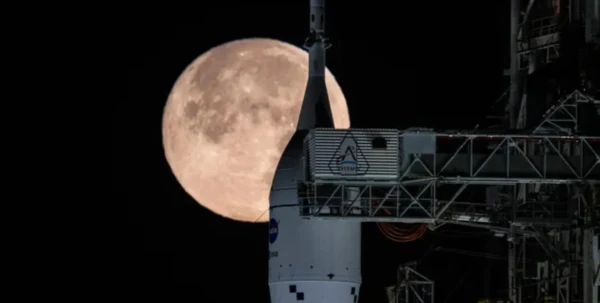
The new method for forecasting superflares on the Sun has shown that the flight of astronauts on the Artemis-2 mission could be very dangerous to their health.
Scientists have determined that the Sun is currently experiencing a period when so-called superflare events, which are emissions of radiation of extreme intensity, occur. Therefore, researchers believe that astronauts may receive a high dose of radiation during the flight to the Moon as part of the Artemis-2 mission in April. Scientists recommend postponing the launch until the end of 2026. The study was published in the Journal of Geophysical Research: Space Physics, reports Focus citing Space.
Powerful solar flares can cause magnetic storms on Earth, disrupt radio communications, damage satellites, and pose dangers to astronauts. However, scientists have developed a new method for forecasting these events, which should help prepare for solar storms in advance.
As previously reported by Focus, NASA has postponed the launch of the Artemis-2 mission to April due to rocket issues. Four astronauts are expected to fly around the Moon and return within 10 days. This journey will be the first for humans in 54 years, following the completion of NASA's Apollo lunar program. The authors of the study believe that the launch of the Artemis-2 mission should be postponed until the end of the year due to the superflare events occurring on the Sun.
Superflares are the most powerful flares that can occur on the Sun, producing X-ray radiation. Scientists do not fully understand the mechanism of their formation, making it currently impossible to accurately predict when and where a superflare will occur on the Sun. Nevertheless, the new method improves the forecasting of these events.
Researchers analyzed data from 50 years obtained from geostationary solar observation satellites that have studied our star in the X-ray range from 1975 to 2025. They found that the timing of superflare occurrences on the Sun coincides with two previously unknown solar cycles. One lasts 1.7 years, while the other lasts 7 years. These cycles are associated with the accumulation of magnetic energy in specific areas on the Sun.
This data has allowed astronomers to predict peak seasons for superflares. They discovered that there is currently such a season, which began in mid-2025 and will last until mid-2026.
This is why astronomers recommend postponing the launch of the Artemis-2 mission until the end of 2026. A flight to the Moon means that four astronauts will be outside the protective magnetic field of the Earth and will be more vulnerable to solar storms. If they leave Earth in April, during a period of heightened superflare activity on the Sun, they will be at greater risk of extreme radiation exposure.
The findings could represent an important step toward protecting astronauts, space infrastructure, as well as communication and energy networks on Earth from solar storms.












Leave a comment