
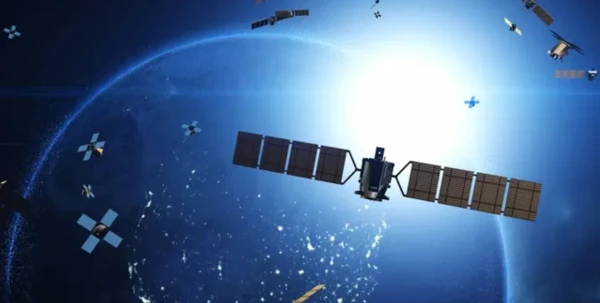
Scientists are concerned that the increasing number of satellite launches into space and their disposal in the atmosphere could permanently change the climate on our planet.
Space seems detached from what is happening on Earth. But the ways of creating, launching, and disposing of satellites are beginning to change that. Currently, there are nearly 15,000 active satellites orbiting Earth, and their number is growing. However, the lifespan of satellites is only a few years, which means they must be constantly replaced. Decommissioned satellites are brought down into the atmosphere, where they burn up or break into small fragments. The authors of the article, Laura Revell and Michelle Bannister from the University of Canterbury (New Zealand), along with Samantha Lawler from the University of Regina (Canada), are concerned about the consequences of satellite burning for the climate and atmosphere of Earth, writes Focus citing Phys.
SpaceX, which owns the Starlink satellites, plans to expand its satellite constellation, particularly to create space data centers intended for AI. The company plans to launch a million new satellites into low Earth orbit.
But the fact of launching such a vast number of satellites is not the only problem. Currently, Starlink satellites weigh about 800 kilograms, and later versions are expected to weigh around 1,250 kg. Future satellites from SpaceX will weigh as much as a Boeing 737.
Rocket launches into space are already contributing to climate change and ozone layer depletion. An increase in the number of launches of satellites with enormous masses will lead to significant warming of the upper layers of the atmosphere and loss of the ozone layer. The constant burning of such massive satellites in the atmosphere will only exacerbate this catastrophe.
Scientists have already detected metals in the atmosphere that ended up there after satellites burned up. There are already many of these metals, but scientists believe there will be even more. Not only SpaceX but also other companies plan to launch over a million new satellites into orbit.
At the same time, the environmental consequences for the atmosphere and climate remain poorly studied, as satellite manufacturers rarely disclose the composition of their spacecraft. Scientists believe that most satellites are made of aluminum, which burns and forms aluminum oxide particles. Scientists think these particles can remain in the atmosphere for years and contribute to ozone layer depletion and climate change.
The authors of the article calculated that the burning of a million satellites in the atmosphere could lead to the accumulation of one billion kilograms of aluminum oxide in the upper layers of the atmosphere. This is enough to significantly alter the chemical composition of the atmosphere and cause rapid warming.
It is also known that not all satellites completely burn up in the atmosphere. Debris from some of them is already falling to the ground. The likelihood of fatal outcomes for people due to this is still low. But it will increase due to the greater number of satellites, scientists say.
The authors of the article point to another problem. The enormous number of satellites could cause a series of collisions in orbit, leading to an increase in space debris.
Scientists believe that if measures are not taken to protect the atmosphere, the consequences could be catastrophic. Using the atmosphere as a crematorium for satellites could lead to permanent changes in the atmosphere, and no one can say for sure how this will affect people. But it is clear that the consequences will not be very good.
















Leave a comment