
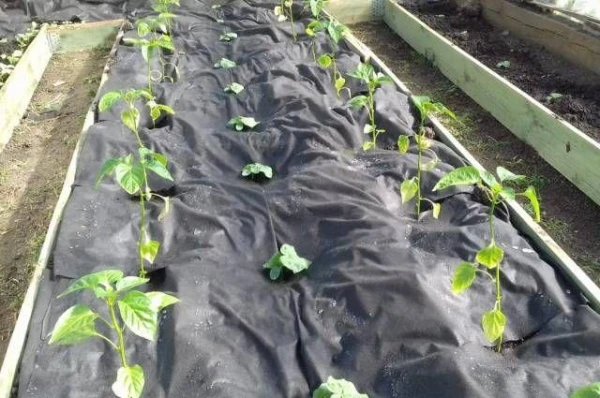
Those who decide to take the risk and plant cucumbers or tomatoes earlier than the recommended dates need to provide appropriate protection for the plants; otherwise, it will be difficult to avoid mistakes.
If there are film structures and coverings on the site, seedlings of pumpkin and nightshade crops can be planted 1-2 weeks (but no more!) earlier than the standard dates. However, it is important to ensure that the wind does not damage the film. The biofuel laid in the bed, combined with film or non-woven material, effectively protects against frost, although only for a short time. In addition, under covering materials such as Lutrasil*, there may be slugs that damage young plants. Sweet peppers, cabbage, and beans are particularly susceptible to this.
Gardeners who visit their plots only on weekends should not get too carried away with early planting of heat-loving crops, as such plantings are at risk not only from frost and low temperatures but also from overheating and sharp temperature fluctuations between day and night.
For example, an increase in soil temperature by 1–2 degrees leads to an increase in temperature in the surface layer and an increase in the sum of temperatures during the growing season by 100–200 degrees, which is equivalent to 'moving' the crop 100–200 km south. To increase the resistance of heat-loving plants to low temperatures, it is recommended to harden them at a young age (seeds, seedlings) using variable temperatures.
*Lutrasil is a durable covering material widely used by gardeners.








Leave a comment