
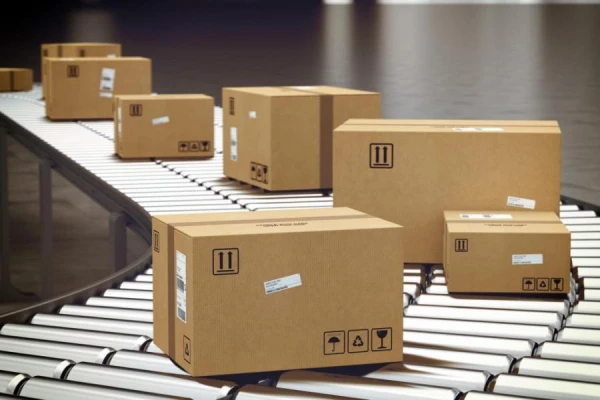
Starting from July 1, 2026, a fee of 3 euros will be introduced in the EU for each cheap parcel from third countries, which will affect millions of buyers. Latvijas Pasts and Venipak warn: the measure will not solve the stated problems, but will only lead to increased costs for end consumers and impact small businesses, LSM+ reports.
Currently, the EU has a duty-free regime for shipments valued up to 150 euros, sent directly to individuals. According to the European Commission, last year alone, 4.6 billion such parcels were imported into EU countries, which is more than 12 million per day. At the same time, 91% of small shipments come from China. Starting from July 1, 2026, a fee of 3 euros is planned to be charged for each low-value parcel.
This measure will be temporary and will remain in effect until 2028, after which the EU intends to introduce customs duties on all goods from third countries, regardless of their value.
According to Sanita Berzina, the executive director of a logistics company, the new regulation will inevitably affect the volume of online orders, LSM+ reports. "In recent years, we have seen a very large influx of small parcels, especially from China. Our residents actively order goods from Chinese online stores because they are significantly cheaper and arrive in a relatively short time — on average, within two weeks."
At Latvijas Pasts, they emphasize that the new fee will primarily impact the average consumer. "In practice, this will mean that the end consumer will face an additional charge for the parcel, meaning that orders will become more expensive," notes Latvijas Pasts representative Kristians Godinsh.
Sanita Berzina adds that for end consumers, the tax will likely be added at the final stage of the checkout process. "This fee will have to be paid by the buyers. Most likely, it will be automatically added at the time of payment for the goods. For some, three euros is an insignificant amount, and habits will not change, but some may think about whether they really need this product."
According to Kristians Godinsh, the European Commission's initiative had two main goals: to reduce the burden on customs services and to protect the European market. However, neither of these, in the opinion of the Latvijas Pasts representative, will be achieved.
"The first goal is to reduce the burden on customs by providing it with additional resources and funding for stricter control. But this will not work because currently more than 80% of all shipments arriving in Europe are cleared through customs in just a few countries — mainly in Central and Western Europe."
The second goal — protecting European traders and online trading platforms — is also questionable. "The additional customs fee will not lead to a mass transition of buyers, for example, from Temu or Shein back to European platforms. We seriously doubt that. Most likely, people will just order less frequently."
Latvijas Pasts also points out that the new measure will affect not only individual buyers but also small businesses. "This will definitely impact micro and small businesses. Many entrepreneurs use components, spare parts, and raw materials purchased on platforms outside the EU. This will also become an additional burden for them."
An important nuance noted by Kristians Godinsh is that the 3 euro fee will likely be charged not for each unit of goods but for each product group. "If you buy three pairs of socks — that’s one group, and you pay three euros. If the parcel contains socks, towels, and spoons, then the fee will be charged for each product group separately — three euros for each."
As a result, the total amount of additional charges may exceed the cost of the order itself, especially if the purchase consists of different categories of goods.
Sanita Berzina notes that there may be technical difficulties in charging for each unit of goods in the parcel. "Parcels arriving in Latvia and other EU countries are not opened, and their contents are not checked. Therefore, applying a fee for each individual item seems technically complex," she emphasizes.
According to Berzina, customs clearance will likely not occur in Latvia. "Latvia is usually not the first point of entry for such parcels into Europe. Most often, they first arrive in the Benelux countries, where customs clearance takes place. The tax will likely be paid there, still on the side of the online stores," she explains.
The representative of Latvijas Pasts also emphasizes that one of the key problems is the concentration of customs clearance in a few EU countries. "Currently, it often happens that goods are cleared, for example, in Amsterdam, and then shipped to the Baltic states or Finland. This means additional logistics costs, increased emissions, and longer waiting times for customers." In this regard, Latvijas Pasts reached out to the Ministry of Transport early in the discussions with alternative proposals. "We suggested redistributing the customs burden so that clearance occurs not only in certain Western European countries but according to logistics. That is, if goods are intended for the Baltics or Scandinavia, then customs clearance should logically take place in that region." In the company's opinion, this approach would speed up delivery, improve the quality of control, and retain part of the tax revenues in Latvia.
At the same time, the logistics company, as a last-mile delivery operator, expects that the new regulation may lead to a decrease in the volume of parcels from large online stores. However, according to the company, the effect will likely be temporary: after a period of adaptation, consumers will get used to the new conditions and return to the habit of ordering goods from China, as has already happened after the introduction of customs duties earlier.











Leave a comment