
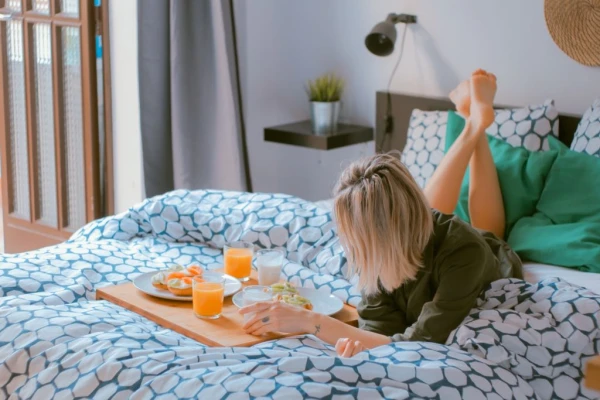
Remember your last vacation. Perhaps it was a trip to the ocean with walks on warm sand or a quiet winter in a cabin in the mountains, where the morning began with the smell of fresh coffee and the sound of crackling wood in the fireplace. Time seemed to flow differently. You allowed yourself not to hurry, were kinder to yourself, and more attentive to the people around you. The world seemed to widen, and internal tension grew quieter. It turns out that this state can be brought back into ordinary weekends — without suitcases, flights, and complicated plans. It’s just important to change the way you are present in the day.
We tend to think that such feelings require a vacation, a flight, suitcases, and a change of latitude. Indeed, research confirms that taking a break away from the usual routine reduces stress levels and improves psycho-emotional well-being. For example, according to an article in the Journal of Happiness Studies (2020), even a week of vacation has a lasting positive effect on mood for several weeks after returning home.
But here’s the paradox: not everyone has the opportunity to leave when their body and mind ask for a break. Too many tasks, projects, expectations, obligations. What if relaxation can be felt here and now, without going anywhere? What if the feeling of vacation is not about geography, but about mindset and how we choose to live our time?
This idea has received scientific confirmation. In a study published in the journal Social Psychological and Personality Science, 441 working adults participated. One group was asked to spend the weekend "as usual," while the other was encouraged to treat it like a mini-vacation without drastically changing their plans. On Monday, those who "vacationed" reported greater joy and satisfaction, lower levels of tension, and a higher sense of energy — and this was despite the fact that most of them simply made their usual weekend a bit more mindful, gentle, and present.
The essence was not in the number of events, but in the quality of attention they brought to the moment.
We don’t so much rest from tasks as we do from the internal mode of haste
Surprisingly, the "vacation effect" is not related to what we do, but to how we allow ourselves to be in the moment. On vacation, we are not in a hurry. We don’t create internal lists of things to do, nor do we mentally replay work tasks. We find ourselves closer to ourselves: noticing the taste of coffee, the passage of time, our own breath.
Psychologist and time researcher Cassie Holmes, PhD, author of the book Happier Hour, explains: "In a state of relaxation, we naturally become more present. We don’t force ourselves to meditate — we simply stop running." And this state can be brought into weekends at home.
What this looks like in practice — gently, without revolutions
In that same study, participants who spent their weekends in a vacation mindset dedicated slightly less time to household tasks and work minutiae, and slightly more to the processual, sensory experience of the day. They didn’t cancel all their tasks; they simply allowed themselves to do them more slowly and not rent their time to anxiety about the "next item on the list."
Try, for example, not to start Saturday in a rush. Don’t jump out of bed, don’t immediately grab your phone or start cleaning. Allow the morning to happen — without coercion, with gentleness. Brew coffee and drink it sitting down, feeling the warmth of the cup. If there’s someone nearby — be closer. If you’re alone — be closer to yourself.
It sounds simple — and that’s exactly why we don’t do it.
But it’s precisely such pauses that reduce cortisol levels and overload on the nervous system. This is shown by a study published in Frontiers in Psychology: even short episodes of mindful presence throughout the day improve emotional regulation and resilience to stress.
What ruins weekends is not the tasks, but their constant shadow
The presence of tasks does not, in itself, ruin relaxation. What spoils it is the feeling that they "hang over your head all day." Therefore, an important technique is to group routine tasks into one block. For instance, Saturday from 10:00 to 12:30 — "time for tasks." That’s it. After that — relaxation without the internal "but then I need to..." This frees not just time, but the psyche from the anticipation of burden, which in itself is restorative.
Look for small "moments of awe"
A study published in Psychological Science in 2012 showed that experiencing "awe" can slow down the subjective passage of time and increase life satisfaction.
And it doesn’t have to be the ocean or the Grand Canyon. It can be the morning light on the wall, a tree in the park that you’ve walked past a thousand times, or music that warms your heart.
It’s not about seeking the grand — it’s about allowing yourself to be touched by the moment. And perhaps most importantly — seeing the value in what already exists.
Think about it — how many more times will you be able to walk your dog in this park? How many more times will you sit in the kitchen with your parents? How many autumn sunsets do you have ahead of you?
This isn’t about sadness. It’s about a gentle awakening of attention — to where the present lives.










Leave a comment