
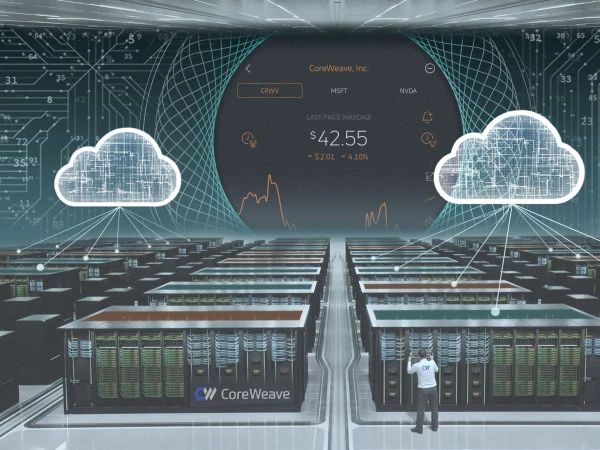
CoreWeave, one of the largest providers of infrastructure for artificial intelligence, lost $33 billion in market capitalization over six weeks.
The company's stock price fell by 46% due to delays in the construction of data centers in Texas caused by unexpected heavy rains and conflicting comments from management. This was reported by The Wall Street Journal.
Heavy rains and winds in the summer led to approximately a 60-day delay at the construction site in Denton, a small town north of Dallas. The bad weather hindered contractors from pouring concrete for a large artificial intelligence data center complex.
The completion deadline for the cluster with a capacity of about 260 megawatts, which CoreWeave plans to lease to OpenAI, has been pushed back by several months. Additional delays arose from the revision of design plans for some data centers.
The situation was exacerbated by statements from the company's CEO, Michael Intrator. During a conference call on November 10, he initially claimed that the issues pertained only to one data center. However, the CFO corrected him, explaining that the delays were concentrated with "one data center provider," indicating a more widespread problem.
The next day, during an interview with CNBC, Intrator reiterated the narrative of "one data center" before correcting himself after a prompt from the host. CoreWeave's shares fell by 16.3% that day and continued to decline in December.
CoreWeave's business model involves using high-interest debt to acquire thousands of cutting-edge artificial intelligence chips from Nvidia, installing them in data centers, and leasing access to the chips to companies.
Critics point to the high level of debt and reliance on a few major clients – OpenAI, Microsoft, and Meta. CoreWeave's sales more than doubled in the last quarter, reaching nearly $1.4 billion compared to $583 million a year earlier; however, the company remains unprofitable and lost $110 million in the last quarter.
Gil Luria, an analyst at DA Davidson, called CoreWeave's balance sheet "the ugliest in the tech world." According to him, the company's operating margin is around 4% – less than half of what it pays in interest on its debts.
"The optimism is that they will scale and that many companies have low initial profitability, but this is a scale company. There is no scaling here," Luria said.













Leave a comment