
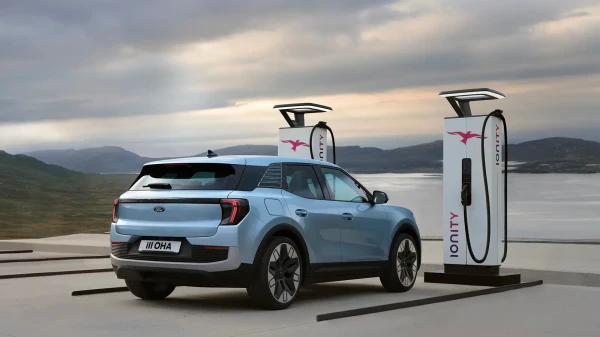
The operational reality has changed, and we are reallocating capital.
The company will focus on producing hybrid and gasoline vehicles, as well as more compact and affordable electric vehicle models.
Ford is revising its once-ambitious electric vehicle plans amid financial losses, betting on gasoline engines and hybrids.
The Detroit automaker, which, like most players in the industry, invested billions of dollars in electrification, announced that it will no longer produce the electric F-150 Lightning pickup, instead opting for a version of the model with an extended range.
Ford will also make changes to its production. The electric vehicle center in Tennessee (part of the BlueOval City campus and once perceived as the future of Ford's electric vehicles and batteries) will be renamed the Tennessee truck plant, and it will produce new affordable gasoline trucks. Ford's assembly plant in Ohio will produce a new van in gasoline and hybrid versions.
The Future of BlueOval City
The company has incurred losses of $13 billion (€11.06 billion) on electric vehicles since 2023 and stated that it expects write-offs of $19.5 billion (€16.59 billion), primarily in the fourth quarter, due to its electric vehicle business.
"This is driven by customer demands to make Ford stronger, more resilient, and more profitable," said CEO Jim Farley in a statement.
"The operational reality has changed, and we are reallocating capital to higher-return growth areas: Ford Pro, our market-leading trucks and vans, hybrids, as well as high-margin opportunities such as our new battery-based energy storage systems business."
Ford reported that it now expects that by 2030, half of its global volumes will consist of hybrids, extended-range electric vehicles (which also use a gasoline engine), and fully electric models, compared to 17% this year.











Leave a comment