
As global tensions rise, Greenland has become a place that indicates the old international legal order is beginning to crumble.
The position of U.S. President Donald Trump regarding Greenland has often changed recently: from threats to seize the island by force to assurances that this will not happen. But Trump's assertion that Greenland is a very important place for the U.S. remains unchanged. And it is directly related to space, writes Focus referring to Space.
Experts believe that the Trump administration's obsession with Greenland is part of broader geopolitical ambitions that are related not only to dominance in the Western Hemisphere but also in outer space. Greenland is located at the intersection of two rapidly changing frontiers: the warming Arctic, which will change shipping routes, and an increasingly militarized outer space.
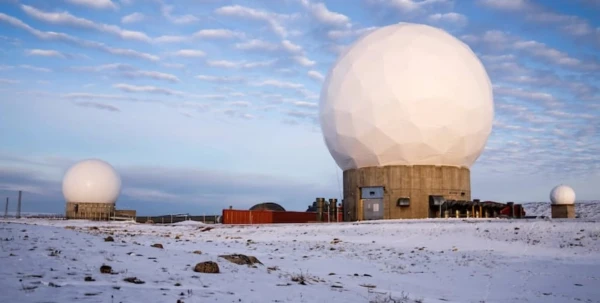
As global tensions rise, Greenland has become a place that indicates the old international legal order is beginning to crumble. At the center of all this is the Thule Air Base, which belongs to the U.S. This is the northernmost U.S. military base, located 1,118 km north of the Arctic Circle and 1,524 km from the North Pole. Once a Cold War outpost, it is now a key part of the U.S. Space Force, necessary for monitoring what happens in low Earth orbit.
Trump has repeatedly stated that Thule Air Base is one of the most important facilities for monitoring what happens above the Earth and has called for an expansion of military presence there. Therefore, Greenland is central not only to U.S. Arctic ambitions but also to its space ambitions.
And it is not just about military monitoring of the orbit. As private companies have now increased the frequency of rocket launches into space to deploy payloads into orbit, Greenland offers ideal conditions for launching. From the island's territory, for example, it is much easier to send spacecraft to polar and sun-synchronous orbits.
Experts note that not only is the order on Earth, established after World War II, crumbling, but this also applies to international space law. Its foundation is the 1967 Outer Space Treaty, which established principles for the peaceful use of outer space. But this treaty could not account for the modern realities of what is happening in orbit. It also never anticipated that ground facilities, such as Thule Air Base, would determine who could monitor the orbit or dominate there.
Major powers now view both terrestrial and orbital domains as strategic assets that need to be controlled and protected. If the U.S. were to expand its control over Greenland, the country would gain a disproportionately large share of global opportunities for monitoring outer space.
Experts believe that the Arctic is becoming the frontline for managing outer space, and treaties designed to regulate this icy territory and the space above it are struggling to cope. Thule Air Base is no longer just a northern outpost of the U.S.; it is a strategic gateway to orbit and a means of exercising political and military power from above.













Leave a comment