
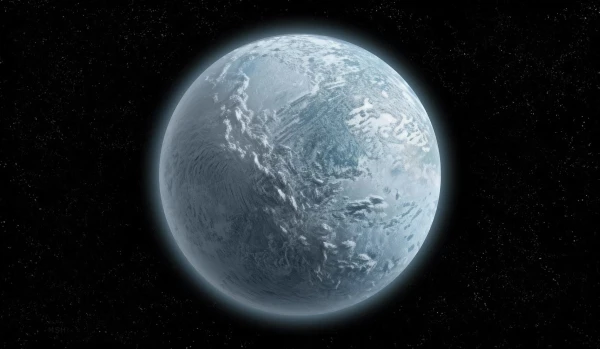
With even about 15% open water in the tropics, the atmosphere and ocean could interact.
During the Cryogenian period, 720–635 million years ago, Earth experienced one of the most extreme glacial epochs. It was believed that during this period the climate system was almost 'stopped': ice covered the planet up to the tropics, and the exchange between the atmosphere and the ocean was suppressed for millions of years. However, new research by scientists from the University of Southampton has proven that even in the midst of global glaciation, the climate continued to fluctuate. The work is published in the journal Earth and Planetary Science Letters (EPSL).
The study was based on the analysis of varves—thin layered deposits on the Garvellach Islands off the west coast of Scotland. These rocks formed during the Sturtian glaciation—the longest episode of Earth's 'freezing,' lasting about 57 million years. The scientists examined 2,600 consecutive layers of the Port Askaig formation, each corresponding to one year of sediment accumulation.
'These rocks preserve a complete set of climate rhythms familiar to us today—annual seasons, solar cycles, and interannual fluctuations—all during global glaciation. This is astonishing,' said co-author Professor Thomas Gernon.
According to lead author Dr. Chloe Griffin, the layers formed in calm deep-water conditions beneath the ice sheet and reflect seasonal cycles of freezing and thawing. Statistical analysis of the layer thickness revealed recurring fluctuations on scales of several years, decades, and centuries.
'We found clear climate cycles, some of which resemble modern fluctuations, including processes similar to El Niño and solar cycles,' noted Griffin.
To understand how such fluctuations were possible in an icy world, the researchers conducted climate modeling. The models showed that if the ocean was completely frozen, fluctuations were indeed suppressed. However, with even about 15% open water in the tropics, the atmosphere and ocean could interact, maintaining climate variability.
'Extensive unfrozen oceans are not necessary. Even small areas of open water can trigger climate regimes similar to modern ones,' explained Dr. Minmin Fu, who led the modeling. The authors emphasized that the identified fluctuations were likely a short-term episode—against a backdrop of an overall extremely cold and stable climate. Nevertheless, the results challenge the notion of a completely 'frozen' planet and support the hypothesis of the so-called 'slushy Earth,' where areas of open ocean could have existed during glacial periods.
















Leave a comment