
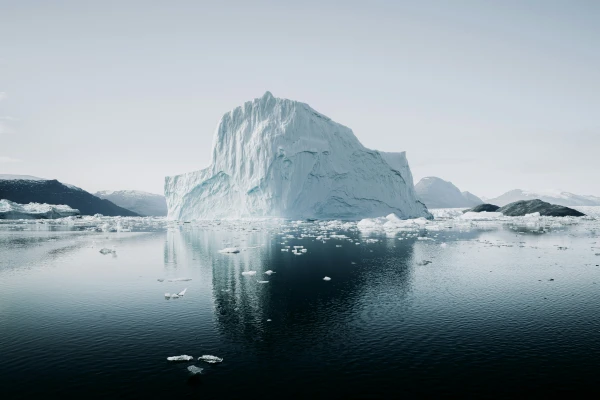
This summer, researchers from the University of Latvia (UL) will embark on an expedition to Greenland for more than a month to study the outlet glaciers of the Kanak ice dome in the northwest of the island, the university reported to the LETA agency.
During the expedition, geologists plan to study the internal structure of glaciers, their temperature, and the volume of water contained within them to better understand the impact of climate change on the future of glaciers. Ground-penetrating radar will be used to determine the thickness and volume of ice, as well as melting zones. Such measurements in this region of Greenland have so far been conducted to a very limited extent.
The scientists will reach the areas under study by boat and will then move on foot, setting up camp on each glacier.
Latvian scientists have been working in Greenland for ten years. The accumulated experience shows that it is the peripheral glaciers of the island that are particularly sensitive to climate change. Their melting significantly affects sea level rise and freshwater reserves; however, these glaciers are still insufficiently studied, making it difficult to form accurate predictions for the future.
Kristaps Lamsters, an associate professor at the University of Latvia's Department of Geology, notes that scientific models increasingly warn of a possible tipping point — if global temperatures rise by three to four degrees compared to pre-industrial levels, the Greenland ice sheet could lose a significant portion of its ice in the long term. This would have a substantial impact on global ocean levels.
The researcher also points out that recently Greenland has become the center of geopolitical discussions; however, in his opinion, there is a risk that this distracts attention from the more important issue of rapid climate change and glacier melting. The expedition participants currently do not see military security threats.
The University of Latvia's expedition to Greenland will take place this summer, and the research will continue until 2028, helping to refine predictions about sea level rise and the stability of the Greenland ice sheet in the future.












Leave a comment