
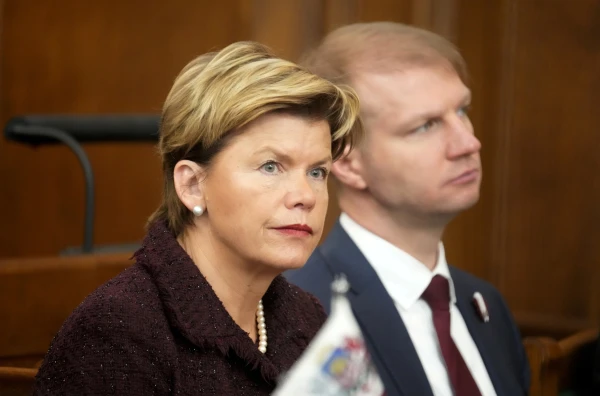
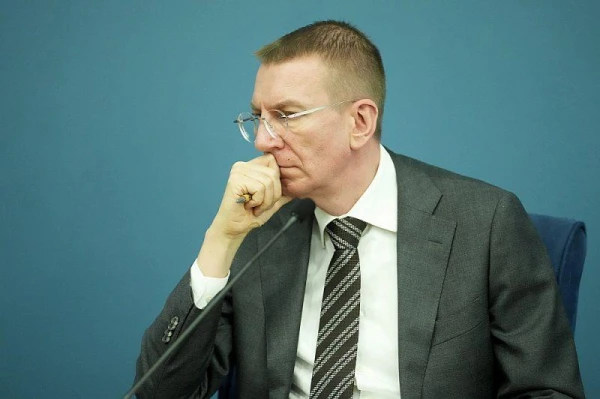
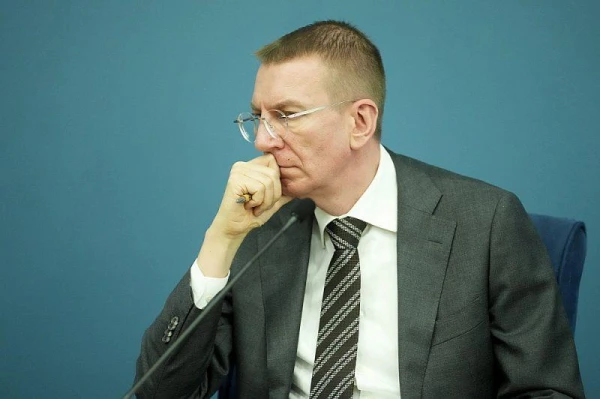
"The European Commission's (EC) 2026 program and the guiding principles of the EU heads of state priorities (Leaders' Agenda) clearly outline the course for the competitiveness and economic growth of the EU, in order to increase economic resilience and global competitiveness," proclaims the report of Latvia's Minister of Foreign Affairs Baiba Braže. This time, the foreign ministry pleased with the national economy block.
"In the Interest of Latvia to Achieve a Fully Functioning Single Market of the EU"
The document calls to "eliminate internal trade barriers while maintaining fair competition." "Relying on the new strategy, the EC plans to present a guide to the single market in 2026," notes the minister. Some progress has already been made: the EC has simplified EU regulations to ease the business environment and stimulate growth. The goal of the EU's simplification policy is to reduce the administrative burden by 25% overall and by 35% for small and medium-sized enterprises. During discussions in Brussels, agreements were reached to give companies more time to implement EU requirements.
The priority areas for Latvia in reducing administrative burdens are in the defense industry, agriculture, and technology.
"The Ministry of Foreign Affairs is also working to reduce administrative burdens and improve the business environment," reports Ms. Braže. For example, starting in 2025:
- Latvian carriers will no longer need a license for the transit of strategic goods;
- Restrictions on the participation of Latvia's academic sector in the research of military goods have been lifted;
- A separate license will no longer be required for merchants with a valid permit for the movement of civilian firearms within the EU."
"Competition in New Technologies Has Become Central in Geopolitics"
Europe, notes the Latvian Ministry of Foreign Affairs, "faces two challenges — to quickly strengthen its technological exclusivity and to influence the development of global technologies in accordance with its values."
Here, it seems to your author that the document's authors have lost their sense of proportion. With all due respect to the academic traditions and industrial past of the Old World, the staff of the diplomatic institution could take a quick look at their gadgets and assess where smartphones and smartwatches are invented and assembled. Unfortunately, it is hardly Nokia and Ericsson. The United States, South Korea, and China are the sources of the overwhelming majority of "smart" devices.
This is indirectly acknowledged in the Ministry's document:
"The EU leads in quantum science and in the field of 5G, but still often lags behind in the commercialization of science and scaling startups. Latvia has recognized EU-level successes in the quantum field and artificial intelligence, therefore... advocates for the improvement of the EU single market and simplification of regulations...".
At Stake – Trillions
The official Riga would like to dialectically combine the EU's "digital sovereignty" with "cooperation in technology with the USA." Here, of course, the question is by no means simple – our representatives in the EC will have to choose sides in conflicts between overseas digital giants and the bureaucratic structures of the EU. And at stake are trillions.
It is certainly much more pleasant to write that "China and similar states promote an alternative in international organizations and bilaterally – a model of digital authoritarianism... using AI to deploy internet censorship, mass surveillance, and manipulation of minds."
But our republic will soon become a member of the UN Security Council (albeit a non-permanent one), and in this capacity will put AI to serve humanity rather than harm it. Latvia is already implementing cooperation projects in this area in Ukraine, Kazakhstan, Kyrgyzstan, Tajikistan, Turkmenistan, Uzbekistan, Egypt, and Tanzania. Only through cooperation with official Tashkent, Latvia has implemented 8 projects. The Central Finance and Contracts Agency (CFLA) – our leading institution for distributing EU funds, operates within the framework of "Digital Compatibility of Central Asia." Of course, not without geopolitics: "Latvia particularly emphasizes the importance of sanctions imposed against Russia, calling for their effective implementation and prevention of circumvention. Latvia has supported the deepening of EU-Central Asia relations, strengthening the EU's role... while balancing the influence of Russia and China."
Sawing Climate Weights – They Are Golden
Of course, one of the main blocks in the Ministry's report was the abandonment of hydrocarbons. The main achievements of last year are declared to be the complete disconnection from the Russian-Belarusian energy system BRELL (which cost about 2 billion euros in the Baltic and Polish region), as well as 1000 days without Russian gas.
"In 2026," continues our Ministry's line from Brussels, "it is important to continue developing broader opportunities for 'green' energy and mutual connections that would reduce energy resource prices and strengthen the resilience of energy infrastructures."
The European Union has set a goal to reduce carbon dioxide (CO2) emissions by 90% by 2040. Therefore, "in 2026, an even greater connection between environmental and economic policies is expected." The country will receive funds from the European Social Climate Fund (for 2026-2032).
Why Should We Go to Cameroon
In this distant African country, the World Trade Organization plans to hold its summit in March 2026, and Latvia will also be represented at the ministerial level. It is expected that "strategic guiding lines" for WTO reforms will be approved. For our national economy, the priority issue is fishing – resource conservation and "good practices for coastal communities." Perhaps we will also benefit from the new WTO Fisheries Fund.
As for the Organization for Economic Cooperation and Development, the Ministry cites the project on "strengths and challenges of Latgale" as a good example.
In general, in the modern globalized world, markets for local producers can be very diverse. For example, after the abolition of 91% of import tariffs for the EU, such potentially giant partners as Argentina, Brazil, Paraguay, and Uruguay (Mercosur organization) have turned to us.
In the first 9 months of 2025, Latvia's exports grew by 5.6%. Moreover, some partner countries showed even double-digit growth – the Netherlands (10.7%), Italy (17.56%), Czech Republic (18.41%), and at the top, Canada (33.11%). The listed countries are close NATO allies, so if we believe the statistics, there is indeed a correlation between strategic and economic factors. Well, with the construction of ammunition enterprises by German companies Rheinmetall AG and Dynamit Nobel Defence GmbH, about 250 million euros will come to us.




Leave a comment