
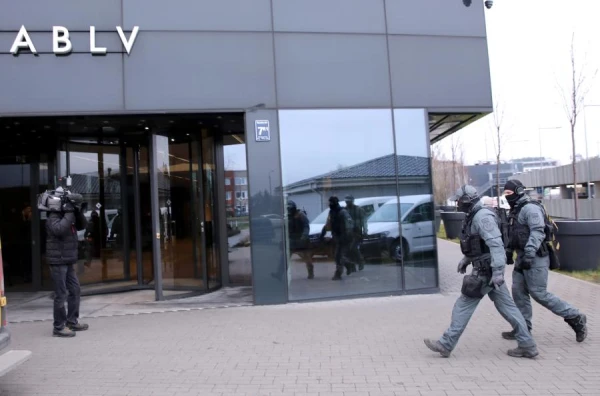
Even a short phrase in the purpose of a bank payment can affect the fate of the transfer — from delays to its complete cancellation.
The portal LVportals draws attention to this, which, together with representatives of banks, explains how to correctly fill out this field and what mistakes to avoid.
The SEB bank emphasizes that the purpose of the payment is primarily for the bank and the recipient to understand the essence of the transaction. However, in practice, its role is much broader. The text of the purpose is analyzed both in terms of preventing financial fraud and in the context of national security — within the framework of the "know your customer" principle established in Latvian legislation on combating money laundering, financing terrorism, and compliance with sanctions.
Moreover, transfer data can be used in tax audits, legal proceedings, dispute resolution, or even when considering a loan application. The "know your customer" principle
As explained by the Bank of Latvia, financial institutions are required to understand who their clients are, for what purposes they use banking services, and what the economic essence of the transactions is. In certain cases, banks must also ensure that the funds have a legal origin. These requirements stem from both national legislation and EU directives and recommendations from the international FATF group aimed at combating money laundering and financing terrorism.
Jokes can be costly
Agnese Šterna, head of the payments department at Citadele bank, notes that it is categorically inadvisable to joke about sensitive or prohibited topics in the purpose of the payment — for example, mentioning weapons or terrorist organizations. It is also unnecessary to specify a personal code to reduce the risk of data leakage. Passwords and any confidential information in the purpose of the payment are fundamentally unacceptable.
Luminor bank reminds that the purpose text is seen not only by the sender and the recipient but also by bank employees, so turning it into personal correspondence is a bad idea.
According to Baiba Tetina, there have been cases in practice where clients jokingly wrote "For a kidney", "This is not a bribe" or "Definitely not for illegal purposes". Even if such phrases are unrelated to reality, they can raise suspicions and attract unnecessary attention to the payment.
Swedbank also advises against abusing creativity. One illustrative example is a transfer for tickets to a Guns N’ Roses concert, where only the name of the band was indicated in the purpose. The system automatically reacted to the word "guns", as transfers related to weapons are subject to additional control.
When the bank can intervene
If automatic systems detect a risk, the bank has the right to suspend the payment and request additional explanations. In such cases, the money may be delayed in reaching the recipient. Sometimes the check is triggered due to matches with sanction lists — for example, when the name of a company matches the name of a sanctioned person.
As banks note, such checks do not in themselves indicate problems, and the faster the client provides the requested information, the faster the processing of the payment will resume.
What to write in the purpose
Financial institutions advise using neutral but clear and understandable formulations. Successful examples include: "Invoice No. 54", "Payment for consultation", "Loan repayment", "Daily expenses", etc.
"For example, 'gratitude', 'payment', 'donation' are permissible, but not recommended, as they do not provide sufficient clarity. 'Invoice No. 54', 'Payment for consultation', 'Loan repayment', 'Daily expenses'.
Too general formulations like 'gratitude', 'payment', or 'donation' are permissible but undesirable — they do not provide clarity, may lead to additional checks, and complicate the protection of one's interests in case of disputes.
Both SEB and Citadele agree: for small household transfers, neutral words are sufficient, but for large amounts, it is better to add a brief and specific explanation to avoid unnecessary questions from the bank.













Leave a comment