
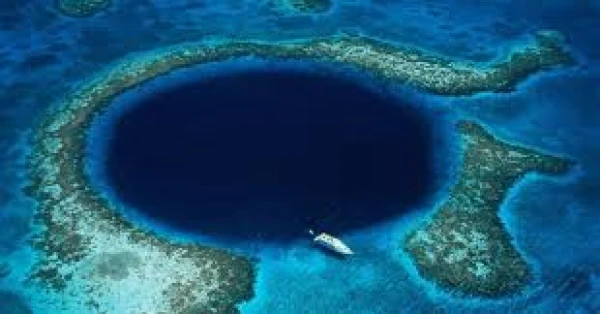
Artificial intelligence has come to the aid of oceanologists.
The Mariana Trench is the deepest place on Earth. It stretches approximately 2,550 kilometers in length and reaches a depth of 11 kilometers. At the very bottom of the Mariana Trench, there is no light, the temperature drops to 1℃, and the pressure is 1,071 times higher than atmospheric pressure. For a long time, it was believed that life was impossible in such a hostile environment. However, it turns out that this place is teeming with amazing creatures. Here are a few beings that researchers have managed to capture during their dives.
Ghostly Snailfish
Footage from deep-sea vehicles shows a translucent, jelly-like creature without scales, calmly swimming at a depth of about 8 kilometers. This is the Mariana snailfish (Pseudoliparis swirei) — the deepest known species of vertebrate.
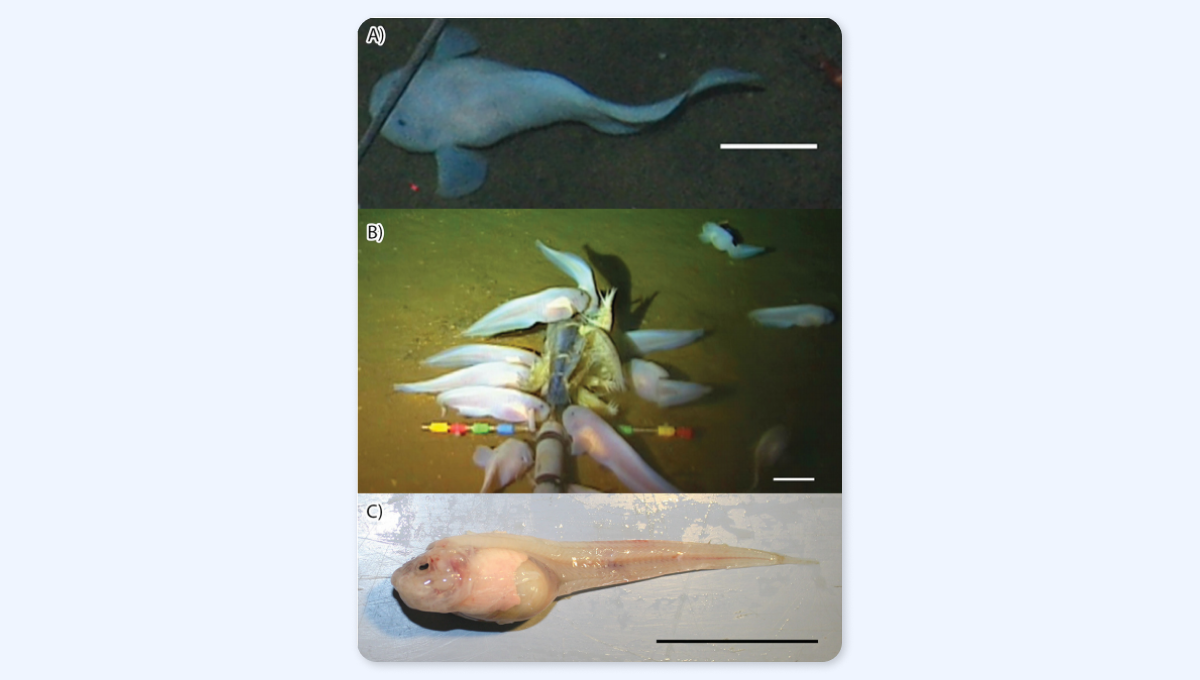
Its ability to survive under crushing pressure is astonishing. Previously, scientists believed that a special chemical substance protected its proteins from destruction. However, recent genetic analyses have shown that its resilience is the result of a more complex evolutionary adaptation. The snailfish has a not fully ossified skull, which gives it flexibility, and it possesses several additional copies of genes responsible for the integrity of inner ear structures and resistance to pressure. At the surface, its body would simply "melt" under low pressure.
Giant "Amoeba"
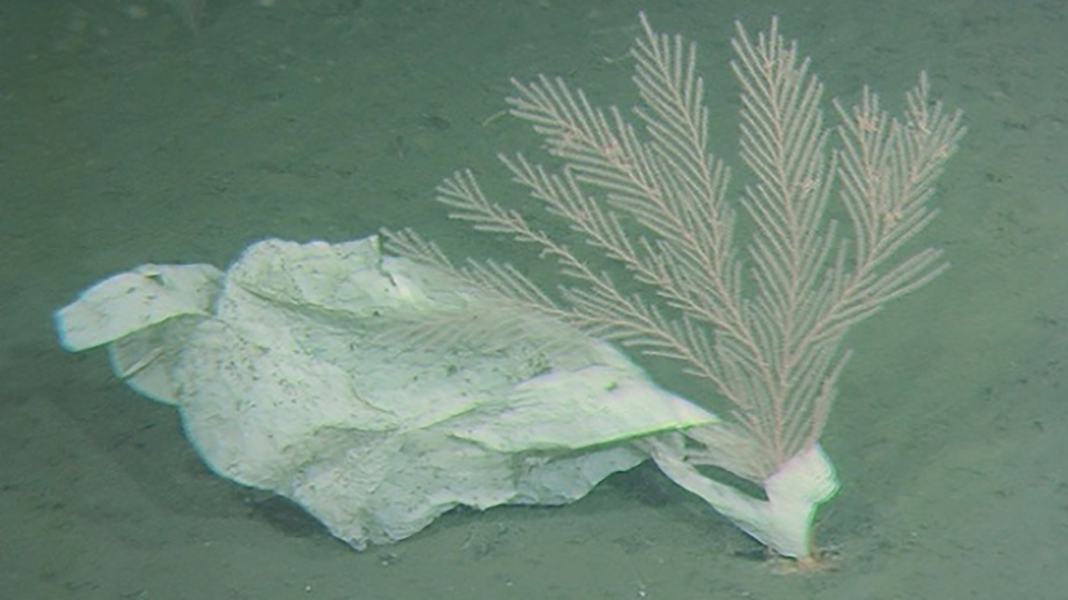
On the bottom of the trench, large organisms resembling sponges or corals the size of a palm can be seen. These are xenophyophores — giant single-celled organisms, among the largest in the world. The fact that a single-celled organism can not only survive but thrive under such pressure amazes biologists. These remarkable organisms have been found at depths of nearly 10,600 meters.
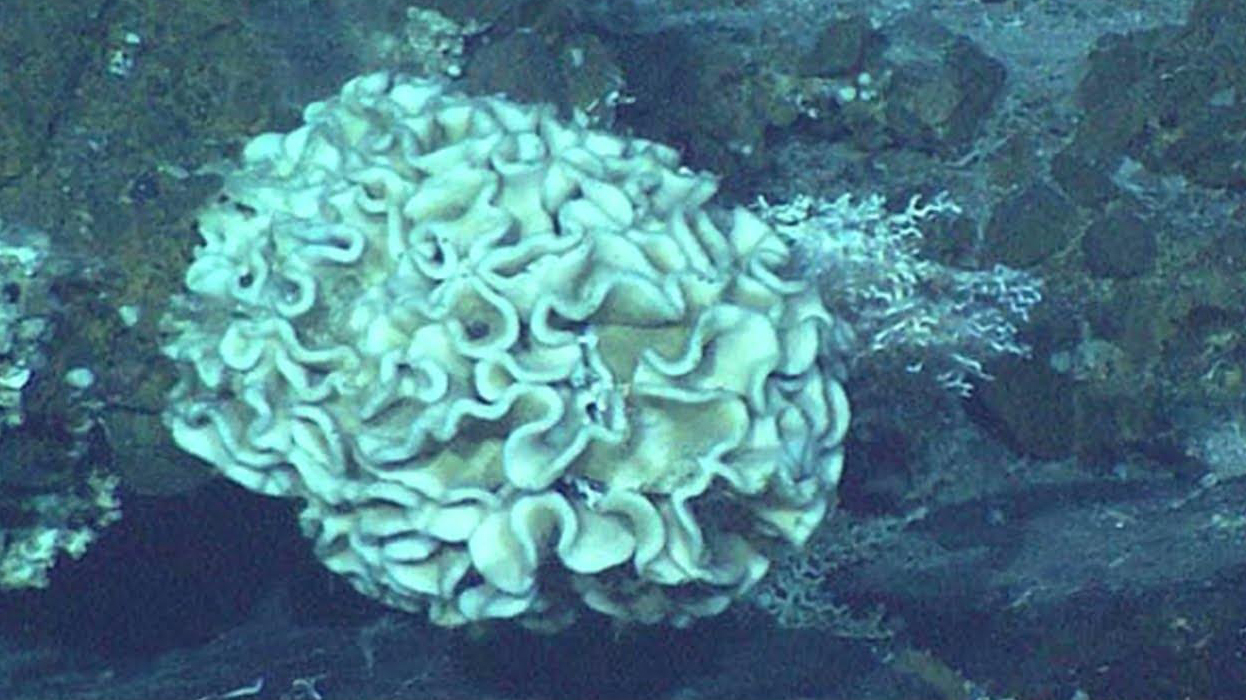
The name "xenophore" translates to "carrier of foreign bodies." These organisms build their fragile skeletons by gluing particles from their environment, such as sedimentary rocks. They play the role of "ecosystem engineers," creating shelters for other, smaller creatures. Additionally, xenophyophores accumulate heavy metals, including lead and uranium, playing an important role in the ocean's geochemical cycles.
Swarm of Amphipods
Cameras from submersibles have repeatedly captured thousands of shrimp-like creatures swarming over discarded bait. These are amphipods — crustaceans that suffer from "deep-sea gigantism" at great depths. While they are tiny in shallow waters, they can reach lengths of up to 34 centimeters here.
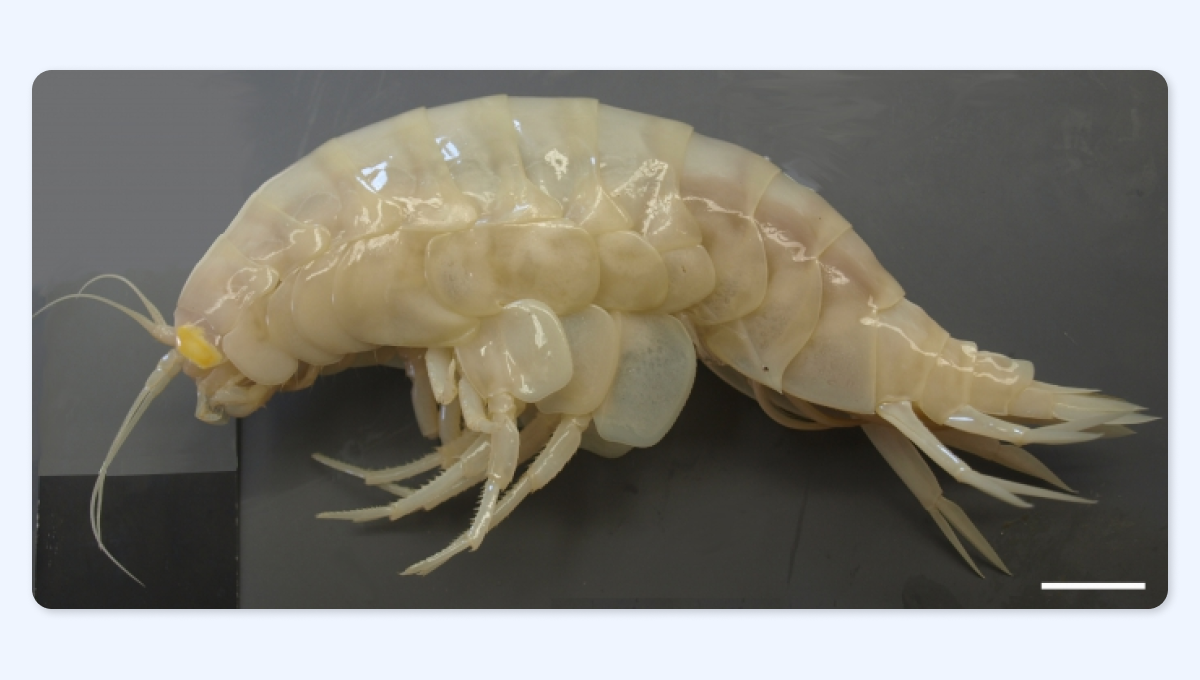
Amphipods are the primary scavengers of the abyss. They can strip the skeleton of a sunken whale in a matter of hours. However, their indiscriminate feeding makes them vulnerable to pollution. Studies have shown that all amphipods caught in the Mariana Trench contained at least one plastic fiber in their digestive tracts.
Mysterious Marks on the Bottom
Sometimes, photographs of the bottom of the Mariana Trench reveal remarkably straight and clear grooves in the sediment, as if something had slowly crawled across the floor. There are also chains of small holes and "trails" resembling marks left by dragging an object. These markings are noticeable both in deep trenches like the Challenger Deep and in adjacent areas, with their shapes and sizes varying from thin parallel lines to wide ditches stretching for tens of meters.
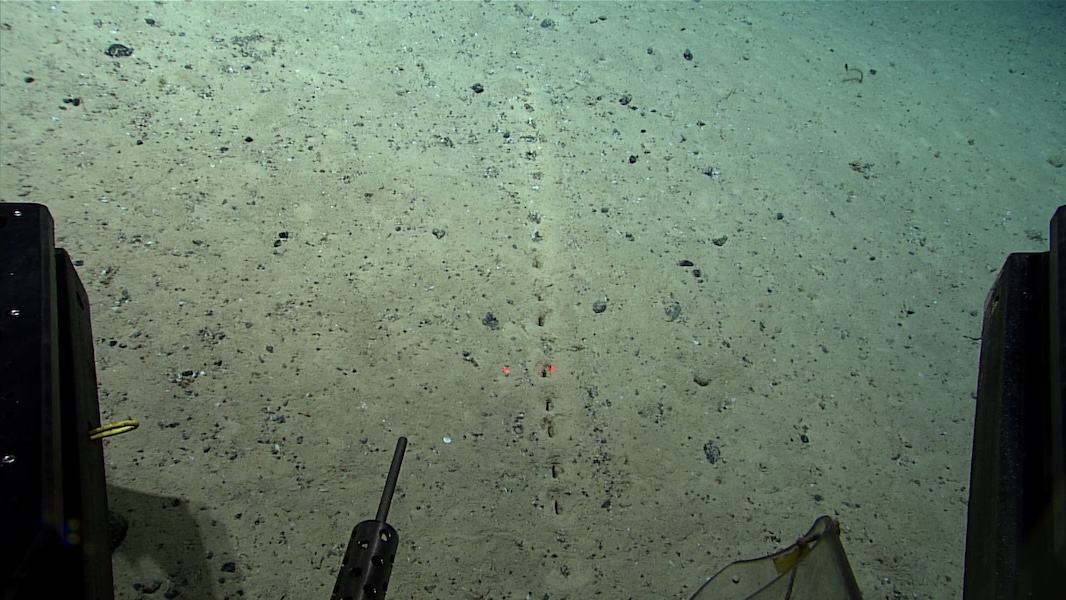
Scientists have yet to provide a definitive answer about who or what leaves these marks. Researchers have several theories:
-
Living organisms — from holothurians and amphipods to unknown, slowly moving deep-sea inhabitants.
-
Marks left by dragging debris or bags that currents have pulled across the sediment, or traces from devices and cables of research systems.
-
Geophysical processes. This hypothesis suggests that the stripes formed as a result of underwater shifts, local flows, or other geophysical processes.
In each case, direct video recordings, samples, and comparisons of bathymetric maps with snapshots are needed for confirmation.
Large areas of the bottom remain poorly studied, and these mysterious markings highlight the scale of the unexplored: repeated observations, long-term filming of the same area, and sampling help distinguish fresh marks from ancient relief forms, but there are still no definitive answers — each new expedition brings both evidence of familiar mechanisms and new questions.
Metallic Sound
Hydrophones have recorded a strange, prolonged sound in the trench area, resembling a metallic scraping noise. The source of the sound remained a mystery for a long time, with theories ranging from geological to anthropogenic. This sound has been dubbed "biotwang."
Artificial intelligence helped unravel the mystery. Scientists analyzed over 200,000 hours of audio recordings and transformed the sound into visual spectrograms. A machine algorithm determined that it is a specific call of a population of Bryde's whales. It turned out that "biotwang" is a "local dialect" used only by this group of whales inhabiting the trench area.
Plastic Bag
Perhaps the saddest image from the Mariana Trench is that of ordinary plastic waste on the bottom. This is a stark reminder that human pollution has reached even the most remote corners of the planet. Although the famous image of the bag was taken at a depth of about 3.7 km, debris has also been found in the Challenger Deep itself.










Leave a comment