
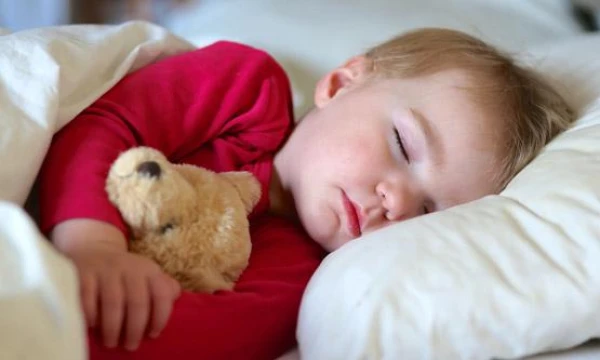
Sleep plays an important role in our health, both physical and psychological. To ensure it is complete and restorative, it is necessary not only to adhere to a routine and choose quality bedding but also to position oneself correctly in bed. It turns out this can significantly affect the condition of teeth, especially in children. This was reported by dentist, surgical implantologist, orthopedic specialist, and periodontist Magomed Dakhilgov.
Sleeping with Teeth Against the Wall
“If a child sleeps in an anatomically correct position, mainly on their back, it will not negatively affect dental health,” says Dakhilgov. “However, if the sleeping position is not physiological, it may lead to various problems over time. For example, it can cause teeth misalignment, occlusion issues, that is, their closure, the development of bite defects, and problems with the temporomandibular joint.” In the latter case, unpleasant sounds may occur when opening the mouth and other complications.
Positions such as sleeping on the side or with an open mouth are considered incorrect. It is also harmful if a child sleeps with their hand under their head or presses both palms or a fist against their cheek. “After many years of observation, orthodontists have concluded that if a child often sleeps with their head thrown back, it increases the risk of developing a distal bite. Throwing the head back combined with mouth breathing hinders the proper formation of the lower jaw, which can lead to its underdevelopment. Conversely, frequent sleeping with the head lowered to the chest can provoke a mesial bite,” explains the specialist.
migraine as a consequence
It seems that for adults, whose dental system is already formed, it does not matter what position they sleep in. However, this is not true. Teeth retain their natural mobility at any age. This is the basis for the tactic of correcting the bite using braces or aligners — under the constant influence of a certain force, the orthodontist moves the teeth into the desired position. Therefore, such treatment is possible not only for children but also for adults. For this, the orthodontist carefully calculates the force exerted by the braces or aligners.
However, if constant and excessive pressure is applied to the teeth daily (for example, when a person sleeps on one side for eight hours), it can lead to a change in their position. But the temporomandibular joint may suffer even more. Not only orthodontists but also neurologists are extremely negative about patients sleeping with their hand under their head or cheek — it adversely affects the muscles and nerves. Therefore, for the safety of your teeth, it is better to sleep in the correct position — on your back, on an orthopedic pillow that supports the neck and head in the correct position, parallel to the mattress.
Can Sleep Correct the Position of Teeth?
If sleeping position is so important for teeth, perhaps if we learn to sleep correctly, we can do without orthodontists? This idea seems appealing. But what does the specialist say about this? “Unfortunately, this is impossible,” says Dakhilgov. “If a child or adult already has a bite defect, the correct sleeping position can only prevent its worsening, but it cannot correct the situation in this way. Medical assistance is necessary for that. Orthodontists use braces or aligners to correct permanent bites, and for correcting primary or transitional bites — special removable and non-removable appliances (plates).”
Why Do Adults Need Braces?
Many dream of a beautiful smile. However, orthodontic treatment is an expensive and lengthy process, and many adults are embarrassed to wear braces, believing that such “decorations” are only suitable for teenagers. In reality, aesthetics is the last thing orthodontists care about, as they provide treatment not only so that their patients can smile freely.
What will happen if the bite is not corrected? — we asked the expert. “In general, nothing good,” replies Dakhilgov. “Firstly, crooked and overlapping teeth are harder to treat — their crowding makes it difficult for the dentist to access carious cavities. Secondly, due to improper load distribution, such teeth decay faster. Thirdly, bite defects hinder patients from maintaining quality oral hygiene. Fourthly, they can disrupt the normal functioning of the temporomandibular joint, which threatens with dysfunctions and unpleasant consequences: from frequent headaches to problems with hearing, vision, and posture. There are also other non-dental consequences, such as digestive issues. An improper bite leads to poor chewing of food, which can cause numerous gastrointestinal disorders.”













Leave a comment