
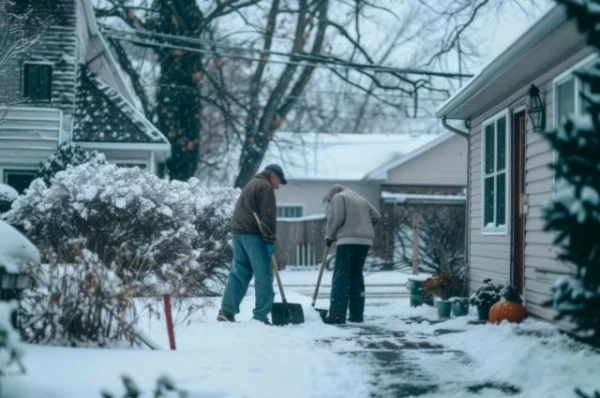
December and January are rarely perceived as a time for active work, as the garden and vegetable patch are preserved until spring. In fact, it is now that the unnoticed but necessary operations largely determine the future harvest.
Fruit Garden
December and early January are the period of the first serious frost cracks, bark peeling, and trunk damage.
Therefore, the first thing an experienced gardener does is a thorough inspection of all trees. Snow around the trunk is cleared away with a glove to reach the root collar. If the roots are partially exposed, this is immediately corrected: a layer of peat mulch and dry loose snow is added.
If frost cracks (cracks in the bark) are found, they are covered with garden paste, preferably of industrial production.
Winter Garlic
In December, winter garlic goes through a critical phase: the root system is active, but the above-ground part is not yet active. Any sharp changes in humidity or temperature can disrupt this balance. Therefore, it is important to check for an ice crust and break it if necessary; ensure that the snow is evenly distributed; and add snow to exposed areas during strong winds.
If leaf tips appear above the snow after a thaw, the bed is immediately insulated with dry mulch.
Winter Onion
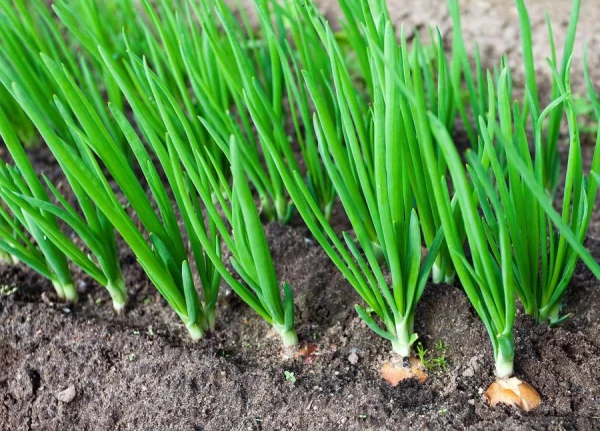
Onions are sensitive to sharp temperature swings. In December, it is important that the necks of the bulbs are not exposed. If the soil has heaved, peat crumbs and/or snow are added.
Greens
Overwintering green crops (perennial onions, aromatic herbs, sorrel) feel good under a layer of snow, but in snowless frosts, their roots can freeze. Therefore, the beds are regularly topped up with snow, and in its absence, they are mulched with peat or other plant material.
Berry Bushes
Currants
Although currants are one of the most winter-hardy crops, their root system is sensitive to sharp temperature fluctuations. And it is December that brings a series of such fluctuations. Therefore, in the absence of snow, an additional layer of mulch is usually added, wet snow that can break branches is removed, and if an ice crust forms around the bush, it is carefully broken.
If the bushes were not tied in the fall, this is done in winter by gently gathering the branches into a loose bundle and securing them with twine, but not tightly.
Gooseberries
Wet heavy snow is one of the main enemies of gooseberries. Its branches break easily since the branching is dense, and snow gets packed inside the bush. Therefore, after each snowfall, a fluffy brush is taken to shake off the snow, the branches are gathered into loose bundles, a circle of dry branches is formed around the bush to prevent icing, and if dry mulch is available, it is added in a layer of 5–7 cm.
Rose Garden
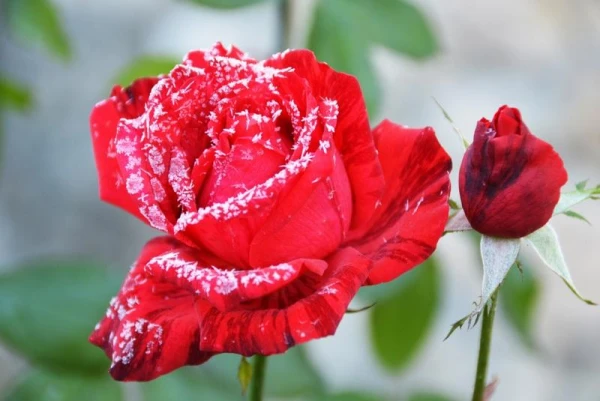
Roses are among the crops whose wintering is formed specifically in December. Early covering may lead to moisture accumulation, too tight covering may lead to a lack of air, and excessively loose covering may lead to freezing.
What to check:
-
The condition of the space under the cover. The lower edge of the structure is lifted, and the following is assessed:
smell (there should be no mustiness); air humidity; presence of condensation droplets on the inner side of the material. If water droplets are visible, the cover is partially removed for a few hours on a dry day for ventilation.
-
The condition of the soil around the roses. If the soil has turned into a crust, it is lightly loosened, avoiding contact with the roots. Dry leaves or dry peat are added on top in a layer of 3–5 cm.
-
Checking the shoots. If a moldy film appears on the shoots, the affected part is carefully removed with a gauze napkin, and the surface is treated with a fungicide.
By the way!
Winter is not a pause. It is the foundation; it connects the outgoing season with the new one. It is now that mistakes from autumn are corrected, planting material is prepared, the harvest is preserved, roots and trunks are protected, greenhouse maintenance is carried out, and the strategy for the next season is formed.












Leave a comment