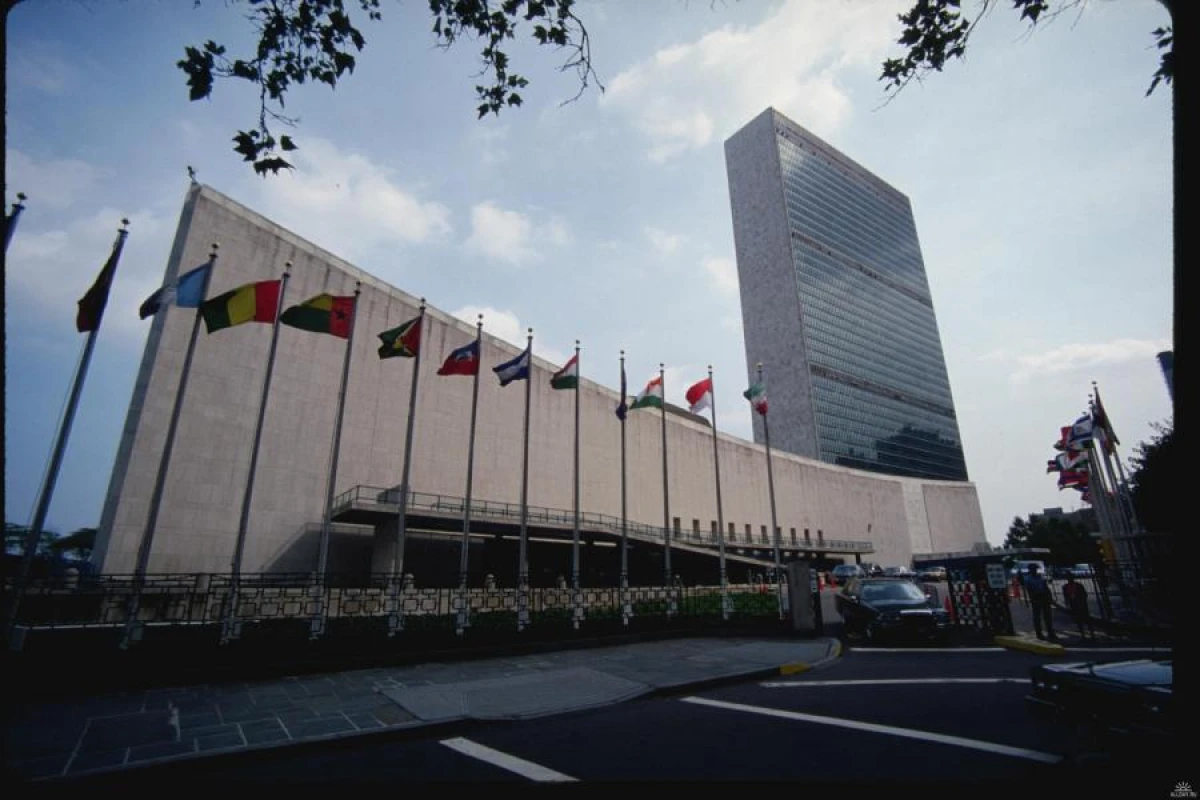
Russia intends to appeal to the International Court of the UN over what Moscow calls the "infringement of Russian rights" in Latvia, Lithuania, and Estonia. This was stated by the Russian Foreign Ministry to the newspaper Izvestia.
The Russian Foreign Ministry claims that the Baltic states "refuse to cease their unlawful policies," and attempts to resolve disagreements through negotiations, according to Moscow, "prove to be fruitless."
"In this regard, we will obviously have to translate our claims into a judicial framework by appealing to the main judicial body of the UN," the Russian Foreign Ministry stated.
The Russian side refers to an information and analytical report on the violation of the rights of Russian citizens and so-called compatriots abroad in 2025. The document names Ukraine, the USA, Canada, the Baltic states, Poland, and Moldova as countries where the highest number of violations are allegedly recorded.
Moscow claims that citizenship, origin, public statements, or even indirect connections to Russia become a "factor of increased risk" and can lead to criminal cases, detentions, interrogations, searches, and other procedural actions.
Member of the Council under the President of Russia for the Development of Civil Society and Human Rights Alexander Brod stated that, in his opinion, "discriminatory measures have become a conscious and consistent policy in Europe aimed at exerting pressure on Russia."
Separately, the Russian side mentions the Baltic states, particularly Latvia. As an example, Brod cited criminal proceedings and administrative measures following May 9. According to him, only in Latvia, the police initiated 67 criminal cases — mainly for the use of symbols related to the Russian interpretation of Victory Day, including St. George ribbons.
The Russian publication also claims that people were detained in Latvia for listening to or performing wartime songs. Similar bans, the Russian side notes, are also in effect in Moldova.
At the same time, in Latvia, after the full-scale invasion of Russia into Ukraine, restrictions on the public use of symbols associated with Russian aggression, militarism, and the justification of war were tightened. Latvian authorities have repeatedly emphasized that such measures are not directed against Russian-speaking residents as a group, but against support for aggression, glorification of totalitarian regimes, and the use of symbols that are perceived in the current context as part of Russian military propaganda.
In the Russian interpretation, these decisions are presented as "anti-Russian policies." However, in the Baltic states, they are primarily viewed in the context of national security, historical memory, and Russia's war against Ukraine.
Russian experts also report a "worrying trend" in Germany, where, according to them, the practice of pressure and judicial prosecution of Russian compatriots is spreading. Brod stated that Germany "more than anyone else needs to remember the lessons of history."
Moscow's statements come against the backdrop of the ongoing confrontation between Russia and the EU and NATO, as well as regular accusations from the Kremlin against the Baltic states. Latvia, Lithuania, and Estonia, in turn, have repeatedly pointed out that Russia uses the theme of "protecting compatriots" as a tool for political pressure and informational influence.