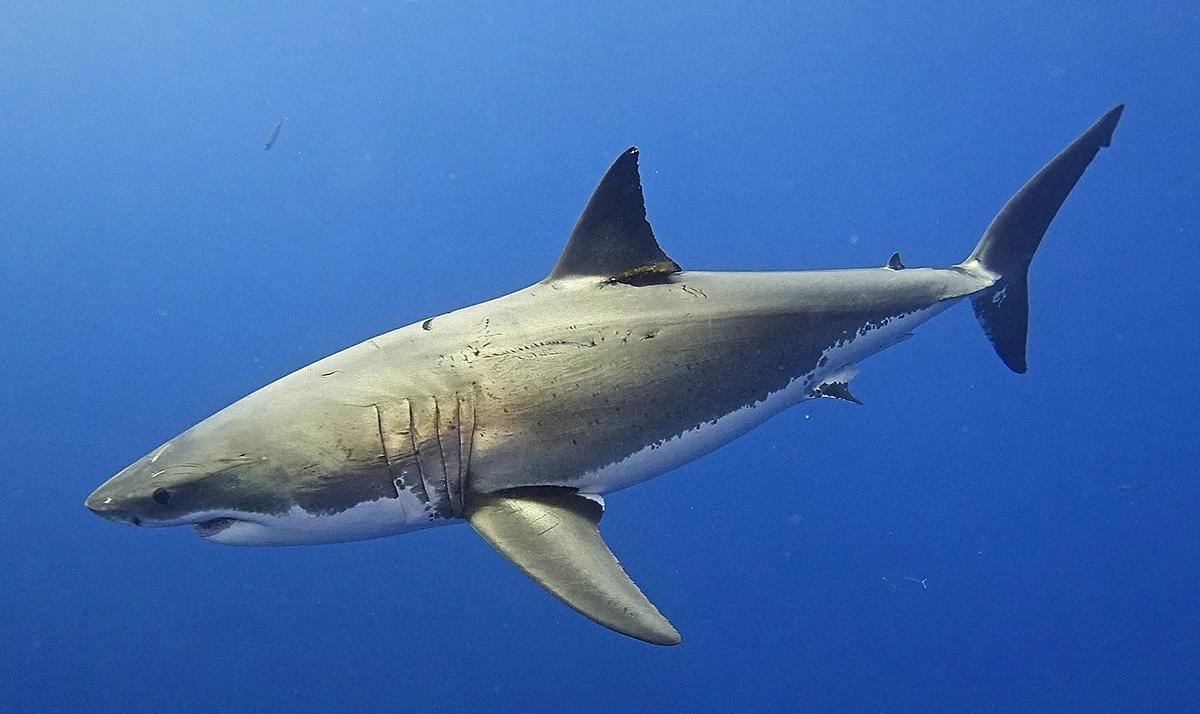
Spanish scientists are almost certain that they have discovered a new habitat for great white sharks off the eastern coast of Spain.
In 2023, an unusual specimen was caught there – a juvenile of this shark species measuring 210 cm in length and weighing 90 kg. This indirectly indicates that the previous trend of declining populations of these apex predators in the world's oceans is slowing down.
For a long time, it was believed that great white sharks were visitors to the Mediterranean Sea, entering from the Atlantic but not residing there permanently. They are observed no more than 1-2 times a year, but now we know for sure that these sharks live here permanently — there is a limited endemic population in the region. Two breeding areas have been found, one around the Sicilian Strait and the Gulf of Gabes, and the other in the Edremit Gulf in the northeastern part of the Aegean Sea.
Scientists have also identified a direct dependence of the sharks' range on the population of bluefin tuna in the region, which is a staple of their diet. For example, when tuna disappeared from the waters of the Sea of Marmara and the Bosphorus, the number of sharks there decreased by 96.6%. Conversely, during seasonal migrations of tuna to the coast of Spain, these marine predators are encountered more frequently.
This discovery has two sides. Scientists and conservationists rejoice as the threat to the vulnerable shark species decreases. However, due to this status, great white sharks are protected by the International Union for Conservation of Nature. This means that if a new breeding area is indeed found, the regulations regarding fishing and anthropogenic impact in this region, including the tourism sector, will need to be reconsidered.