
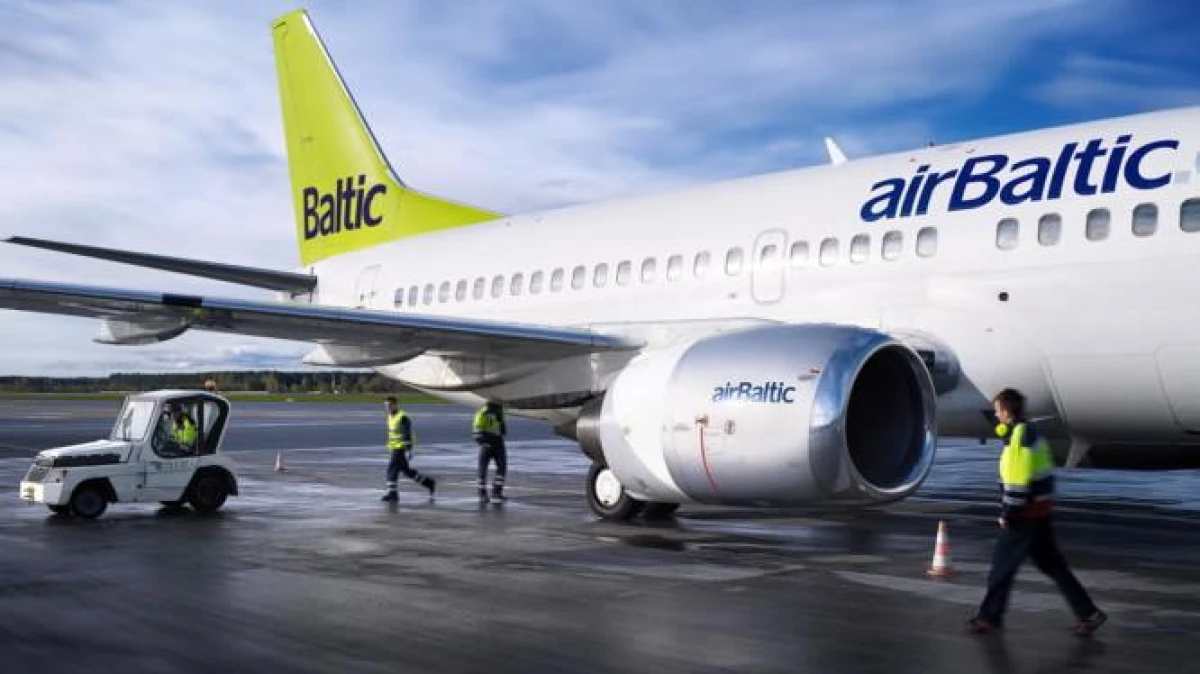
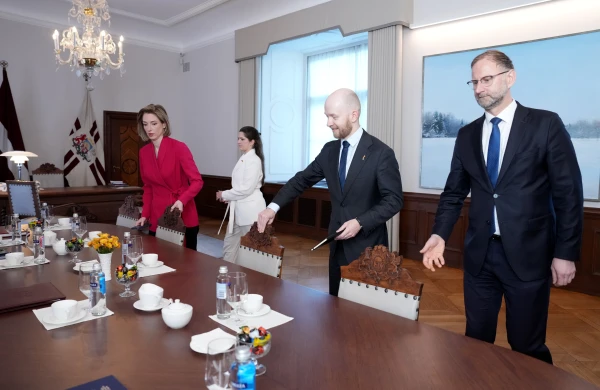
The outgoing government's Minister of Transport, Atis Shvinka (Progressives), at a meeting of the Baltic states' transport ministers on Tuesday called for a broader regional approach to the financing and development of Latvia's national airline airBaltic, suggesting that colleagues consider the possibility of future solidarity support for the airline from all three Baltic countries.
As Shvinka reported on Twitter, the negotiations were constructive, and the ministers expressed their willingness to continue the discussion after the presentation of the updated business plan for airBaltic.
Shvinka noted that the Middle Eastern crisis has once again highlighted the issues of air travel in the Baltic region, in which airBaltic plays a strategically important role.
He emphasized that airBaltic is currently effectively the Baltic airline, as it also provides connections from Lithuania and Estonia, offering a total of 80 direct flights from the Baltic states.
In his opinion, the solidarity support of the Baltic states would allow for the preservation of one strong regional airline with an extensive and competitive route network in Europe.
The Ministry of Transport informed the LETA agency that the ministers also discussed Lithuania's proposed abandonment of seasonal time changes. Shvinka, expressing Latvia's national position, emphasized that the Baltic states need a unified approach, as, for example, Valka and Valga cannot exist in two different time zones.
Latvia supports the transition to permanent summer time as the new standard time, but notes that a broader discussion on this issue is necessary. Lithuania and Estonia also agree, but a significant factor is Finland's position, which supports the transition to permanent winter time, as it is important for Estonia to maintain a unified time zone with Finland.
The meeting also discussed the implementation of the Rail Baltica project, and the ministers emphasized its significance for strengthening connectivity, developing the economy, and ensuring the security of the Baltic region. The successful implementation of the project is based on close cooperation among the Baltic states, as well as EU support within the next multiannual budget.
As reported, airBaltic's losses in the first quarter of this year amounted to €70.064 million, which is 2.4 times more than in the same period of 2025. The group's turnover increased by 12.3% to €149.086 million.
airBaltic explained that the size of the losses in the first quarter was influenced by fluctuations in foreign currency exchange rates, a reduction in commercial support, and ongoing pressure from rising costs in several categories.
On April 16, the Saeima approved a short-term state loan of €30 million for airBaltic, maturing on August 31 of this year.
The turnover of the airBaltic group last year increased by 4.2% compared to 2024, reaching €779.344 million, while losses amounted to €44.337 million, which is 2.7 times less.
In 2025, the airline transported 5.2 million passengers, which is 1% more than in 2024.
In its annual report, airBaltic noted that considering the financial results of 2025 and the market situation, the airline has suspended its planned initial public offering and currently does not consider it a potential source of capital. Despite the expected improvement in operational and commercial performance, in 2026 the airline will operate with a negative free cash flow, and, based on current forecasts, its management expects that additional funding of €100 to €150 million will be needed to finance operations in the winter season of 2026/2027.







Leave a comment