
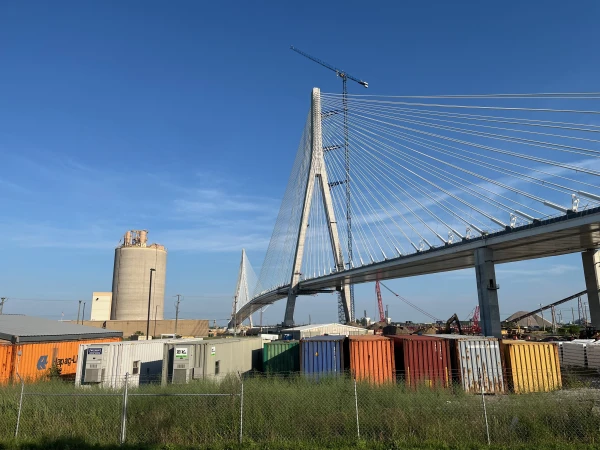
The neighboring Canada is being targeted for significant financial losses.
Despite the efforts of Canadian authorities, they have been unable to normalize relations with their southern neighbor. On the contrary, new problems are arising, particularly in unexpected areas. Currently, Canadian Prime Minister Mark Carney is trying to negotiate with U.S. President Donald Trump regarding the nearly completed bridge over the Detroit River – a project that started eight years ago and seemed to be successfully coming to fruition. Trump's dissatisfaction stems from the fact that the structure is owned by the state of Michigan and the Canadian government, while the federal government has no stake in it. In Ottawa, there is speculation about whether this is a pretext to express grievances against Canada on other issues or a genuine reason for the American president's discontent. Commenting on the recent phone conversation, Carney promised that he would be able to "resolve the situation."
The scandal erupted a few days ago when Trump accused Canada of "unfair treatment" towards the U.S. in a post on his social media platform, Truth Social. The president believes that the bridge was built almost entirely without the use of American materials and that it essentially belongs to the northern neighbor, which he deems unacceptable. Trump seems to have forgotten that during his first term, he positively assessed this infrastructure project, calling it a "vital economic link."
"I will not allow this bridge to open until the United States receives full compensation for everything we have given them. And also, importantly, until Canada treats the United States with the fairness and respect that we deserve. We will immediately begin negotiations. Given everything we have given them, we should own at least half of this asset," the American president now states.
Construction of the bridge linking Canadian Windsor and American Detroit began in 2018, and the project was initiated during Barack Obama's administration. The project, named the "Gordie Howe International Bridge," was intended to provide direct connectivity between the highway systems of the two countries. The Windsor-Detroit Bridge Authority, fully owned by the Canadian government, is responsible for both the construction and financing. The bridge will be jointly owned by Canada and the state of Michigan, with the opening planned for the beginning of this year.
According to an agreement made over 10 years ago, Canada will receive revenue from tolls until it recoups its construction costs, after which the money will be split evenly between Canada and Michigan. The contract value of the bridge is 6.4 billion dollars.
Carney, in his phone conversation, pointed out to Trump the equal division of ownership rights. He also reminded him that his country financed the project, but steel and labor from both states were involved in the construction. "This is a great example of cooperation between our countries," noted the Canadian Prime Minister. Apparently, these arguments did not have much effect on the American president. He, according to his statements, intends to reconsider the terms of the project.
The shift in Trump's rhetoric regarding the infrastructure project appears to have been influenced by the lobbying efforts of the Moroun family. They own the Ambassador Bridge, which also connects Detroit and Windsor. For a long time, the Moroun family has filed lawsuits to prevent the construction of a second crossing that would deprive them of income. The Ambassador Bridge accounts for nearly a quarter of all crossings at the Canadian-American border, making it one of the busiest checkpoints. Shortly before Trump’s post was published, Matthew Moroun met with U.S. Secretary of Commerce Howard Latnick, The New York Times reported. The secretary then called Trump.
The issue with the bridge has driven another wedge into the relationship between the neighbors, which has been strained since the beginning of Trump's second term. The U.S. president has accumulated numerous grievances against Ottawa, which he mentioned on Truth Social. Firstly, there is the ban on the sale of American alcohol in Ontario (where Windsor is located).
Secondly, there are the "unacceptable" tariffs on dairy products in Canada, which "subject American farmers to significant financial risk." Trump also did not forget about the intentions of Canadian authorities to establish ties with China.
In January, Carney reached an agreement with Chinese President Xi Jinping to reduce tariffs. The politician also delivered a speech at the World Economic Forum in Davos, calling for unity against the hegemonic policies of great powers (including the U.S.). Such an attempt to distance Canada from the U.S. has drawn a wave of criticism in Washington. Given that Canada is one of the top three trading partners of the country, such a reaction to Ottawa's desire to diversify its foreign economic ties and achieve greater independence from the United States is quite expected.
Trump has threatened the country with huge tariffs several times. In the fall, he imposed a 35 percent tariff on the small number of Canadian goods not covered by the United States-Mexico-Canada Agreement (USMCA). The agreement protects trade from artificial economic barriers. The American president then threatened to raise this rate to 45 percent and then to 100 percent, additionally imposing a 50 percent tariff on Canadian-made aircraft. None of these threats have been realized.
Currently, the Trump administration is trying to pressure the Canadian government, reminding them that a review of the USMCA terms is due this year. American officials are almost directly stating that their colleagues in Ottawa should behave better (read: comply with the U.S.) for the agreement to remain in force. Nevertheless, Carney continues to adhere to the proclaimed pragmatism in the country's foreign policy, responding cautiously to Trump's threats.







Leave a comment