By 2027, the Cabinet of Ministers has planned the size of the stock market capitalization in the country to be 9% of GDP. At the current rate of development, the gross domestic product is expected to be 45-50 billion euros next year, which means that between 4 and 4.5 billion will transition into securities. And from where?
"There Is a Lack of Mature, Appropriately Sized Enterprises"
At the meeting on March 24, the government discussed the information report "On Proposals for the Development of the Capital Market and State and Municipal Capital Companies Directed Towards Initial Public Offerings."
In recent years, the capitalization of corporate bonds in the Baltics has grown, with Latvia slightly lagging behind Lithuania and significantly exceeding Estonia. Nasdaq Riga increased by 28.8% in 2025 compared to the previous year, reaching 1.8 billion euros. Last year, bonds were issued on the international market by AS Latvenergo for 400 million euros and AS Citadele Bank for 300 million euros.
However, currently, Latvia ranks among the last places in the European Union in terms of the residual value of quoted company shares and the nominal value of issued bonds. The stock market in the country accounts for about 1% of GDP. Following the buyback of shares, the securities of AS Latvijas Gāze were delisted from the exchange, reducing capitalization by almost half.
"Latvia lacks mature, appropriately sized enterprises that would have strong growth potential," the document prepared by the Ministry of Finance states. "Despite positive developments in the bond market, the stock market continues to stagnate. It should be concluded that to achieve the government's set goal, the crucial missing element remains the listing of large enterprises on the stock exchange. Accordingly, without the participation of state and municipal capital companies or large private enterprises in the capital market, it will not be possible to achieve the set goal."
Thank goodness the population is still conscious – they are investing their money: in February 2026, the volume of savings bonds held by individuals amounted to 396,000,000 euros, compared to 15,000,000 euros at the beginning of 2022. "The purchase limit for securities has been reduced from 100,000 euros to 1,000 euros so that these government securities are accessible to a wider range of investors, including individuals, and provide trading opportunities in the secondary market." It is no coincidence that the communication campaign "Savings Bonds – Convenient, Safe, Profitable" won a professional award at the International Public Relations Association Golden World Awards!
Growing an Energy Homunculus
The Ministry of Finance's document outlines what has been done to bring the largest state enterprises to the market. "In November 2024, SIA Elektrum Next, a subsidiary of AS Latvenergo, was registered in the commercial register as a specialized company for implementing renewable energy projects... Given the plans for further development of the enterprise and the anticipated expansion of its activities, investment attraction is necessary, including assessing the possibility of attracting financing in the capital markets. Preparation has begun in a timely manner, envisaging its gradual implementation, in accordance with the actual situation and continuously assessing the optimal structure of the group."
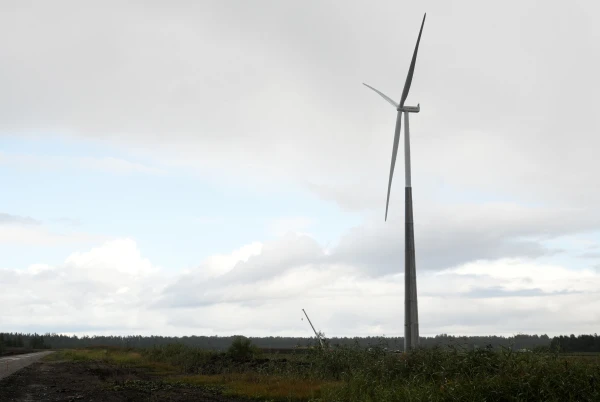
Currently, the energy company has 17 different generating capacities, with 15 greenfield projects at various stages of readiness. This year, Latvenergo's "green" generation is expected to reach about 1,000 megawatts. Meanwhile, "SIA Latvijas vēja parki continues its activities in accordance with the goal of its establishment as a separate subsidiary." SIA Elektrum Next, formed from the merger of 6 subsidiaries of Latvenergo, currently has modest assets worth 17 million euros, but is expected to reach 1 billion by the end of 2026! And this is where they will start selling:
"For the further development of the enterprise, a new appropriate capital attraction model needs to be applied," promises the Ministry of Finance. "In the coming years, an initial public offering of the renewable energy subsidiary of AS Latvenergo may be prepared."
A Letter in an Envelope, Wait, Don’t Tear It
The most familiar postal service to us may soon also become a publicly traded business. But there are nuances:
"Given the need to develop new business directions to attract investor interest, according to the Ministry of Transport's calculations, a possible initial public offering of VAS Latvijas Pasts may take place no earlier than 2027... as this also depends on the willingness of the state as a shareholder to divest part of its shares in the enterprise, the ability to ensure alignment of the enterprise's goals with new shareholders, and the overall situation in the financial market. Furthermore, in the case of an initial public offering, it should be considered that new shareholders may prioritize profit generation, which would mean faster price growth, a reduction in the number of employees, and optimization of services."
As an example of postal privatization, the Ministry of Finance cites the cases of the United Kingdom and Japan. Although even abroad, "postal service providers face challenges related to declining volumes of letters and press, and the need to raise tariffs."
With Hope for the Capital
The government also approved the recent practice of share issuance by the first municipal capital company – SIA Rīgas ūdens, which on June 2, 2025, "executed the issuance of European green bonds, attracting 20 million euros at a fixed rate of 4 percent per annum with a five-year term." The timing coinciding with the elections to the Riga City Council is, of course, a coincidence...
Currently, the main direction of capital privatization in the capital is SIA Rīgas namu pārvaldnieks, which, as a result of successful reforms, according to the government, "would be attractive for attracting private capital and would meet stock exchange standards"...
RESIDENTS ARE SAVING THE COUNTRY
Against the backdrop of stagnation, household deposits in credit institutions in Latvia have been steadily increasing – from 5.4 to 11.7 billion euros from 2015 to 2025, according to the Bank of Latvia.