
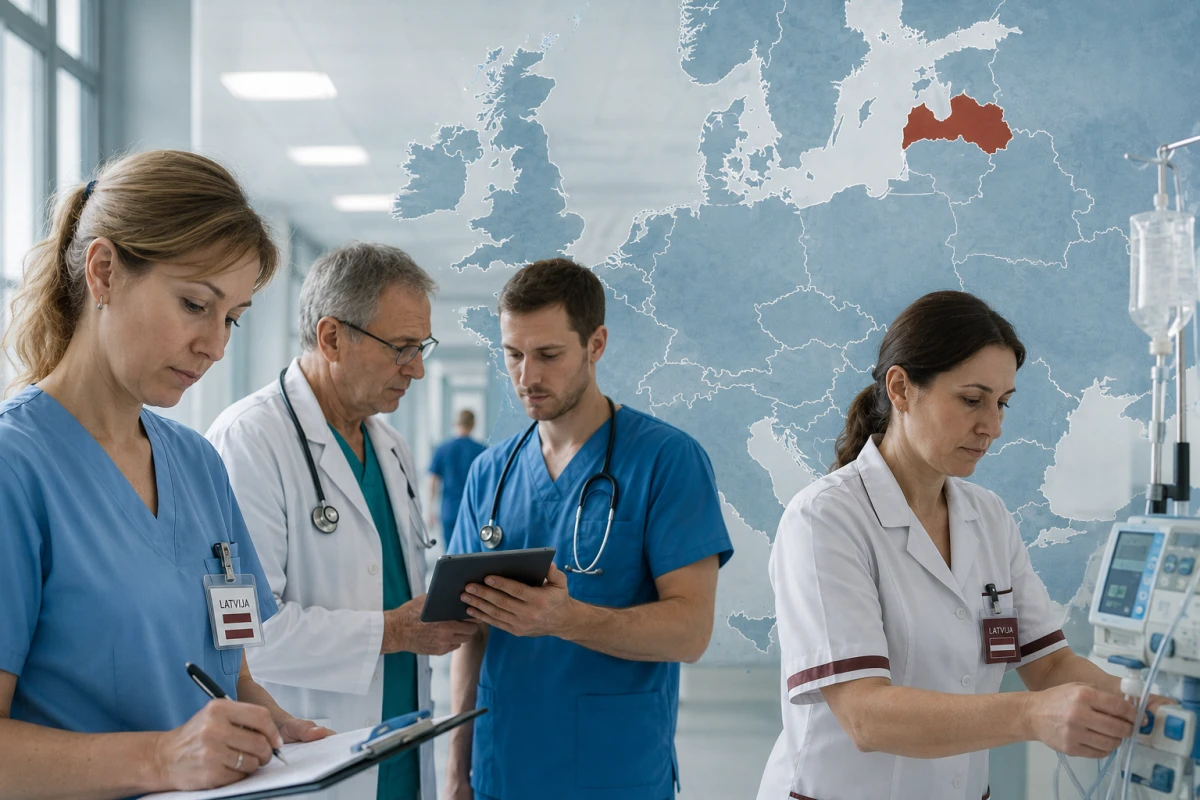
Healthcare and security experts urge Latvia to prepare its medical system for crises in advance rather than reacting in a panic mode. According to the international Healthcare Readiness Index, the country received one of the worst scores in Europe.
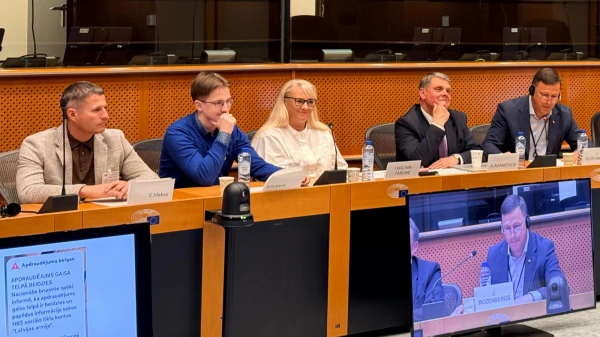
The Latvian healthcare system remains vulnerable to major crises — from pandemics to military threats. This conclusion was reached by participants in a discussion on healthcare security held on Friday in Riga, as reported by LETA.
Experts emphasize that the system needs to be strengthened systematically — through stable funding, personnel training, the creation of medication reserves, and faster decision-making in emergencies.
Particular attention during the discussion was drawn to the results of the international Healthcare Readiness Index 2024, presented by researcher Martin Smatana from the Globsec analytical center.
Latvia received a score of 47.7 out of 100 — the fifth worst result among the European countries surveyed.
For comparison, the average score across Europe is nearly 60 points, with Sweden leading at 73.2.
Among the main problems identified for Latvia, experts cite chronic underfunding, a shortage of medical personnel, and weak investments in prevention.
In fact, the Covid-19 pandemic and Russia's war against Ukraine have forced European countries to reassess how resilient their healthcare systems are in times of crisis.
Agnes Valuliene, State Secretary of the Ministry of Health, acknowledged that the issues highlighted in the study were not a surprise for the sector. According to her, some tasks can be addressed without additional funding; however, the system itself must operate calmly and consistently, rather than switching to a mode of chaotic response every time.
"We need to work in a crisis mode, but not in a panic mode," Valuliene emphasized.
She identified the instability of political leadership as one of the serious problems. According to the study, the average tenure of a health minister in Latvia is less than two years — about 598 days. This is significantly shorter than the EU average.
Valuliene stated that with each change in leadership, the system is effectively forced to re-establish its working rhythm.
Experts also specifically point out the issue of staffing. Biruta Kleina, advisor to the Ministry of Defense on medical support, emphasized that even having equipment and medications will not help if there are not enough people in the system. She highlighted the importance of training personnel for mass incidents, military injuries, and non-standard crisis situations.
After Covid-19, Latvia began to actively form material reserves, and work is currently underway to create stocks of outpatient medications for crisis situations.
At the same time, the availability of modern medicines remains a weak point. According to the director of the Association of International Innovative Pharmaceutical Companies, Vladislava Marane, only about 15% of innovative medications are available in Latvia compared to the EU average.
This means that many modern drugs remain difficult for patients to access.
The discussion also included a warning that the resilience of the system depends not only on hospitals and reserves but also on the overall health status of society even before a crisis occurs.
Airis Rikevics, advisor to the Prime Minister on national security, added that the state needs less bureaucracy and more ability to make quick decisions in non-standard situations.
Against the backdrop of war near Latvia's borders and regular discussions about crisis readiness, the topic of healthcare resilience is gradually becoming a matter not only of medicine but also of national security.




Leave a comment