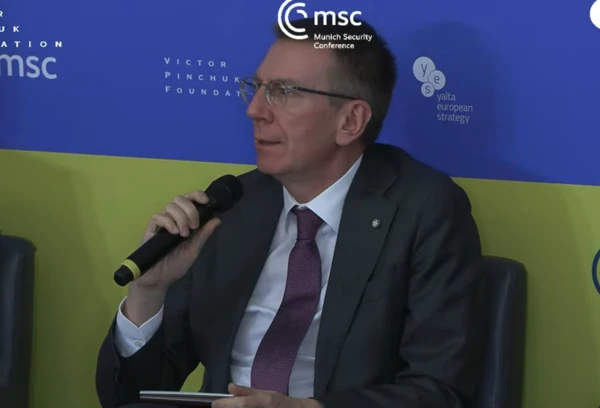
On Saturday, Rinkēvičs participated in a discussion in Munich on supporting Ukraine titled "Ukraine: The Future Front." The President emphasized the importance of supporting Ukraine while simultaneously continuing political and economic pressure on Russia.
A balanced pragmatism is necessary to strengthen Europe’s defense capabilities and transatlantic cooperation, stated Latvian President Edgars Rinkēvičs following the Munich Security Conference.
As LETA reported, the president's communication advisor, Mārtiņš Drēgeris, said that Rinkēvičs participated in the Munich Security Conference from Friday to Sunday. This year, the conference focused on cooperation between Europe and the United States and differences of opinion, the prospects for achieving sustainable peace in Ukraine and the necessary pressure on Russia, as well as discussions of other current geopolitical challenges.
<iframe width="560" height="315" src="https://www.youtube.com/embed/C4Pi5t5Fkb4?si=c5mzheaimZjvEegn&start=651" title="YouTube video player" frameborder="0" allow="accelerometer; autoplay; clipboard-write; encrypted-media; gyroscope; picture-in-picture; web-share" referrerpolicy="strict-origin-when-cross-origin" allowfullscreen></iframe>On Friday, Rinkēvičs participated in a discussion titled "The New Great Game: Rethinking Information, Technology, and Global Power" alongside Finnish President Alexander Stubb, organized by NATO’s Strategic Communications Centre of Excellence. The Presidents of Latvia and Finland, along with representatives from technology companies, researchers, and experts, discussed the impact of artificial intelligence and new technologies on the information environment, geopolitical competition in technological development, as well as the opportunities and risks of technology's influence on public opinion, including in the educational process.
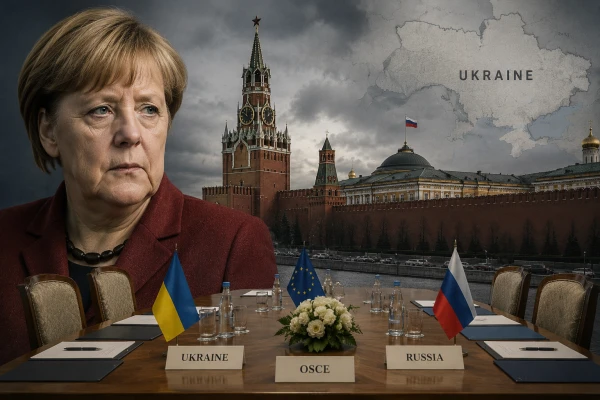
On Saturday, Rinkēvičs, together with Czech President Petr Pavel, Danish Prime Minister Mette Frederiksen, Croatian Prime Minister Andrej Plenković, and Dutch Prime Minister Dick Schoof, participated in a discussion on supporting Ukraine titled "Ukraine: The Future Front." The President emphasized the importance of supporting Ukraine while simultaneously continuing political and economic pressure on Russia, which shows no willingness to achieve peace. According to Rinkēvičs, Russia does not show readiness and does not offer any solutions for achieving peace, instead engaging in diplomatic games and refusals.
"I very much want and hope that the joint efforts of the leaders of the United States and Europe will bear fruit. However, Russia rejects various peaceful solutions, and we have to use not only diplomatic methods but also direct pressure. The only way to try to move towards achieving peace this year is to increase both political and economic pressure on Russia, including increasing sanctions, combating the Russian shadow fleet, and continuing to support Ukraine," Rinkēvičs stated.
The President noted the significance of security guarantees for Ukraine in peace negotiations aimed at achieving sustainable peace. Rinkēvičs emphasized that strong security guarantees are necessary to achieve peace. Without them, problems will arise both in Ukraine itself and in Europe. "In Europe, we need to develop such defense industries and capabilities that we can withstand any type of Russian aggression. We have already said that Europe actually has many military resources; however, there are difficulties in managing them. But we must also recognize that in the coming years, the role of the United States in ensuring the security of Europe will be irreplaceable. Therefore, we must develop our own defense capabilities while simultaneously demonstrating ourselves as a reliable partner for cooperation," Rinkēvičs emphasized.
During the Munich Security Conference, Rinkēvičs also met with Moldovan President Maia Sandu. The parties discussed active political dialogue and close bilateral cooperation, the consistent approach of the Moldovan government, and progress in reforms in the process of integration into the European Union. The conversation also focused on Moldova's experience in overcoming attempts by Russia to interfere in electoral processes. "It is important to be vigilant and coordinate actions in the face of hybrid threats from Russia, including in the context of the planned elections in the Saeima of Latvia this year," Rinkēvičs noted.
The President also met with the leadership of the American defense industry company Anduril Industries to discuss opportunities for mutual cooperation in developing significant military capabilities.
On Sunday, the president participated in a panel discussion of the main program of the Munich Security Conference titled "Europeans Together: Regaining Leadership in a Tougher World" alongside the EU High Representative for Foreign Affairs and Security Policy Josep Borrell, NATO Deputy Secretary General Mircea Geoană, and French Minister for European Affairs Benjamin Griveaux.
During the discussion, Rinkēvičs noted that much attention is given to speeches made outside of Europe, but Europeans themselves need to talk about what Europe should do to become stronger. According to the president, first of all, hope cannot be a strategy. Secondly, a balanced pragmatism is necessary to continue implementing long-agreed tasks in the areas of defense, digital sovereignty, and energy independence. "We all understand that a strong Europe serves the interests of ourselves and our allies, but a strong Europe does not serve the interests of our adversaries," the president emphasized.
He explained that the foundation of the democratic and liberal order lies in the ability to recognize differences of opinion and that, yes, discussions can sometimes be tense, but the main thing is to be able to come to common decisions. "I still hope that, despite differences in views, we can still reform and transform transatlantic relations through cooperation. We are to blame for having neglected defense issues and other problems for so long. Just a few years ago, the dependence of European energy on Russian gas and oil was enormous," Rinkēvičs noted during the discussion.
Concluding his participation in the Munich Security Conference, the president took part in a discussion titled "Conclusion: Defining the Transatlantic Path After Munich," organized by the Atlantic Council.