
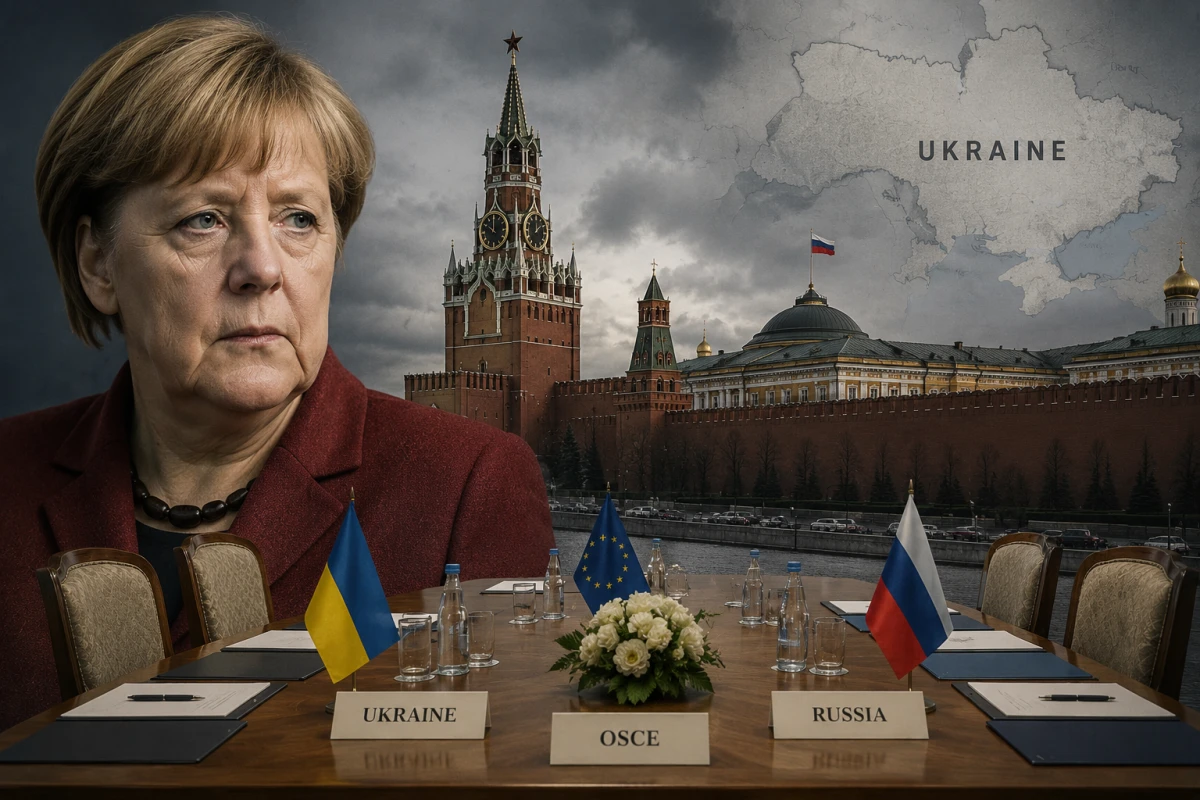
The European Union is considering appointing former German Chancellor Angela Merkel as a special envoy for negotiations with Russia regarding the war in Ukraine. According to the Financial Times, this issue may be discussed as early as next week.
The European Union has begun discussing the possibility of a more active role for Europe in negotiations regarding the war in Ukraine. One option could be appointing Angela Merkel as the EU's special envoy for contacts with Russia, as previously reported by BB.lv.
Moreover, Angela Merkel stated that the leaders of the European Union should more actively utilize diplomatic opportunities and engage in direct negotiations with Russia to end the war in Ukraine. At the same time, the former chancellor emphasized that she herself does not intend to act as a mediator in this process.
The Financial Times reports on her possible involvement, citing sources in European diplomatic circles. According to the publication, foreign ministers of EU countries plan to discuss this issue at a meeting in Cyprus next week.
In addition to Merkel, among the possible candidates are former European Central Bank President Mario Draghi and Finnish President Alexander Stubb.
In fact, Europe is seeking ways to strengthen its own role in the peace process, which has so far been largely controlled by Washington.
According to the Financial Times, the White House has already indicated to European partners that it does not oppose parallel EU negotiation efforts alongside the contacts being conducted by the administration of President Donald Trump. However, the negotiations between the US and the Kremlin have not yet yielded significant results.
European capitals are increasingly expressing concern that the EU is playing a secondary role in discussions about the future of Ukraine and potential peace terms.
Ukrainian President Volodymyr Zelensky has repeatedly stated that Europe must be a full participant in the negotiation process, as European countries bear a significant portion of the economic and military consequences of the war.
Importantly, Merkel's potential appointment would appear to be a symbolic step. During her chancellorship, she remained one of the main European negotiators in relations with Russia for many years.
However, Merkel's candidacy may also provoke disputes within Europe. Critics remind of her previous policies towards Russia and energy cooperation with Moscow prior to the full-scale war.
So far, this is only about preliminary discussions, and the European Union has not yet made any official decisions.
Nevertheless, the very discussion shows that the EU is increasingly trying to regain influence on issues related to a possible resolution of the war in Ukraine.


Leave a comment