
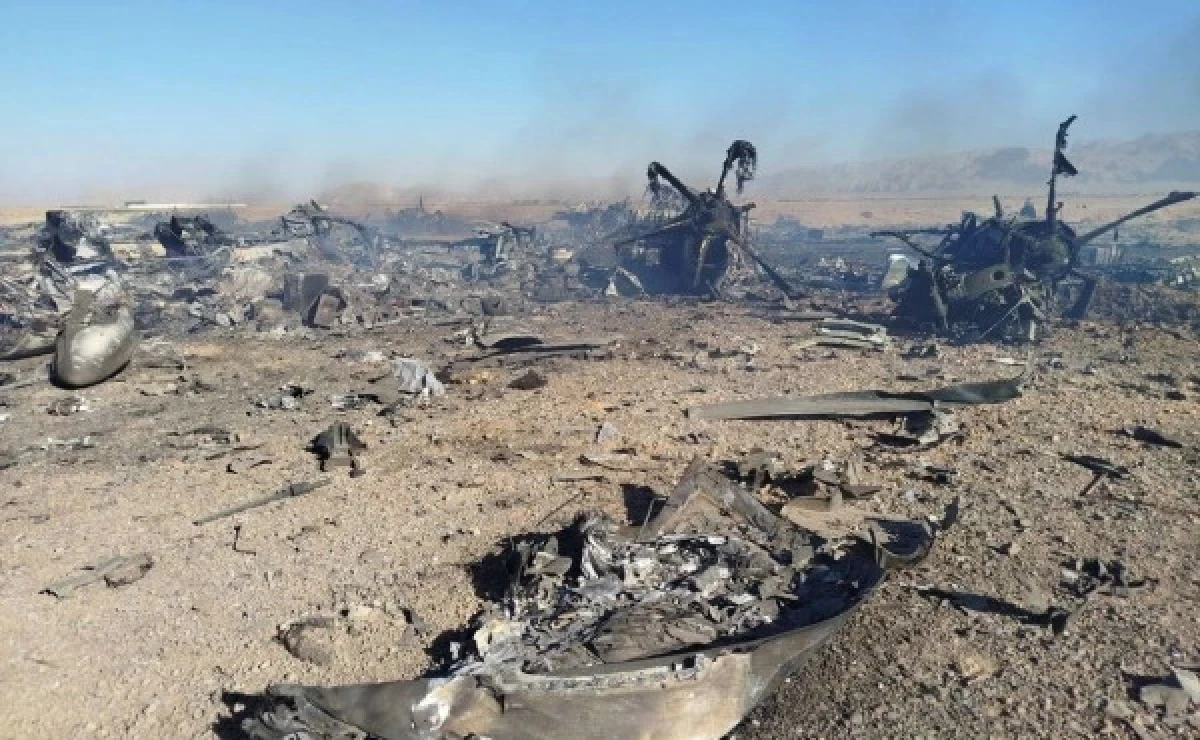
The U.S. Congress published data on the extensive losses of aviation in Operation Epic Fury.
An analytical report from the Congressional Research Service (CRS), published on May 13, 2026, revealed the scale of losses for U.S. aviation during Operation Epic Fury – a six-week air campaign against Iran that ended with a temporary ceasefire. The U.S. lost a total of 42 aircraft, not counting those that were damaged. This is stated in the updated report from the Congressional Research Service (CRS), prepared for American lawmakers.
The heaviest losses were suffered by the fleet of MQ-9A Reaper strike drones: 24 drones were shot down. These are irrecoverable losses, as General Atomics closed the Reaper production line back in 2025 due to a lack of orders from the Pentagon. According to a company representative, parts for only five new machines remain in stock. One Reaper costs over $56 million.
Significant damage was also inflicted on manned aviation. According to CRS, the following were destroyed or irreparably damaged:
• 7 KC-135 Stratotanker refueling aircraft (five were burned on the ground during Iran's missile strike on the airbase, and two collided in the air).
• 4 F-15E Strike Eagle fighters (three were "accidentally" shot down by a Kuwaiti Air Force F/A-18, and the fourth was shot down by Iranian air defense).
• 1 E-3 Sentry (AWACS) aircraft was destroyed on the ground.
• 1 F-35A fifth-generation fighter was damaged by an Iranian heat-seeking missile (made an emergency landing).
• 1 A-10C attack aircraft was destroyed during a search and rescue operation.
• 1 HH-60W Pave Hawk helicopter was damaged.
• 2 MC-130J special operations transport aircraft of the U.S. Air Force were destroyed by U.S. special forces to prevent them from falling into enemy hands during a rescue operation for an F-15 pilot.
• 1 MQ-4C drone (maritime reconnaissance) was lost in the Persian Gulf and was likely shot down by Iranian air defense or air force.
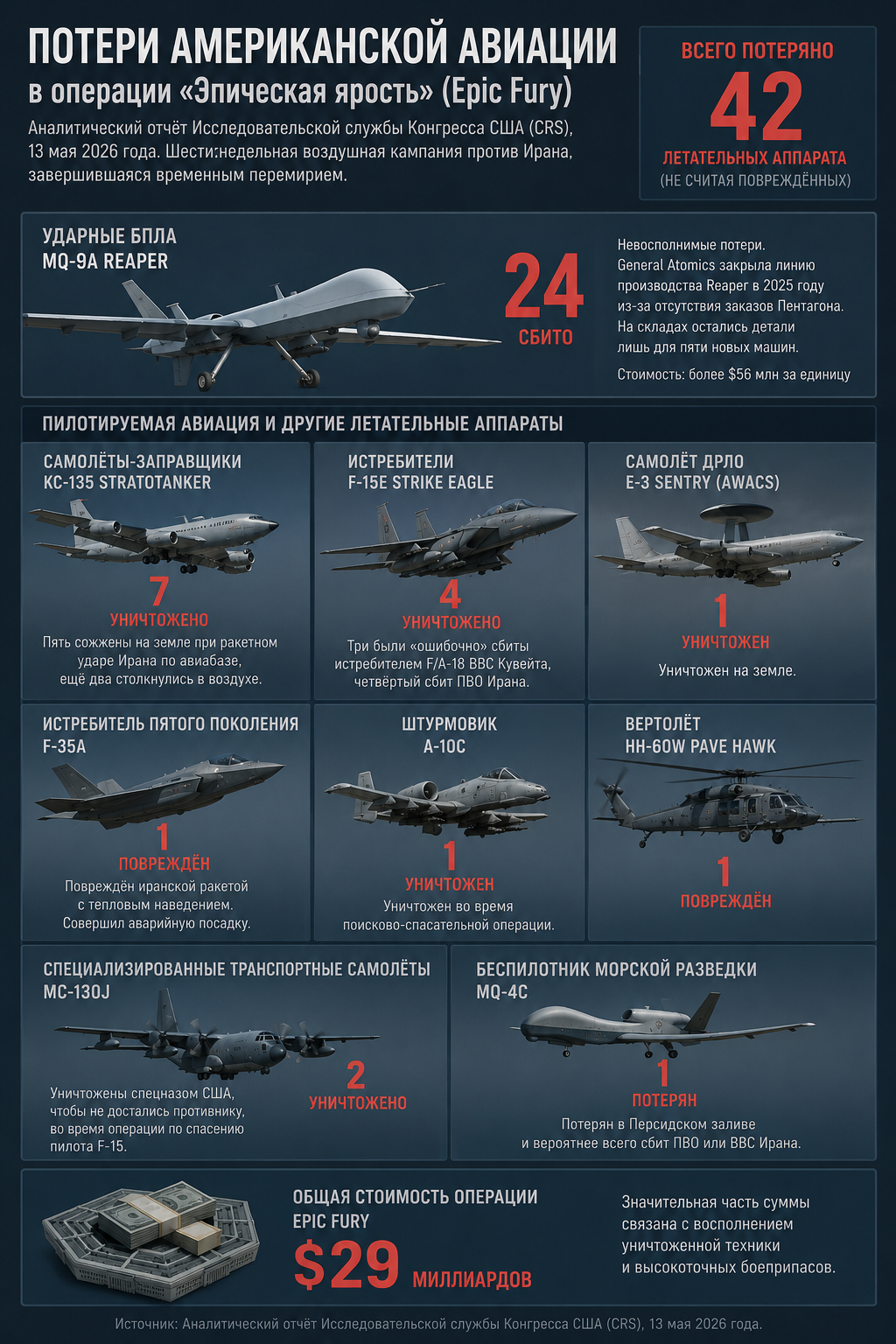
The total cost of Operation Epic Fury is already estimated by the Pentagon at $29 billion. A significant portion of this amount is related to replenishing destroyed equipment and precision munitions.
In the opinion of the editorial team, the published data may also intensify political disputes within the U.S. regarding the cost of foreign military campaigns. Against the backdrop of billion-dollar expenditures, losses of equipment, and instability in oil markets, American society is increasingly forced to question the justification of such operations in terms of the country's long-term interests.









Leave a comment