Additional legal mechanisms for protection against violence have been developed, and legal protection for children has been improved.
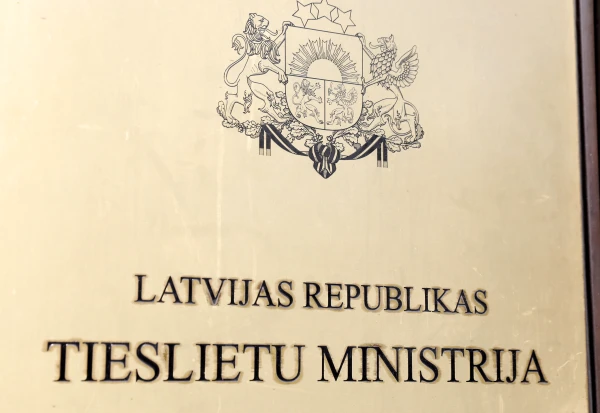
As is tradition, on the eve of the New Year, ministries and other state institutions summarize their work. The Ministry of Justice also reported today on what has been accomplished in 2025.
The Ministry of Justice reminded that the outgoing year was marked by important reforms that reduce bureaucracy, strengthen the investment environment and the country's security, as well as improve the protection of human rights. From faster and more convenient services for residents and entrepreneurs to targeted support for families, children, and victims of violence.
According to Justice Minister Inese Lībiņa-Egnere, "in 2025, we purposefully strengthened law and order where society expects it the most — strengthening the investment environment, protecting families, preventing violence, and our overall security.
Reduction of bureaucracy and attracting investments
A unified service for the registration of structures has been created; starting from January 6, 2026, the registration of a structure will become easier, faster, and more convenient for residents. Residents will no longer have to contact several institutions separately, providing documents repeatedly, which will save time and resources, as data in state systems will be synchronized. Already now, private houses can be registered in the cadastre based only on documents, without a personal inspection, making the service simpler, cheaper, and faster for residents and entrepreneurs.
For entrepreneurs, processes are simpler and faster — the registration of a limited liability company in the Register of Enterprises can be applied for in five minutes with automatically prepared documents. The service allows generating documents simultaneously in both Latvian and English, enhancing Latvia's attractiveness in the eyes of international investors.
Child-friendly justice
Preventing the re-traumatization of children in family disputes, the Saeima adopted amendments to the laws on civil procedure and notaries prepared by the Ministry of Justice. The new procedure stipulates that upon the divorce of parents, the agreement on child custody, the right to communication, and maintenance will be directly enforced as a court ruling by a sworn notary. Thus, children will not be re-involved in long and emotionally difficult court processes to resolve parental disputes that should already be settled within the divorce proceedings.
The amount of state funds allocated for maintenance has been increased in both 2025 and 2026.
Strengthening the internal security of the state
The Liepāja prison was built ahead of schedule and with budget savings. Additionally, since the beginning of 2025, a training center for the management of places of detention has been operating in Olaine, improving the work on resocialization and behavior modification of convicts. A new Norwegian program has been launched, providing for the creation of a modern place of detention for women in Cēsis and the rehabilitation of children.
The Justice Academy has begun its work, providing training for judges, prosecutors, investigators, and court staff on hybrid threats, violence, and family disputes.
Combating violence
Significant work has been done to tighten criminal liability for violent crimes and to create new mechanisms for improving the protection of victims. In particular, the Ministry of Justice proposed to improve the Criminal Law by extending the statute of limitations from 20 to 35 years, or, at the Saeima's discretion, to completely abolish the statute of limitations for particularly serious criminal offenses against morality and sexual inviolability of minors, including forced abortions, human trafficking, and serious bodily harm.
It is important to note that Latvian society is increasingly demonstrating intolerance towards domestic violence; the Council of Europe Convention on preventing violence against women and domestic violence ensures a rapid and coordinated response to violence and stable protection for victims.
Amendments to the civil procedure law improve access to the judicial system. The court in divorce, custody, and communication cases, when deciding on the distribution of court costs, must assess not only the financial situation of the parties but also the principles of fairness and proportionality, including the actions of the parties during the dissolution of the marriage and the consideration of the case. In strengthening temporary protection from violence, shorter deadlines for completing courses on reducing violent behavior have been established. To reduce the submission of unfounded claims and prevent the prolongation of proceedings, the possibility of re-applying to the court to cancel or replace temporary protection from violence has been limited. At the same time, the procedure for state fees has been simplified and reduced in most cases, as well as the enforcement of debts has been made quicker and more efficient as a preventive measure.