
As tradition dictates, let us summarize the outgoing year. Despite the fact that there was practically no summer in Latvia this year (at most, one could "scrape together" two weeks of warm weather), it was very hot in a political sense!
The authorities often made, to put it mildly, very strange decisions.
Political Surprise of the Year
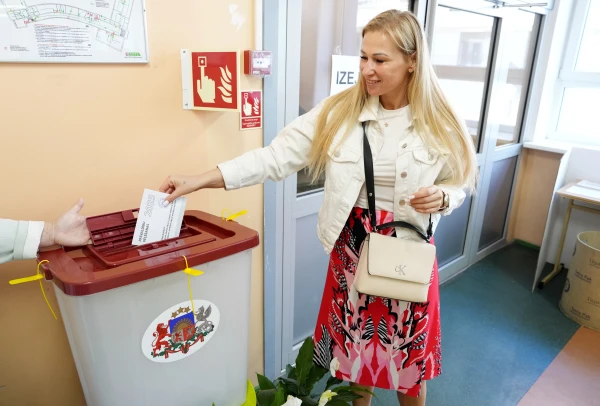
The main political event of 2025 was, of course, the municipal elections. And the main surprise was the "prevention" of a change of power in the Riga City Council. Despite all the opinion polls indicating the extreme unpopularity of the capital's authorities, the June elections did not lead to any upheaval in the Riga City Council.
The opposition party "Latvia First" came in first, but the mandates obtained were not enough to take power even with the support of potential allies. Everything happened according to the old scheme: the right-wing parties united, bringing the left-wing "Progressives" along with them. As a result, the same coalition remained in power in the capital, with only the mayor changing: Vilnis Kirsis handed over the reins to Viesturs Kleinbergs, while he returned to the position of vice-mayor. This means that no significant changes in Riga should be expected in the next 3.5 years.
However, towards the end of 2025, a project for a strange decision by the city council emerged, which could potentially split the current ruling coalition. This is the possible sale (privatization) of the controlling stake in the largest municipal enterprise in the Baltics, "Rigas namu parvaldnieks," by listing its shares on the stock exchange. Immediately after the emergence of this project, tensions, to put it mildly, began to surface among the leadership of Riga. Vice-mayor Ratnieks advocated for the suspension of the consideration of this privatization project — he called for a thorough analysis, followed by discussions with experts and consideration of alternative options. Meanwhile, Mayor Kleinbergs effectively supported the privatization. Major political battles over the privatization of RNP are expected in the first months of the new year!
Political "Salvation" of the Year
In the outgoing year, the Silin government, to use the language of a classic spy film, was closer than ever to failure, or rather – to collapse. At least three times the government faced a severe storm, and the opposition was already preparing to uncork champagne, but...
LETA
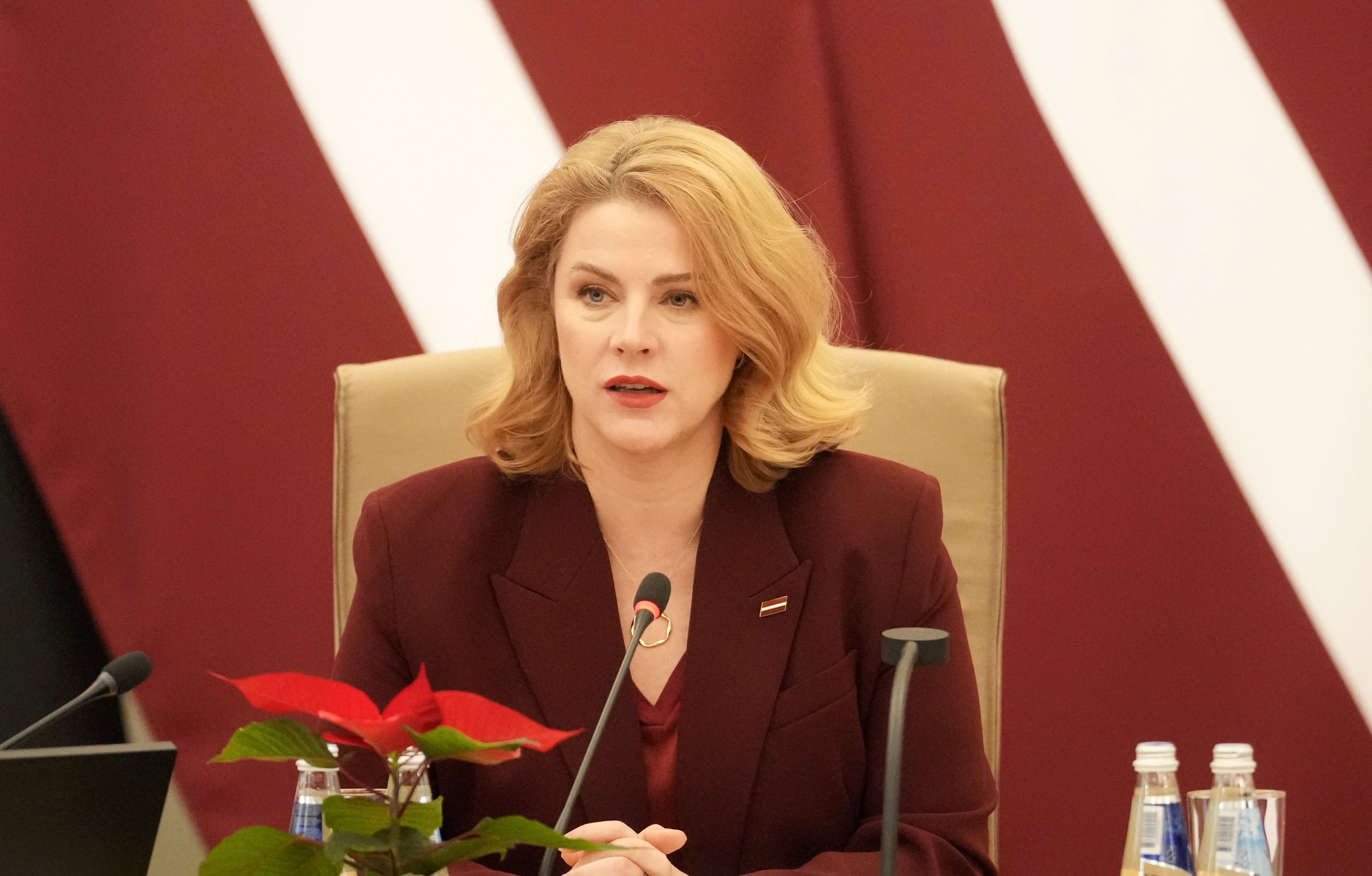
The first time it "smelled like a crisis" was at the beginning of the year when both the Prime Minister and the partners in power could no longer tolerate the presence of Kaspars Briškens as the Minister of Communications. The reason was his complete inability to control the implementation of the Rail Baltica project and to bring order to the management of the national airline airBaltic. However, the "Progressives" issued a sort of ultimatum: they would allow the removal of their minister only on the condition that one minister from each of the other coalition parties would also be changed. Silin met the "Progressives'" demand, and, in the Prime Minister's words, a restart occurred in the government.
A restart plan was adopted, and priorities were defined: external and internal security, education, combating bureaucracy, and supporting demographics. The coalition partners swallowed this bitter pill related to the change of ministers, and the government continued its work.
The second time the Silin government wobbled was during the famous saga with the Istanbul Convention, but here too, by a miracle, the fire was extinguished. However, not without the help of the president, who returned the bill on exiting the Istanbul Convention to the Saeima and persuaded the majority of the parliament to freeze the consideration of the returned bill until the next parliamentary session!
The third time the government could have collapsed was just before the adoption of the budget when the "Green Farmers" almost removed the Minister of Communications Švinka and demanded additional funds in the budget for regional passenger transport. Soon, however, the "Green Farmers" changed their minds about collapsing the government and calmly voted for the version of the budget-2026 that had been agreed upon at the coalition council, that is, without additional money for passenger transport.
Credit must be given to the resilience of Silin & Co. Despite the catastrophically low trust rating for the government and the negative popularity of all ministers, the Silin government managed to hold on this year.
Political Failure of the Year
There were many failures in the outgoing year, but we will highlight one — one that affected EVERY RESIDENT OF LATVIA!
LETA
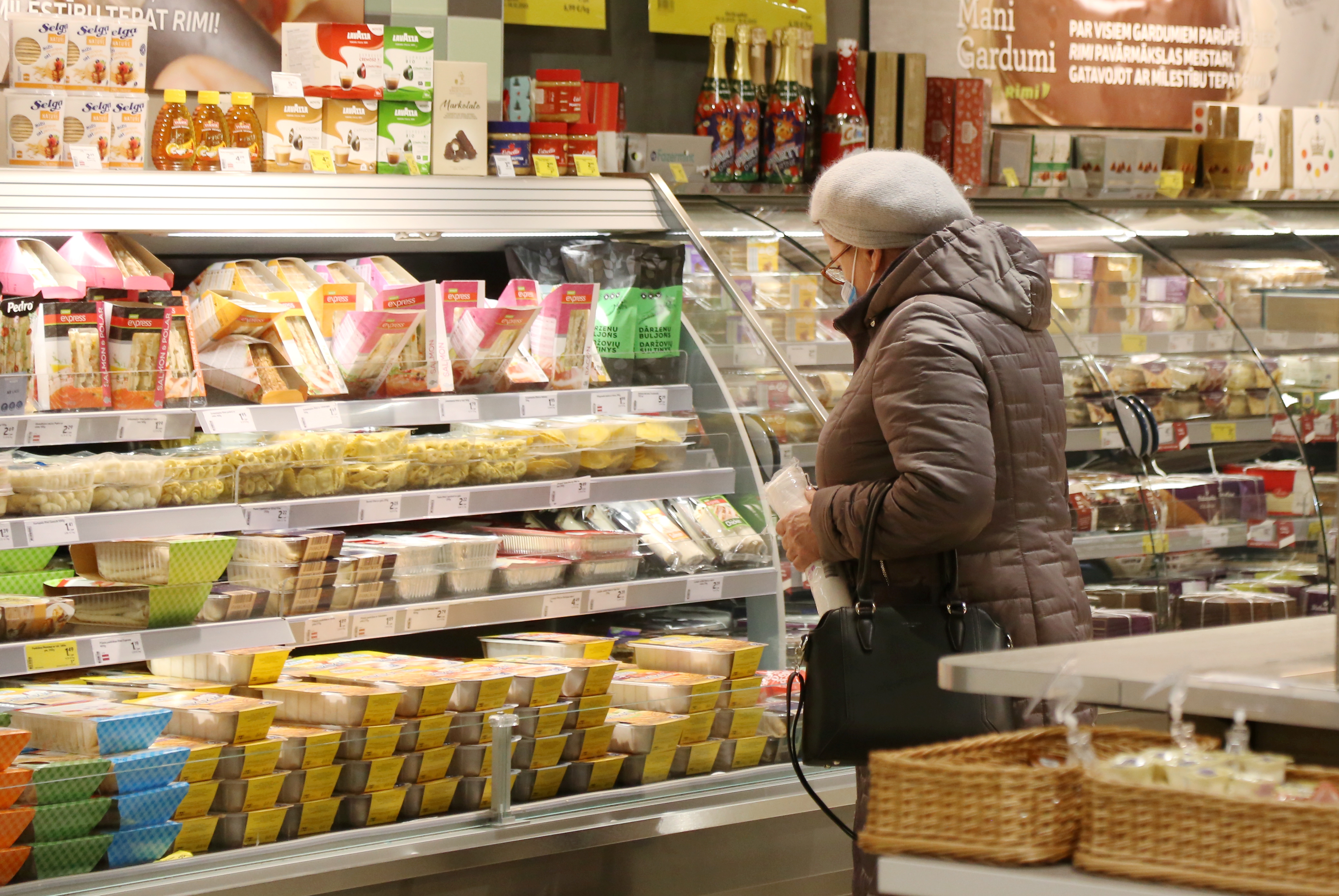
Of course, this refers to the desperate attempts of the government to intervene in food prices, which continued to break records in Latvia in 2025. Let us remind you that the government literally forced the leaders of all major retail chains to sign a memorandum in which the retailers committed to daily allocate products with the lowest prices in each group of essential food items. An agreement was also reached to create price comparison tools, that is, special internet portals where any buyer could track prices for essential food products across all retail chains on a daily basis.
Unfortunately, retail chains still have NOT started providing online data about prices in their stores. As for the baskets of low-priced products in each segment, the proposed system had virtually no impact on price levels: this mechanism was simply unable to curb inflation.
In the outgoing year, Latvia once again entered the group of EU countries with the highest inflation rates, primarily for food products. Experts were even clearly baffled and could not find a solid explanation for food inflation. The arguments about geopolitics and rising energy prices no longer hold, as prices for gas and oil have fallen below pre-war levels of 2021. Nevertheless, food prices continue to rise, and the government's attempts to intervene in the process have effectively failed.
Political Absurdity of the Year
If there were a prize for "political impotence," it would go to those parties that managed to let slip an almost 100 percent victory! We are referring to the autumn saga with the Istanbul Convention. Since it has already become tiresome for everyone, let us just mention the main points.
LETA
Initially, the right-wing opposition initiated a bill to exit the Istanbul Convention. It seems that the opposition had already reached an agreement with the "Green Farmers" in the ruling coalition to support this initiative. It was clear that the supporters of exiting the convention had a more than confident majority in the Saeima!
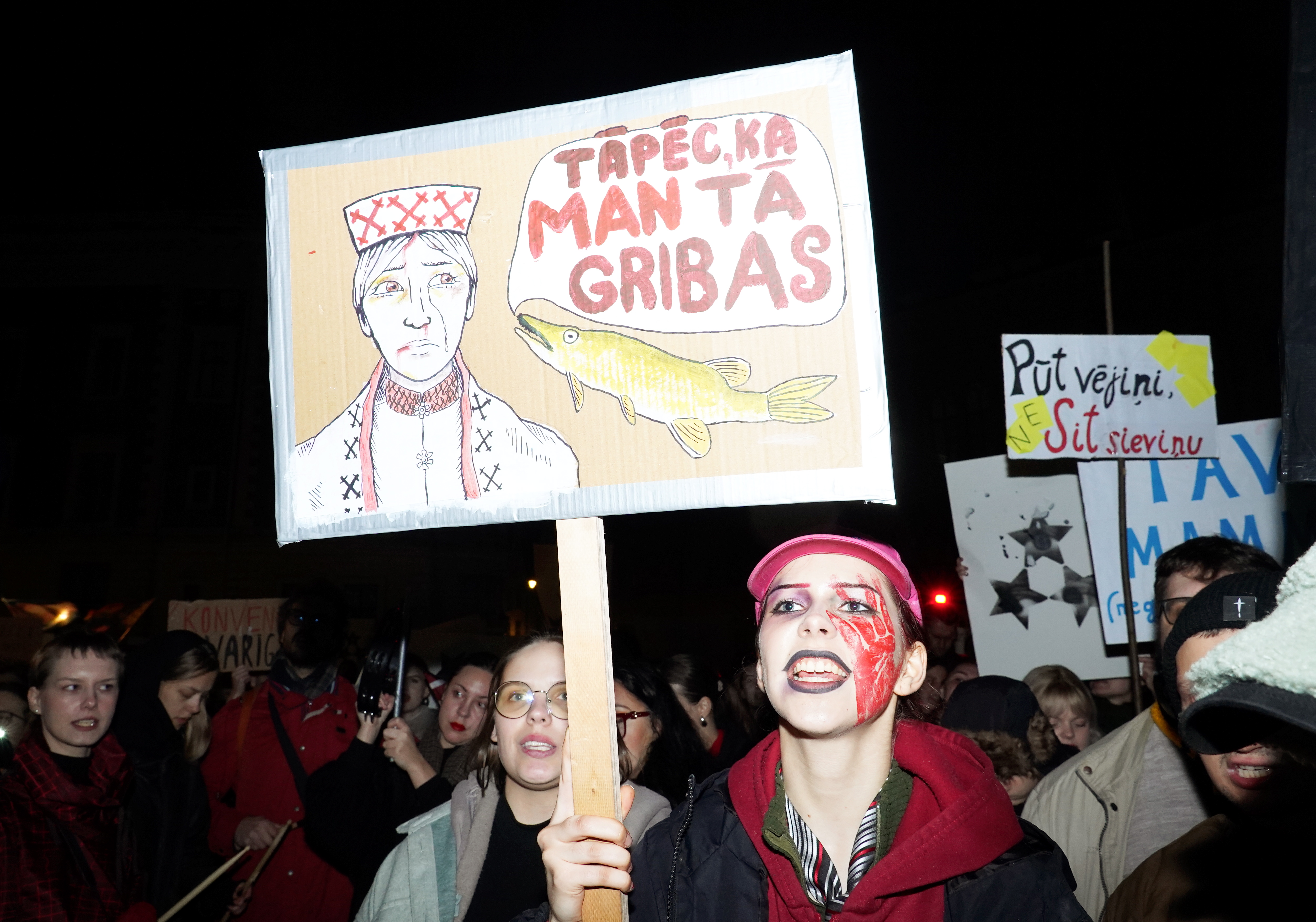
The outcome was predictable – the corresponding initiative was adopted in an expedited manner. Yes, the president, as predicted, returned the bill. This was facilitated by protest actions skillfully organized by two political forces – "New Unity" and the "Progressives". However, this did not change the political balance of power in the parliament, and it would have been logical to expect that all those deputies who voted for the bill would do so again, and the president would be forced to proclaim the law. But that was not the case – the deputies from the National Alliance and the United List, along with "New Unity" and the "Progressives," supported Rinkēvičs' proposal to postpone the consideration of the bill until the new parliament began its work! The deputies from the Union of Greens and Farmers did not vote at all.
The reaction of voters to this strange behavior is clearly visible from the latest opinion poll, where the parties that changed their position rapidly began to lose popularity.
Political Imbalance of the Year
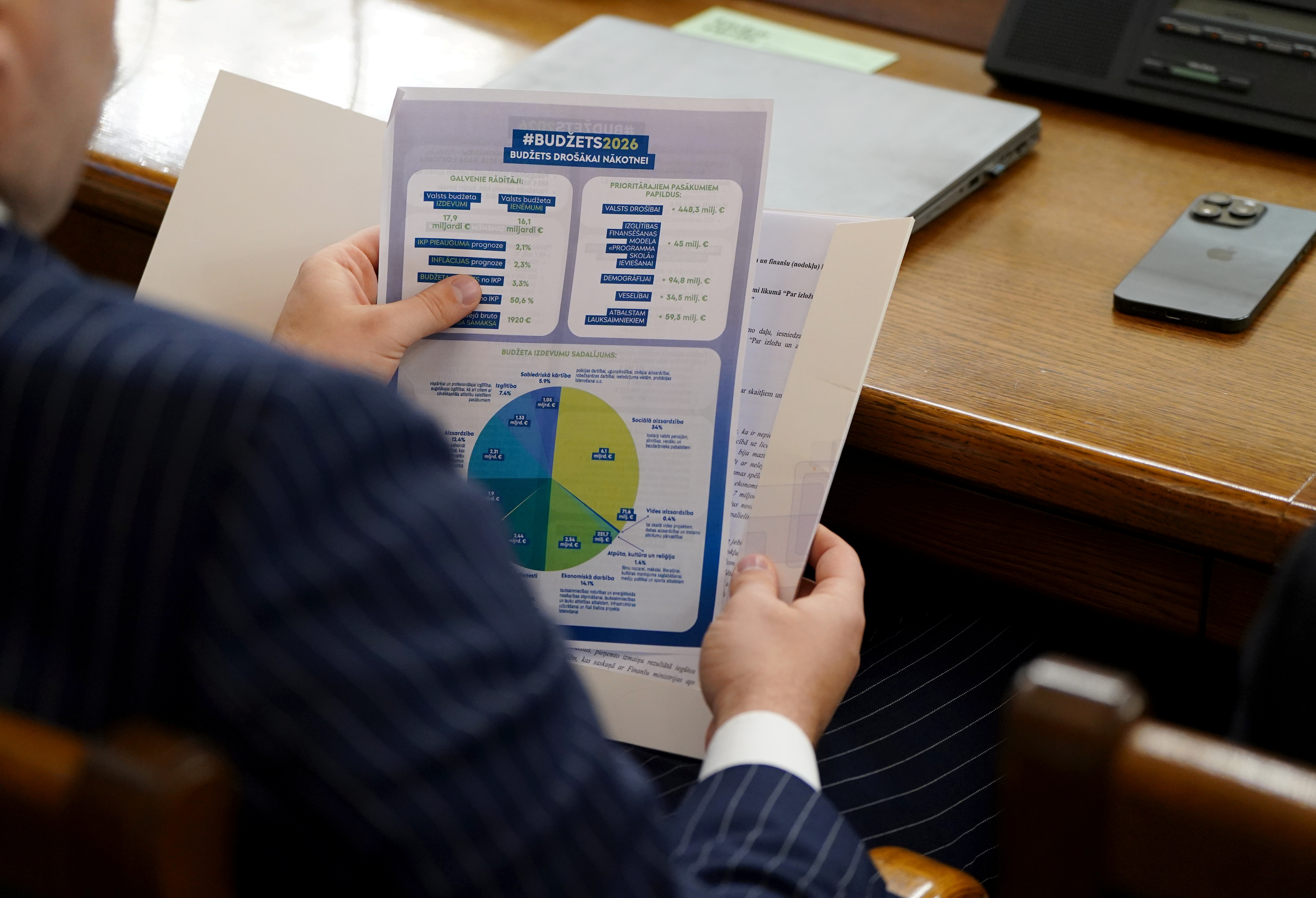
Although, of course, we are talking about a political-economic imbalance. The budget-2026 was adopted in early December of the outgoing year with a significant deficit – 3.1% of GDP, with expenses exceeding revenues by almost 2 billion euros.
LETA
Even for the main priority of this government – security – additional funds were scraped together only through external borrowing! As a result, in the next year, taxpayers will spend about 700 million euros just on debt servicing, and by 2029, debt servicing will exceed 1 billion euros!
Many experts, including representatives of the business community, have accused the government – and quite justifiably! – of unwillingness to genuinely reduce administrative expenses. Living on borrowed money, living beyond means will continue!
Political Ideafix of the Year
Towards the end of 2025, an initiative group led by theater director Alvis Hermanis made a serious bid for political upheaval. Let us remind you: a political movement called "Without Parties" was created. The sensation lies precisely in the name: the founders of the political movement are essentially proposing... a revolution in Latvia's electoral system!
Specifically: parties essentially cease to exist, and the Saeima is elected on a majoritarian basis, that is, through single-member districts! How all this will happen and how it will work afterward, the authors of the ideafix themselves do not fully envision yet. The idea for Latvia can be called strange, as the refusal of parties will lead to the fact that single-member candidates will hardly be able to create a stable coalition majority in the Saeima, and there is a great risk that chaos will simply reign in the parliament. It will certainly be extremely difficult for "ownerless" parliamentarians to even approve a government.
But one thing is clear: newcomers to the political game have clearly shaken the political swamp, and the elections of the next year promise to be very interesting!
Political Farce of the Year
No, the very idea of curbing bureaucracy was good. However, its execution – alas! Let us remind you that, in the end, the fight against bureaucracy was entrusted to... the bureaucrats themselves, albeit "diluted" with representatives from the non-governmental sector in the corresponding working group.
But credit must be given to the leaders of the confederation of employers and the chamber of commerce – they were very tough, and as a result, officials did not even attempt, as is the long-standing tradition, to delay the work of the group and drown it in endless approvals. However, the representatives of the business community, being realists, set themselves achievable goals in the current situation. Namely: to propose a minimal package of measures to combat bureaucracy – that is, those ideas that can be implemented quite quickly.
As a result, let us remind you, the working group prepared and sent 21 priority proposals to the government for reducing bureaucracy. This is, of course, a drop in the ocean, and it is still very early to talk about "de-bureaucratizing" the economy!
Political Hope of the Year
This event is not directly related to Latvia, but, of course, it affects it, as it concerns the attempts to end the terrible war in Europe! We are talking about the desperate attempts of U.S. President Trump to achieve peace or at least a ceasefire in Ukraine. In the last months of the outgoing year, the head of the White House finally abandoned the "minimum task" – to achieve a ceasefire and focused on achieving long-term peace, which is much more reasonable. At the time of preparing this material, the U.S., Ukraine, and EU countries agreed on a revised peace plan consisting of 20 points, which will soon be sent to Moscow, after which the next round of negotiations for peace will begin.

Yes, in the outgoing year, these attempts to end the bloody carnage have not yet yielded positive results, but a certain ray of hope has appeared on the horizon. With this hope, we enter 2026! May it be peaceful and happy!






Leave a comment