
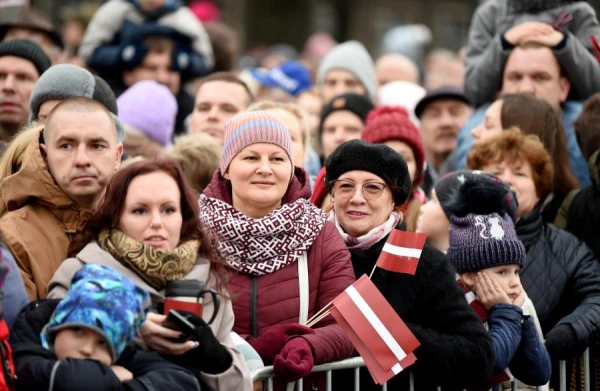
The LaSER analytical center suggests reconsidering the holiday system in Latvia by abandoning the transfer of working days and double pay on holidays, pointing to their weak impact on the well-being of workers and increased costs for businesses.
The holiday system in Latvia should be reconsidered by abandoning the transfer of working days and evaluating the cancellation of double pay for work on holidays, "as additional days off do not structurally impact the well-being of workers in the long term," said Annemariia Apine, a representative of the LaSER analytical center, in her report on the holiday system in Latvia.
Apine believes that the transfer of weekends is an ineffective practice that should be replaced with a voluntary choice, namely: those employees who would like longer continuous weekends could use vacation days. This way, businesses would find it easier to adapt to the international market and the public sector's work schedule, and there would be no decrease in productivity on the Saturday when the transferred working day is made up.
The report also suggests considering the abandonment of an additional day off in cases where November 18 and May 4 fall on weekends.
Apine also proposes considering the cancellation of double pay for work on holidays, pointing out that a significant portion of workers "are not even aware that days such as Mother's Day or Pentecost are official holidays." The representative of the analytical center emphasizes that double pay is a significant financial burden for employers.
The report notes that providing additional days off is more ideological than pragmatic — to give residents the opportunity to celebrate certain holidays and form national identity. At the same time, it is a political decision that can serve to gain voter support.
Although for employees, weekends may be seen as an additional benefit in the compensation package and improve morale in the short term, in the long term, they do not structurally improve the well-being of workers. Meanwhile, entrepreneurs are negatively affected by transferred working days and other features of the holiday system in Latvia, argues the representative of the analytical center.
The report states that, according to representatives of business interests, the number of holidays is too high and increases business costs, negatively impacting the economy as a whole. At the same time, transferred working days create an additional burden for companies operating internationally, as they need to adapt to the work schedule of foreign partners while also complying with Latvian law by paying double pay for work on weekends. The report notes that additional days off can also be used as a relatively inexpensive tool for attracting workers.
After comparing with other European Union (EU) countries, the report concludes that Latvia does not have significantly more holidays. The number of holidays in Latvia and Lithuania is comparable — 32 days a year, including minimum annual leave days and holidays. This is three days more than in Germany and the Netherlands, where the number of holidays is the lowest, while Estonia has the most holidays at 41 days, followed by France with 42 days.
Apine notes that Latvia is currently among the EU countries with low labor productivity.
In a representative survey of the population of Latvia conducted for the LaSER analytical center, 61% of respondents indicated that they are satisfied with the existing number of holidays, while opinions were divided among the rest. The survey data indicate that during the week around the so-called long weekends — the period when holidays precede or follow weekends — 58% of respondents would work as much as usual. At the same time, 26% admitted that they work more during this time to complete postponed work from the weekend, while 14% noted a decrease in their productivity.











Leave a comment