
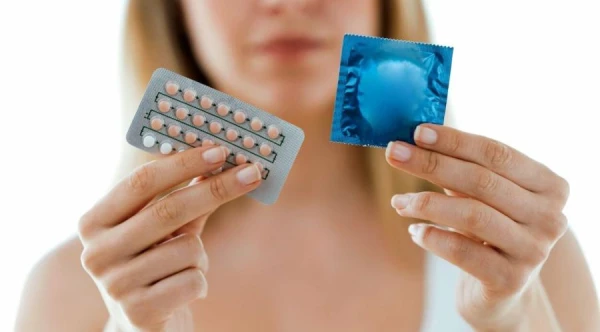
In Latvia, access to free contraception should be purposefully expanded to ensure it is available to those girls who are starting their sexual lives, said Iveta Kelle, chairwoman of the "Papardes zieds" society, to the LETA agency.
There will be no "helicopter" condoms
Kelle emphasized that support should be targeted, rather than automatically extended to everyone of a certain age. Ideally, before starting sexual activity, a girl could consult a specialist who would prescribe contraception covered by the state.
Since this is about targeted support, rather than a measure for everyone without exception, the costs would be relatively low considering the size of the target group, noted the organization’s representative. According to her observations, on average, young people in Latvia begin sexual activity around the age of 17, although for some young women this issue becomes relevant even after the age of 20. Therefore, establishing a clear age threshold for providing free contraception is mechanically impossible — the decision should be made based on needs.
The head of the organization also emphasized that access to contraception should be linked to education. It is important to talk to young people about consent in relationships, positive interactions, and responsibility.
Kelle acknowledged that pilot projects are currently being implemented in schools to provide free hygiene products; however, for example, distributing condoms in schools may provoke public resistance.
"In the absence of comprehensive health education and considering parents' attitudes, schools may not be ready for such a step yet," she noted.
Free for the disadvantaged
Currently, state-funded contraception is available to women who are in a social risk group and meet at least one established category. These include girls under 19 who have had a pregnancy (including childbirth or abortion), women with alcohol or drug dependencies, prisoners and those released from incarceration, as well as women with developmental disorders or schizophrenia.
Additionally, free contraception can be provided to girls under 18 who are under foster care, have established disabilities, or come from low-income or needy families.
These target groups are provided with hormonal and non-hormonal intrauterine systems (IUDs), a contraceptive implant in the arm, and in some cases, surgical sterilization.
The choice of an appropriate method is made by a gynecologist, taking into account the patient’s health condition, age, and lifestyle.












Leave a comment