
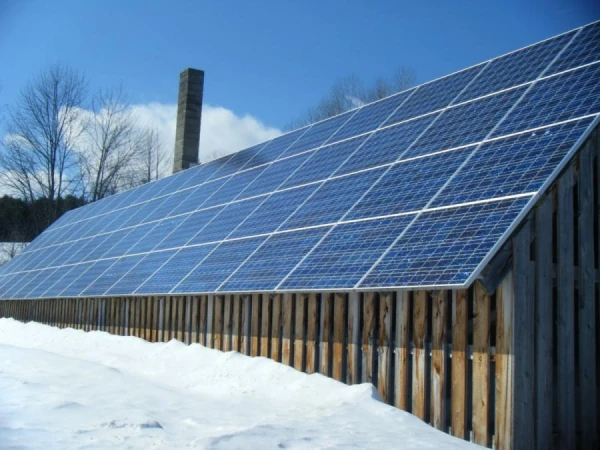
Despite having installed solar panels, some households this winter do not see the expected savings — electricity bills remain high. What is the reason?
Maris Dembovskis installed solar panels without a battery system for about 11,000 euros less than a year ago; part of the costs were covered by state support. Electricity in the household is needed for ordinary domestic needs, with no "special luxuries" in the house. Before the installation of the panels, the bill averaged 70 euros per month throughout the year, reports LSM.lv.
"In the summer, my bill is zero — sometimes even negative, because I use a net metering system. This means: if I consume electricity worth 40 euros from the grid and give back 60 euros to the grid, then the excess of 20 euros is carried over to the next month. Usually, by March or April, the balance goes to zero," Dembovskis said.
To accurately track expenses and production, the owner keeps a detailed accounting table. But in the cold months, the picture is not so optimistic.
"In the tenth month — that is, in October — it was 40 euros, in November — 85 euros. And in December 2025, I paid 105 euros for electricity, and in January 2026 — 117 euros," admitted the solar panel owner.
Although in months with little sun the bills are higher, Dembovskis believes that the installation of the panels pays off for him. Meanwhile, installers note that interest in the market has slightly declined, influenced in part by a reduction in government support. "At the peak moments, when interest in solar panels was at its highest, there were about 1,000 applications for support for these small projects, but now there are about 100 per month. They are supported, approved, and funds are paid to households," explained the project manager of Solarshop, Eduards Ciritis.
Sadales tīkls added that last year about 2,000 clients installed solar panels, with most additionally installing storage batteries (accumulators), which are more expensive. "A battery is generally not a solution for long-term storage, where the generated electricity can be 'stored' for two months and then taken back. Rather, it is an opportunity to balance consumption over a shorter period — for example, on a sunny day, to accumulate generated electricity and spend it in the evening or over a slightly longer period," explained Sadales tīkls representative Gunta Line.














Leave a comment