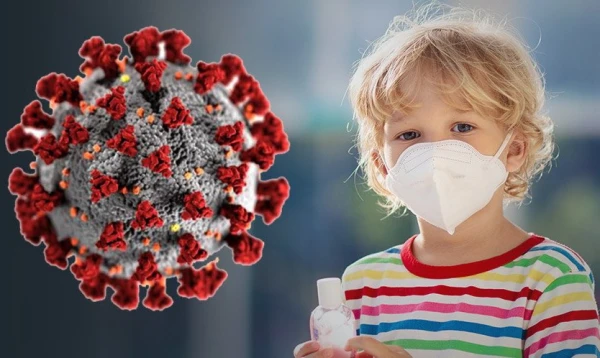
The world is facing a new 'version' of the coronavirus BA.3.2, known as 'Cicada'. It has already been detected in dozens of countries, but despite its rapid spread, experts do not yet consider it more dangerous for the majority of the population. However, there are nuances concerning children.
The new variant of the coronavirus BA.3.2, intriguingly named 'Cicada', is rapidly spreading across the globe, already confirmed in dozens of countries. Initial observations indicate a possible increased vulnerability of children, but this data still requires thorough verification. Nevertheless, the World Health Organization assesses the overall risk as low, with no cases of severe disease reported.
'Cicada' Takes Over the Planet
According to global agencies, 'Cicada' has been detected in at least 23 countries, including the USA, UK, Hong Kong, and Mozambique. In the United States alone, according to the Centers for Disease Control and Prevention, this variant has already been identified in 25 states.
What Do Medical Professionals Say About the New Version of COVID-19?
Medical specialists are actively monitoring the spread of the new strain, identifying it in both clinical samples and through wastewater analysis – one of the key methods for monitoring the virus. The World Health Organization has already classified 'Cicada' as a variant 'under monitoring'.
What Makes 'Cicada' Unique?
Experts characterize this strain as 'highly divergent', meaning it significantly differs from previous variants due to a large number of mutations. The name 'Cicada' was not chosen randomly: in some regions, the virus remained virtually unnoticed for a long time and then suddenly and rapidly spread, similar to the awakening of these insects.
Are Children Really at Risk?
Preliminary observations suggest that children may be infected with this variant of the virus more frequently than adults. However, scientists strongly urge against making hasty conclusions, as this data has not yet been confirmed by comprehensive and large-scale studies. Among the possible reasons for increased vulnerability are the less developed immune systems in children, as well as mutations that allow the virus to bypass the body's defense mechanisms.
Symptoms of the New Strain
Currently, 'Cicada' does not exhibit any specific or more severe symptoms. The disease presents with typical signs of COVID-19: fever, cough, sore throat, fatigue, headache, and shortness of breath. Although mutations may slightly reduce vaccine effectiveness, they still provide basic protection and significantly help avoid severe disease progression.
Should We Be Worried?
The World Health Organization notes that the current risk to the population remains low. The emergence of new variants of the virus is a natural process of its evolution. At the same time, doctors strongly advise paying close attention to symptoms, especially for individuals in at-risk groups – the elderly, patients with chronic diseases, and those with weakened immune systems.