
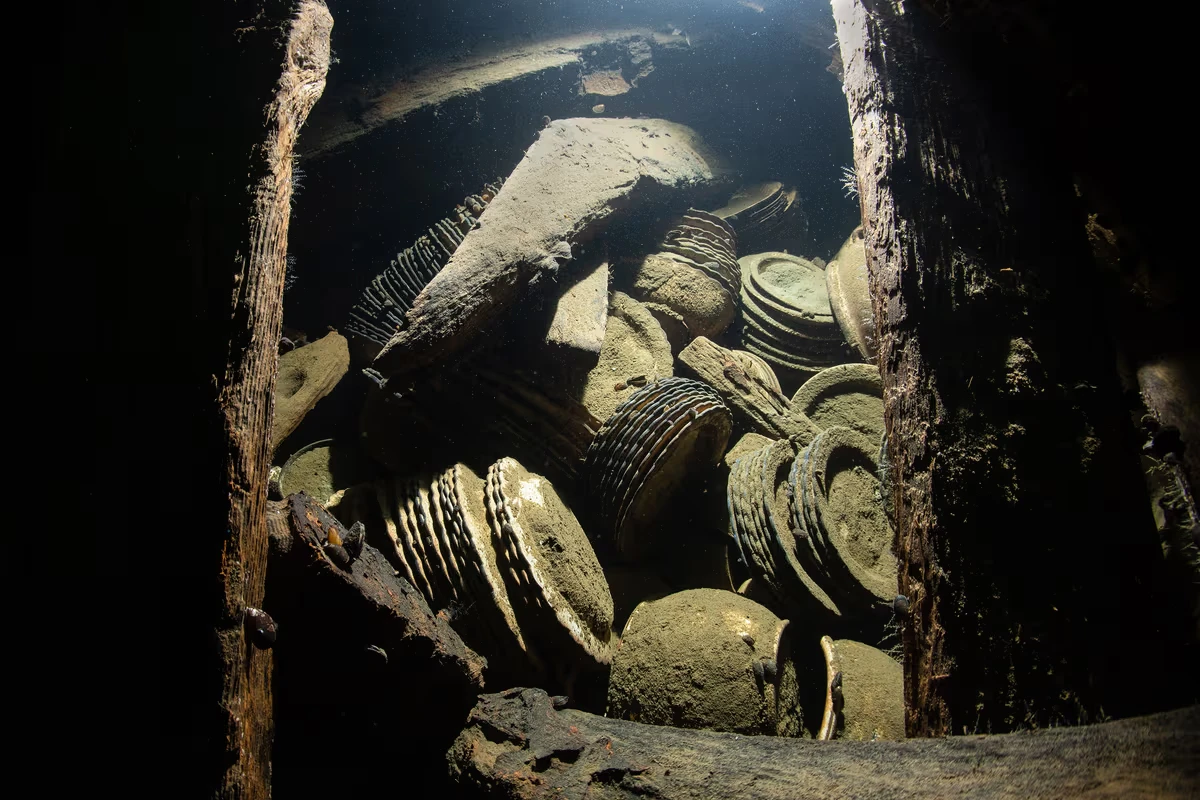
In the Middle Ages, even kings did not shy away from maritime crime.
Summer is the time for vacations and sunny cruises in the Baltic. However, few know that in the Middle Ages, the Baltic Sea was one of the most dangerous in the world.
The Middle Ages in the Baltic were a turbulent time: ruthless pirates roamed the sea, raiding even the shores of Finland. There was no talk of a world order based on rules.
Regional powers – Denmark, Sweden, Novgorod, the Hanseatic League, and the Teutonic Order – could not maintain order due to internal conflicts and disputes among themselves. The law of the strong prevailed.
At the same time, trade was growing and bringing prosperity to the countries. Ships carried salt, household goods, fabrics, and an increasing number of luxury items to the Baltic countries.
Herring, furs, and timber were primarily exported. On the tables of Catholic Central Europe, Finnish herring was a coveted guest during Lent.
In the High Middle Ages, the Hanseatic League dominated trade in the Baltic. At its peak, the alliance encompassed 80 cities – from Flanders to Novgorod. During these years, piracy in the Baltic Sea reached its maximum scale.
The Hanseatic League developed ways to combat pirates: guards were placed on trading ships, and special "peace ships" were created for escorting. The League played a key role in suppressing piracy. People became pirates out of necessity and greed. In the Middle Ages, poverty was the main cause of piracy.
Pirates came from different social strata: among them were the destitute, poor younger sons of nobles, and merchants. Sometimes circumstances turned a person into a thief. The cargo could prove too tempting for the crew if there was insufficient protection.
A pirate ship had to be light and fast to allow for a quick escape. However, most often, ships were robbed while they were anchored.
Robbery under the protection of a ruler
So-called privateers received a letter of marque from a ruler who protected them and took a share of the loot. The condition was set: do not touch the ships of the patron, but raid the vessels of his enemies. The enemy, of course, considered such a letter illegal.
In troubled times, even members of the royal blood became privateers. Eric of Pomerania (1389–1442) became king of all the Northern countries thanks to Danish Queen Margaret I (1353–1412), the founder of the Kalmar Union. But he angered his subjects and the Hanseatic League so much that he lost his crown.
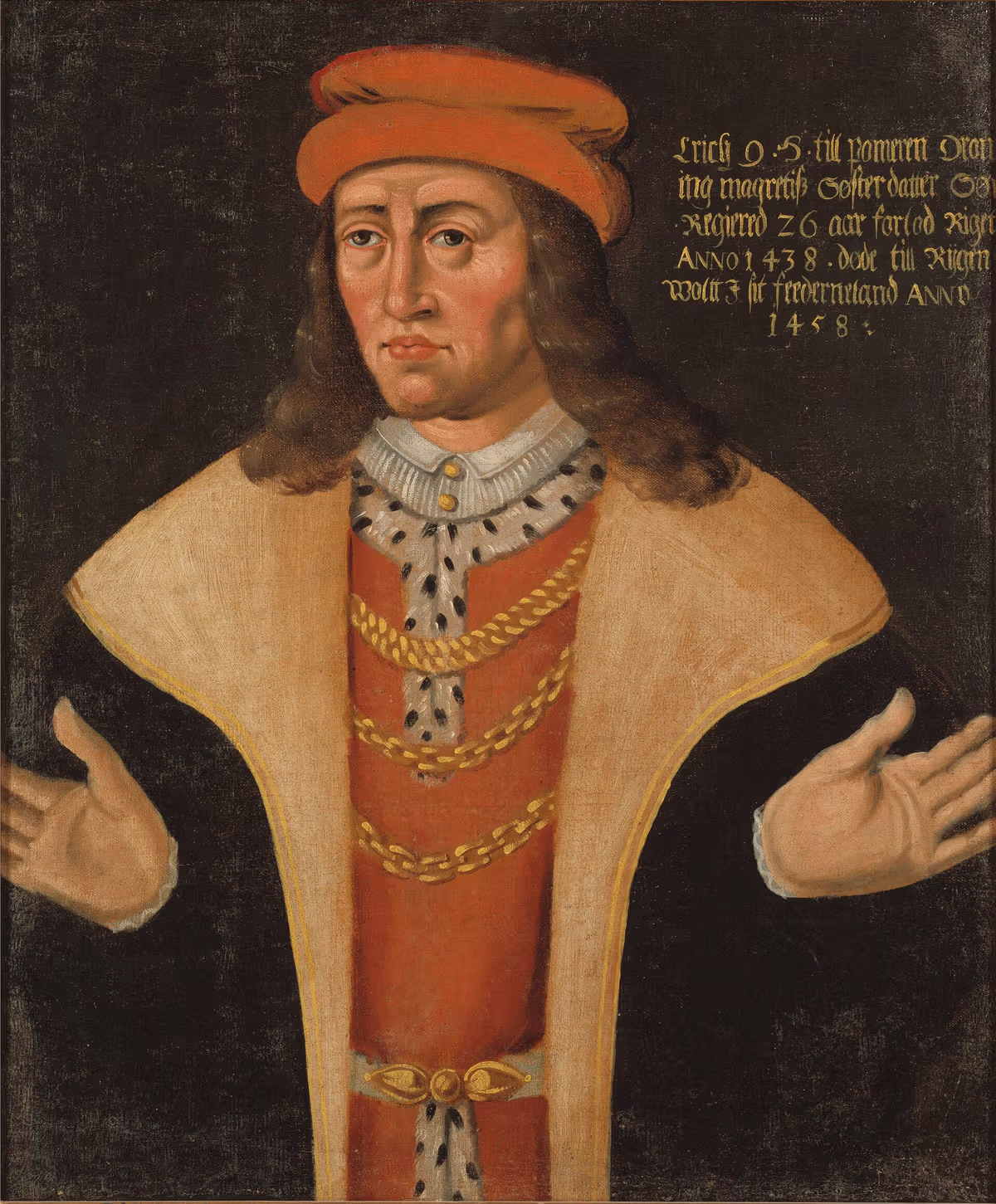
In the 1430s, he found himself on Gotland as a pirate leader and engaged in raiding ships.
A century later, a similar career was made by the daughter of Swedish King Gustav Vasa – the scandalous Princess Cecilia (1540–1627). A lover of luxury and entertainment, Cecilia lived with her German husband at the court of English Queen Elizabeth (1533–1603), formally promoting her brother's marriage plans. Tired of constant requests for money, Elizabeth sent the princess back to Sweden.
Her brother, King Eric XIV (1533–1577), also did not wish to finance his sister's lavish lifestyle. Cecilia moved to Gotland and in the 1570s received a letter of marque to capture ships heading to Narva.
The permission was easily granted since Sweden was at war with Moscow.
The Vitalian Brothers
The most legendary pirate gang was the so-called Vitalian Brothers. At the turn of the 14th–15th centuries, they instilled fear throughout the Baltic and even the North Sea.
The Vitalian Brothers started as privateers – legal pirates. Their letter of marque was issued by Swedish King Albert of Mecklenburg (1340–1412), who was fighting for the Scandinavian crowns against Danish ruler Margaret I.
Albert lost, and his letters lost their validity.
Most of the Vitalians became ordinary pirates and plundered indiscriminately. Their motto became: "Against all and with God."
The exact number of Vitalian Brothers is unknown. It is estimated that there were about two thousand. They never acted all together but united in large flotillas – of up to several hundred ships. Most were Germans, including nobles and merchants.
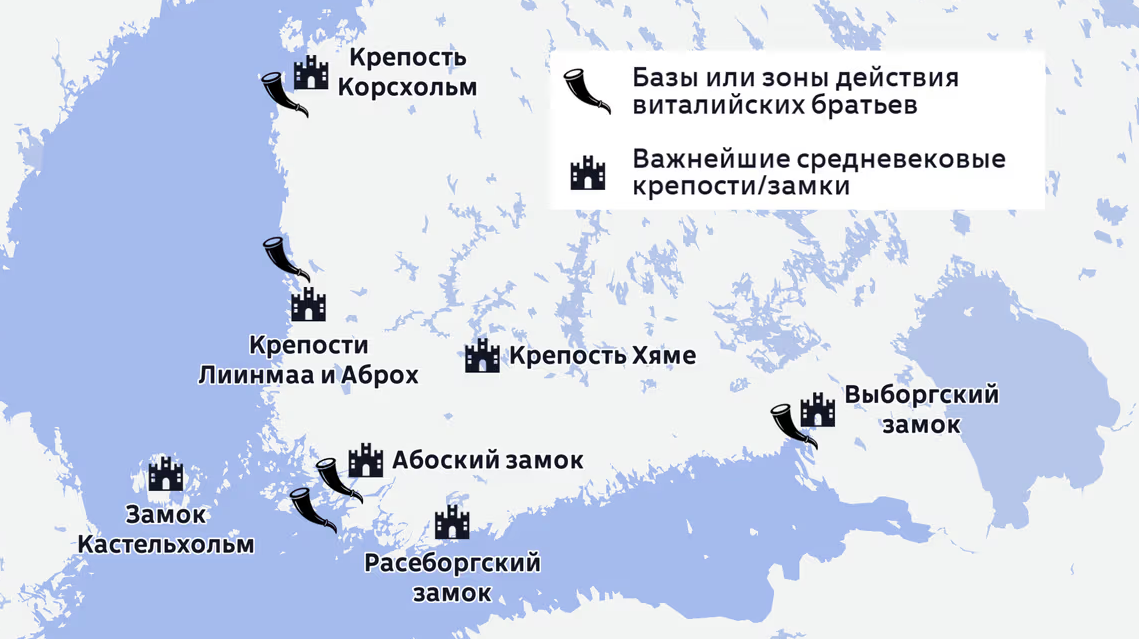
Their base from 1394 to 1398 was Gotland. After the Teutonic Order expelled them from there, their activities concentrated in the Turku archipelago, where there were good hideouts, as well as in the Gulf of Bothnia.
In Finland, the Vitalians had bases: for example, the fortress of Korsholm near the modern city of Vaasa. They conducted raids as far as Vyborg and the mouth of the Neva.
Crew and passengers were thrown overboard
The Vitalian Brothers were notorious for their brutality. They took the loot, captured the crew. Crew members and passengers were thrown into the sea.
Those for whom a ransom could be obtained or who could be recruited were locked in herring barrels for the duration of the journey.
The lack of support and the strengthening of opponents eventually cornered the Vitalians. Even pirates needed friendly ports, and they had fewer and fewer left.
About 1500 pirates tried to continue their trade in the North Sea – on the Frisian Islands off the coasts of Holland and Denmark. They were defeated, and as a lesson, hundreds were executed. The heads of the executed were displayed on the fortress wall for intimidation.
The leader could end up on the scaffold or become a castle owner
Klaus Störtebeker (1360–1401) led the Vitalian Brothers for only ten years, but he is still remembered in Northern Germany.
Over the centuries, several monuments have been erected to him, legends are told about him, books are written, and films are made. For some, he is the Robin Hood of Northern Germany, robbing the rich for the poor. The Nazis exalted him as the ideal Aryan.
Störtebeker and his crew were captured by the Hanseatic fleet. Six months later, on October 20, 1401, all the detainees were executed.
On the German island of Rügen, once favored by pirates, an annual Störtebeker theater festival takes place.
Another leader of the Vitalians, Otto von Peccatel (1370–1418), had a more fortunate fate. He timely switched sides to Queen Margaret. As a reward, she appointed him commander of the fortress of Korsholm. The former pirate found a wife from the noble Swedish family Natt-och-Dag.
Sweden and Russia fought against pirates when they were not engaged in robbery themselves
The defeat of the Vitalians did not put an end to piracy in the Baltic. While wars and struggles for power continued, robbery thrived.
In addition to Korsholm, in the 1440s, the Rasborg Castle on the southern coast of Finland became a pirate base.
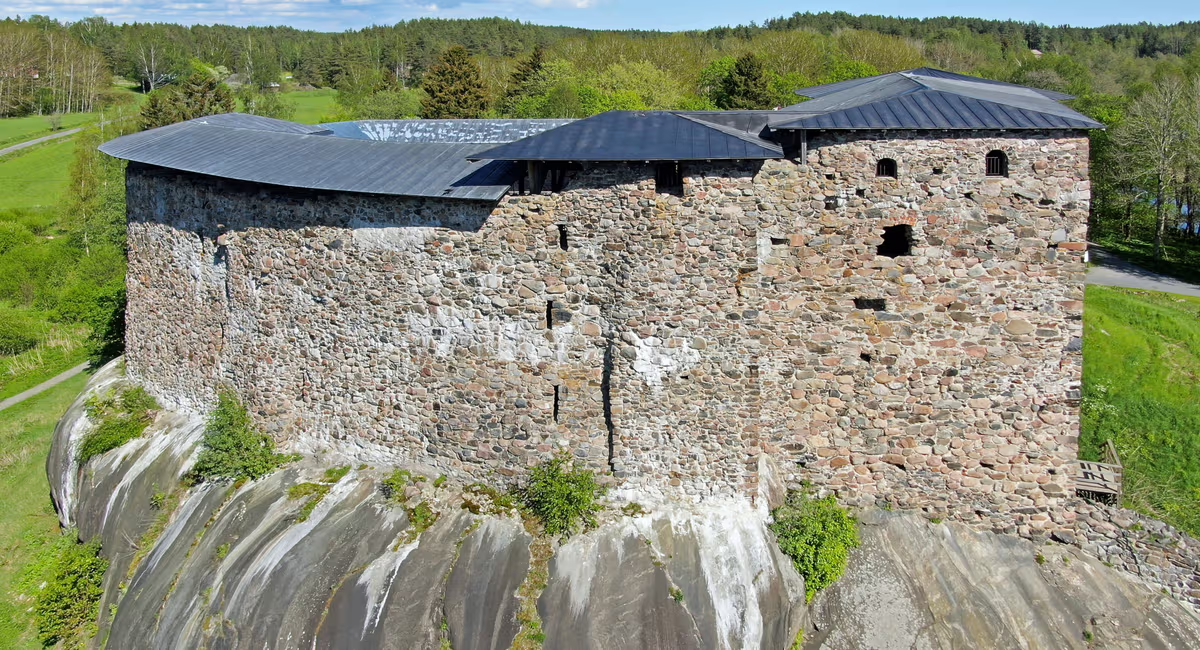
The Danish brothers Fleming and their gang of 60 robbed the Estonian coast from there.
Finland also periodically fell victim to pirates. The most famous case was the Danish raid in 1508 when they burned the estate of Haikko.
Gradually, powers capable of curbing piracy formed around the Baltic. In the 17th century, it was Sweden; in the 18th, it was Russia. At that time, ships were already armed significantly better than in the Middle Ages.
Robberies increased during troubled times: warring parties seized enemy ships. The last privateers in the Baltic were French and British ships that plundered Finnish and Russian vessels during the Crimean War (1853–1856).
Robbery on the coast continued until the 19th century
Swede Petter Gottberg was a coastal robber. He often rode along the wide sandy beach of Gotland Sandön with a lantern and a light device, luring ships onto the rocks. The villain was lucky to operate in the 19th century – he was sentenced only to the stocks, not to death.
Throughout the Baltic, stories have survived about coastal residents who lured ships onto the rocks with false lights and robbed them.
There is no convincing evidence of this. However, it is well known that coastal residents plundered ships that ran aground. In the Middle Ages, this was considered customary in many places. The principle of "finders keepers" applied. Today, finds cannot be appropriated. According to the antiquities law, the remains of a ship older than a hundred years are an archaeological monument. They must be reported to the Museum Authority.
Real pirates, capturing ships, have not been seen in the Baltic for two centuries. However, the fight against looters of sunken ships continues to this day.
A documentary film by Yle in 2014 titled "Kuka ryösti hylyn" ("Who Looted the Sunken Ship") was made about this struggle.













Leave a comment