
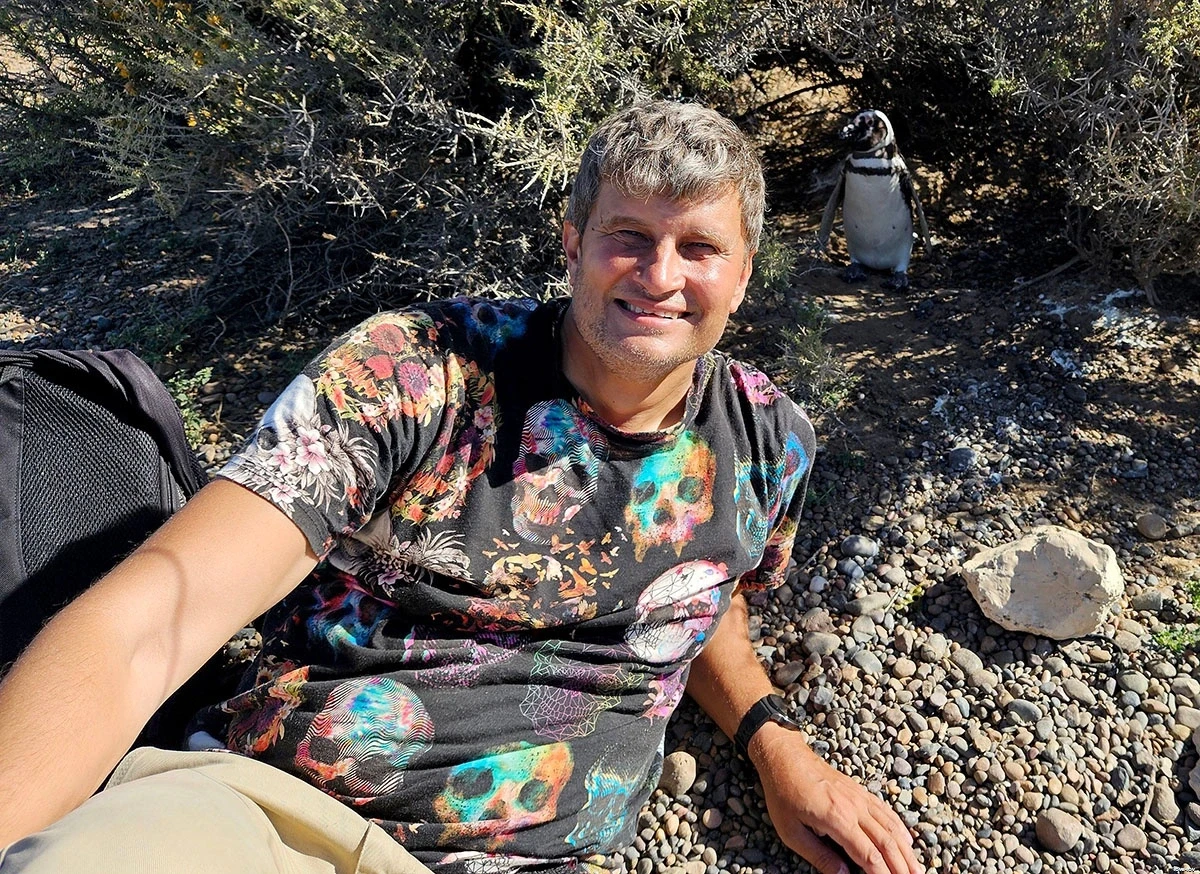
The most important thing is that his family understands him.
Once, Evgeny Lavrov from Barnaul set himself an ambitious goal: to visit all the countries on the UN list. This includes more than 190 states, some of which are quite difficult to reach. But the traveler decided that there are no difficulties that cannot be overcome, and after 30 years, he fulfilled his dream. He is now 50 years old, and his travel collection includes almost 200 countries.
In a conversation with NGS22.RU, Evgeny spoke about the places he has visited, where visitors are welcomed with open arms, and where a "window of opportunity" opens suddenly due to war or a change of power.
Final Destination
Evgeny completed his three-decade journey this spring — he crossed all of Africa from south to north. It all started back in the 2000s — that’s when the Siberian began to travel, and he became so captivated by the process that he simply couldn’t stop.
— I dreamed of visiting Yugoslavia, which no longer exists. I couldn’t visit a country by that name, but I did visit its parts — namely Bosnia, Macedonia, Serbia, and Croatia, — the traveler lists.
Then came the typical tourist destinations: Europe, Turkey, and Egypt. However, over time, his dreams and plans became bolder. Soon Evgeny made it to Iceland, New Zealand, and Australia. Then he was drawn to exotic places: Africa and Oceania, Latin America, and Antarctica.
Regularly — several times a year — traveling, according to Evgeny, is made possible by his job. For many years he has been running a consulting company. He spends six to seven months in Barnaul to resolve work and family matters.
— I simply explain to my loved ones that traveling is a very important part of my life, as when you arrive in another country, you feel different. It’s a certain mania. And we manage to spend time together with family, — he says.
Angola: A Place Where All Wild Animals Were Eaten
In 2026, Evgeny added several more countries to his already impressive list of places he has visited: he traveled to Angola, São Tomé and Príncipe, Gabon, the Republic of the Congo, and Equatorial Guinea. Each has its own unique features.
Angola is a large country in southern Africa. For many years, there was a civil war there, so almost the entire territory of the country resembled a minefield.
— Now the mines have been mostly cleared, and the country is slowly opening up to tourism, — Evgeny says.
According to him, there is indeed much to see in this country. On the southern coast, one can admire the bizarre rock formations with arches and towers, and in the Malanje province — the Kalandula waterfall, one of the largest and most picturesque in Africa.
However, what struck the traveler the most were the local tribes.
— Unlike many African countries, where the natives have long been "theatricalized" and dress up specifically for tourists, there it’s still all real. Women can walk topless, but with huge ear decorations made from fabric — like two large wheels. Other tribes wear a bunch of rings around their necks, paint their hair with ochre or clay, — shared the traveler.
Taking a photo with them, according to the tourist, costs about a dollar. For that money, you can snap as many pictures as you want.
— The capital, Luanda, is a city of contrasts. In the 2010s, when the country was experiencing economic growth, many modern glass and concrete buildings were constructed there. Therefore, the capital looks like a European or American city, which is unusual for Africa. However, right next to it is poverty, beggars, and devastation, — noted the businessman.
This country also has another feature: there are practically no wild animals. Over the years of war, as locals explained to Evgeny, due to hunger, all the lions, elephants, and zebras were eaten.
Two Islands on the Equator and Bureaucracy
Next on Evgeny's final route was São Tomé and Príncipe — it is located on an archipelago in the Gulf of Guinea off the coast of Africa. The state is tiny, occupying only two volcanic islands — their names became the name of the entire country.
It’s not the most popular place, but it has its own attractions: Mount Can Grande — a monolithic rock that rises upwards, and the island of Rolas, through which the equator line passes.
— You stand there by the pole, crossing from the northern hemisphere to the southern as much as you want. Those crossing the equator for the first time are supposed to swim in the sea right there, — Evgeny recounted.
The beaches on the island of Príncipe, according to our interlocutor, are very picturesque but have not yet gained wide recognition. The authorities are currently trying to build roads and improve infrastructure for tourists.
The other country, Gabon, Evgeny remembered not for its nature but for the strictness of bureaucratic procedures. According to him, even with a ready visa at the border, you may be interrogated about who is meeting you and who is responsible for you.
— The person meeting you must be present — at the airport, they must vouch for you. It can be someone from the hotel or a simple taxi driver. He must approach the staff and say: "I am responsible for this person, he will be under my control." But this is a pure formality. You can exit the airport with him and never see him again, — noted the traveler.
The first time Evgeny flew to Gabon, his passport was taken in the morning and returned only in the evening. Throughout the day, he was stopped by police multiple times — he had to show copies of the document and explain the situation.
— The country is economically decent, but there’s not much to see. There are national parks, but very few animals. Perhaps they were also eaten during the civil war, — the hero jokes.
A Date with Gorillas
It turned out to be much more interesting in the Republic of the Congo. There, the traveler was able to see gorillas — not the mountain ones weighing up to 220 kg found in Uganda and Rwanda, but the lowland ones. They are significantly smaller than their counterparts and weigh "only" up to 150 kg.
— This is not a zoo, but rather a shelter for orphans. The gorillas live in the wild but under human supervision. We were sailing on a boat down the river, and they came out of the jungle to the water — they greeted us, as they cannot swim. We fed them, — the traveler recounted.
The massive animals impressed Evgeny. Despite their size, the monkeys turned out to be completely non-aggressive.
— Gorillas are maximally peaceful animals; they are not chimpanzees that can throw stones at people. There was no fear, even though they are huge, such giants, resembling King Kong on one side, but on the other, they have something in common with humans, — the Siberian marvels.
On the water journey, Evgeny saw many other creatures: hippos, crocodiles, river snakes — literally at arm's length.
However, in the city on the ocean coast, the tourist found himself in an unexpected situation.
— The views there were quite good. There are canyons on the coast that resemble a mix of Barnaul's Colorado and Altai's Mars. However, the locals set an ambush: I had to pay money just to look at these beauties. But such things happen in Africa, — he says.
Equatorial Guinea, Building a New Capital
The final point of Evgeny's journey was Equatorial Guinea, which, despite its name, is located significantly north of the equator itself.
— There are actually many Guineas: there is Guinea-Bissau, simply Guinea, Papua New Guinea, and finally Equatorial Guinea. These are all different countries that are quite scattered around the world. I have been to all of them, — he explained.
Equatorial Guinea consists of two parts: the island part, where the old capital Malabo is located, and the continental part, where a new capital — Ciudad de la Paz — is currently being built.
According to him, in the continental part, right next to the wild jungles, highways are appearing, skyscrapers are rising, futuristic hotels with rooms costing a thousand dollars a night, and low-rise residential quarters resembling those being built in Scandinavia.
— On one hand, it’s incredibly interesting to watch this. It’s as if you’ve been teleported to Europe. You can’t immediately understand where you are. On the other hand, there’s a feeling of a "Potemkin village," as in other recently built capitals. The houses are built, but there are no people on the streets. There’s a highway, but no one drives on it. I fear this is a decoration that will remain empty, — the Russian reflects.
— Now it is one of the richest countries in Africa with a high GDP per capita, but few people know about it. There is oil, minerals, which allows the government to extensively develop the country, — says the businessman.
However, Evgeny admits that the idea itself is ambitious and suggests that perhaps the local authorities want to replicate the success of the UAE, where Dubai was built in the middle of the desert, attracting people from all over the world.
— But it’s still unclear whether it will work out the same way in Equatorial Guinea, — he added.
"Windows of Opportunity"
Obtaining visas and entry permits to some countries is a separate adventure.
— There are states that do not expect tourists at all, such as Sudan or Syria during certain periods. You can only get there through "fixers" — people who negotiate with ministries and pay bribes, — Evgeny said.
— In the 2010s, it was practically impossible to get into Saudi Arabia. But then, apparently looking at the Emirates, the local authorities realized that tourists are good, and made visa acquisition easier, and now with a Russian passport, you can fly there even without one, — the tourist provides an example.
Another example is the Republic of the Congo: when a rebel group took over the east of the country, the border guards "relaxed." Evgeny simply showed his passport at the border — he was let through for free.
— Then they realized and started charging 100–200 dollars. A similar situation was in Syria. I went there after the change of power. They scratched their heads at the border and said: "Russia? Well, okay, go through." No visa was required either, — he recounted.
Even Turkmenistan, which had long been completely closed, is now slowly opening up.
At the same time, sometimes — unexpectedly and for unclear reasons — even very closed countries open their doors slightly. The traveler calls this "windows of opportunity."
— If before everyone was denied, now most tourists are getting visas. However, only with accompaniment. But progress is evident: just a few years ago, there were only eight travel agencies in the country, and now there are about a thousand, — Evgeny added.
Where It’s Dangerous and Where It’s Just Scary
When asked if it’s scary to travel to countries with a fairly unstable situation, Evgeny answers honestly:
— Fear is present, as is the instinct for self-preservation. But you go to such countries with maximum caution, trying to be inconspicuous, avoiding the military.
Thus, in Afghanistan, the traveler arrived after the Taliban had taken power.
— In Afghanistan, I managed to travel in my own car. However, to get permission, I had to struggle a bit. I was only given it at the border, although I had received my visa back in Moscow. Armed people in civilian clothes stand along the roads; they stop cars and check documents. You just have to trust that the person with the gun who stops you won’t harm you. But the country’s leadership is also monitoring this; tourists were instructed not to be touched to avoid damaging the country’s image, — Evgeny explains.
Tourists are even provided with certain protection there, as the Taliban has many enemies who, by attacking tourists, can damage the country’s reputation.
— They are very concerned about tourists, so there were even some comical situations. For example, we were driving to a hotel, and they decided to escort us. We got there, but the gates were closed. The Taliban called in an armored vehicle with 15 fighters. They knocked and shouted until the bewildered administrators opened the gates. The fighters checked all the rooms, and only after that did they leave. From the outside, it was certainly frightening, — the traveler confessed.
At the same time, according to Evgeny, the attitude towards Russians in Afghanistan is ambiguous. The older generation, which fought against the Soviet Union, may darken, but for the youth, who fought against the Americans, Russians are almost allies.
"It’s Hard to Stop"
Equatorial Guinea became the last, 193rd country on Evgeny’s list, who can now boast that he has visited all the states recognized by the UN.
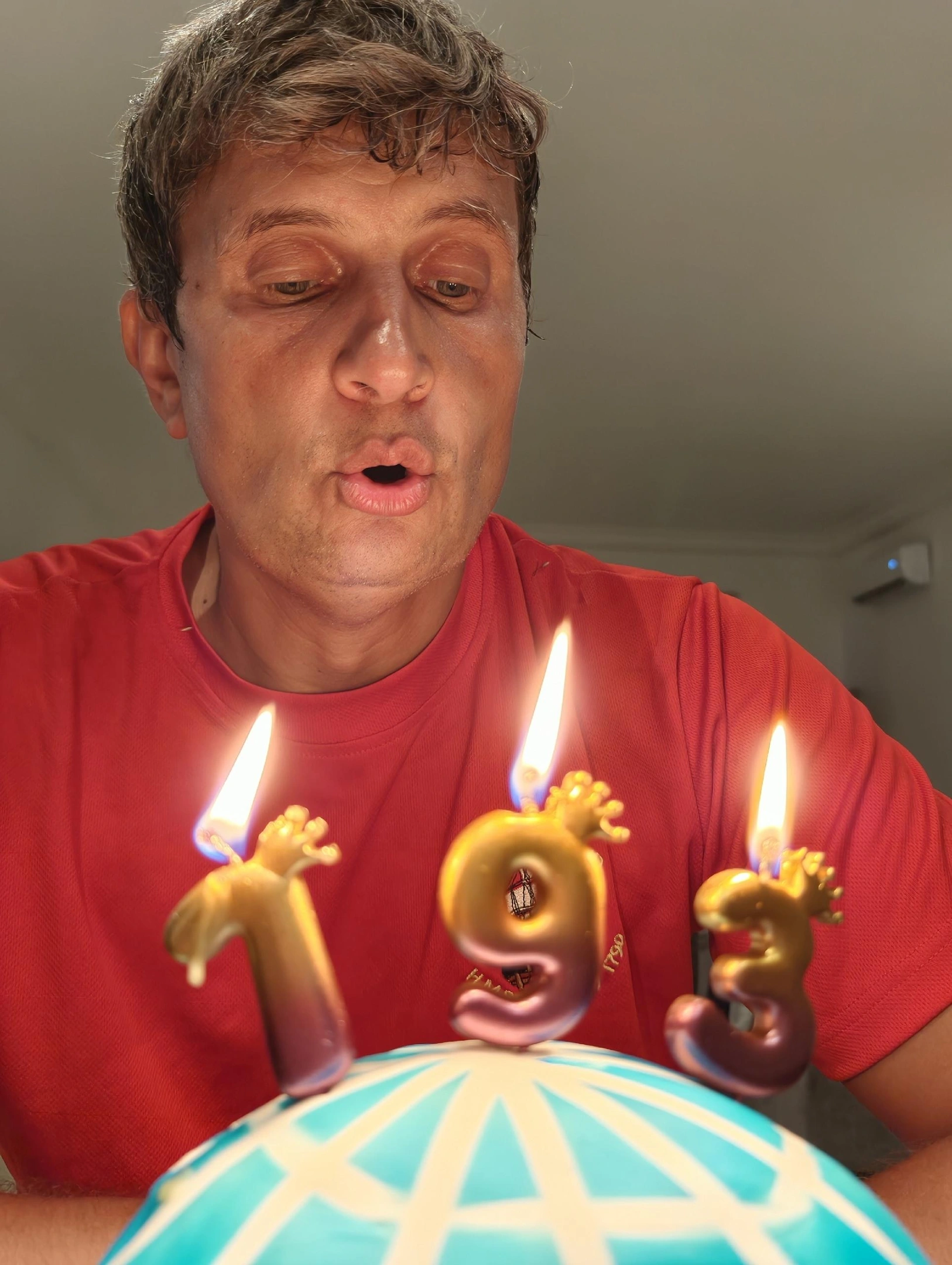
— A weight has been lifted off my shoulders because a very long journey has been completed. It was long, expensive, and very interesting. This is, in this case, the key emotion, — he smiles.
And although all the countries have been visited, Evgeny admits: stopping now is not an option.
— It’s hard to stop, like a car — it moves by inertia. Now I want to not just check off boxes but to study the countries I already liked more carefully. To spend about a month somewhere to delve into it, — he says.
The first on the list for a return visit is Indonesia, as the traveler believes it’s worth going there not just for Bali.
— It’s actually a huge and very diverse country: from the Muslim Sumatra to the Hindu Bali, from the Papuan east to the Buddhist temples. A very heterogeneous country. Both nature and culture and people — everything is different. I plan to go there, — concluded the tourist.











Leave a comment