
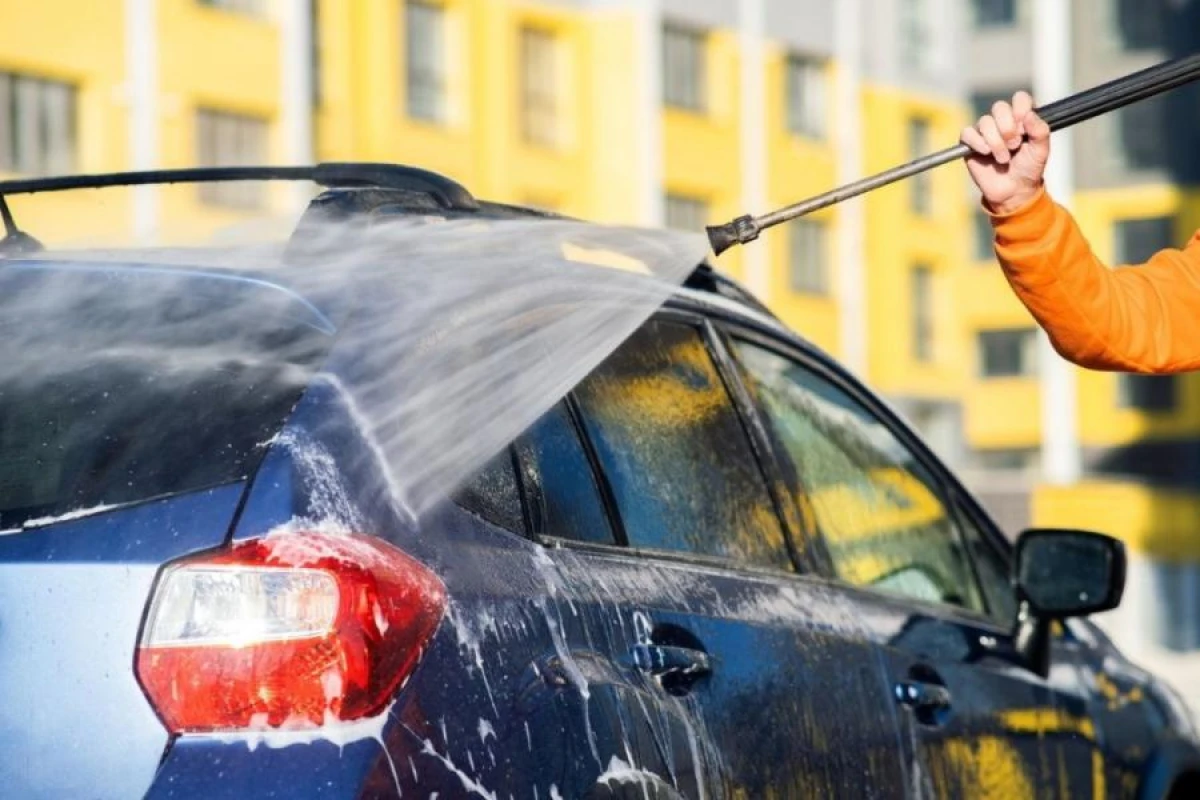
Even in dry weather, on hot days, a layer of dust forms on the car just a few days after washing. In spring, pollen adds to this. How can one avoid such a large number of particles sticking to the body?
There are several ways to reduce the amount of dust settling on the car's body. Each has its own advantages and disadvantages. The choice depends on how frequently the car is used and the volume of dust it collects.
In winter, we clear the car of snow, while in summer and spring, we remove dust and pollen. Even if you rarely use the car, it becomes dirty just a few days after washing — fine particles seem to stick to the body, and they can only be washed away with water, and not always successfully.
This sticking occurs due to static electricity. While driving, the car's body accumulates an electric charge due to friction with the air and particles moving along with the flow. The larger the vehicle, the stronger the accumulated charge. That is why you can see chains on trucks that drag along the asphalt — they help periodically discharge the accumulated charge and prevent it from building up on the body.
In passenger cars, the charge accumulates to a lesser extent, but the problems still remain: charged dust particles begin to literally attract to the body and stick firmly to it. If this is the case, are there any means that can prevent the accumulation of static charge and avoid dust buildup? Yes, such means do exist, but their effectiveness varies.
The first means is a wax coating. It makes the car's body smooth, and dust simply slides off. Treating the entire body takes about 30 minutes, but the effect can last a long time. However, after the first rain, the coating will wash away, and it will need to be reapplied. Another method is ceramic coating. It can only be applied at a specialized center, but the time spent is justified: a thin layer of lacquer forms on your car's body, which will prevent dust from settling.













Leave a comment