
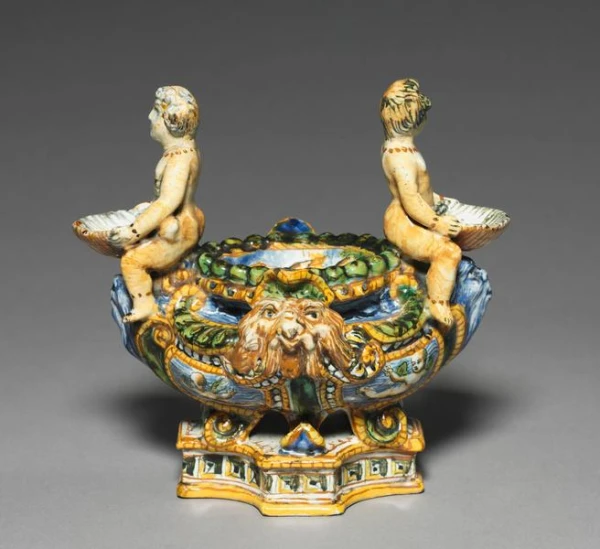
Majolica is a type of ceramics known since the Neolithic era.
The name “majolica” comes from the Spanish island of Mallorca, which played a key role in trade with Italy and the Maghreb countries. Arab merchants brought clay products covered with tin-lead glaze here.
Expertly painted plates, jugs, and vases, being quite expensive, served as decorations for grand halls and were highly valued. The works of potters from Egypt, Babylon, Iran, and Asia were particularly famous.
Majolica was made by masters who possessed not only outstanding artistic taste but also a steady hand, as the painting was done on raw glaze applied to the walls of the fired product, and even the slightest mistake could ruin the work. After painting, the ceramics were placed in special kilns for firing, where the glaze fused with the paints.
Italian masters gained worldwide fame in the early 16th century, becoming trendsetters in this art. The purest colors were obtained using blue-green and yellow-brown paints, which became traditional for Italian majolica. The main production centers were the cities of Faenza, Florence, Cafaggiolo, and Urbino. During this time, majolica workshops also opened in Spain, Germany, and France.












Leave a comment