
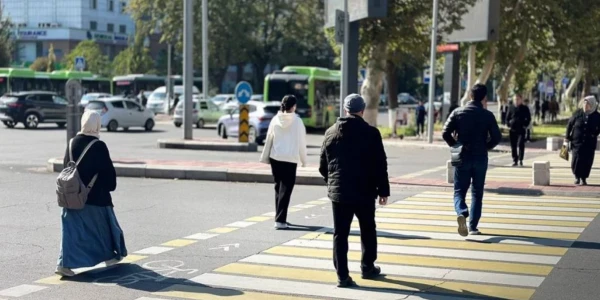
The country's economic growth has led to a noticeable increase in living standards, reports Euronews.
The President of Uzbekistan, Shavkat Mirziyoyev, believes that his country has all the opportunities to bring its gross domestic product to $240 billion in the next five years.
During his address to the parliament and the people of Uzbekistan, the president stated that in 2025, the country's GDP exceeded $145 billion for the first time.
According to Mirziyoyev, considering the current potential, reforms, entrepreneurial activity, and expanding cooperation with foreign partners, Uzbekistan will be able to easily achieve the GDP target of $160 billion by 2026.
"If we prepare personnel for modern professions based on science and innovation, there are all possibilities in the next five years to increase the economy's volume to $240 billion," the president said.
Earlier, Mirziyoyev approved the state budget for 2026, where real economic growth rates are projected at 6.6% and 6.8% in 2027.
Uzbek authorities expect economic growth in 2025 to be at the level of 5.5-6.0% after 6.5% in 2024.
Mirziyoyev stated that to support businesses, Uzbekistan will maintain current tax rates in 2026. The President of Uzbekistan, Shavkat Mirziyoyev, believes that his country has all the opportunities to bring its gross domestic product to $240 billion in the next five years.
"The results of our reforms are felt in every mahalla, in every family, and in everyday life," said Shavkat Mirziyoyev, linking these changes to job creation, infrastructure modernization, and expanding access to basic services.
The country's economic growth has led to a noticeable increase in living standards, reports Euronews. Electricity production has increased to 85 billion kilowatt-hours, which has allowed meeting the needs of a population of over 38 million people and an expanding industrial base.
Irrigation infrastructure has covered 470,000 households in previously unserved areas, enabling about 3 million people to earn income from household plots several times a year.
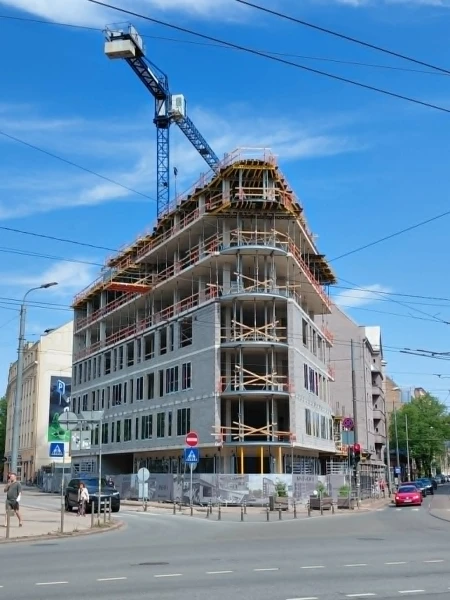
Mass housing construction continued: in 2025, 135,000 new apartments were put into operation. Over the past nine years, more than 210 million square meters of residential and non-residential space have been built and commissioned across the country.
The unemployment rate has decreased from 5.5% to 4.9%, and 1.5 million people have been lifted out of poverty just this year. The national poverty rate has decreased to 5.8%, compared to nearly one-third of the population at the beginning of the reforms.









Leave a comment