
Against the backdrop of Donald Trump's threats to Iran, global oil prices have sharply risen, and the situation surrounding the Strait of Hormuz has once again become one of the main factors of global instability. While the U.S. increases pressure on Tehran, Europe, according to Berliner Zeitung columnist Harald Neuber, remains a passive observer, risking facing a new energy and economic crisis.
Donald Trump threatens Iran, oil prices soar, Europe remains silent. The Strait of Hormuz remains closed, gasoline prices rise. The main question is: what is Europe doing? This is what Harald Neuber, a columnist for the German Berliner Zeitung, asks.
On Sunday evening, Donald Trump takes to the keyboard. "Time is running out for Iran, and they better start acting quickly, or there will be nothing left of them. Time is running out" — capital letters, exclamation marks, a digital fist punch in his social media platform Truth Social. "TIME IS RUNNING OUT!"
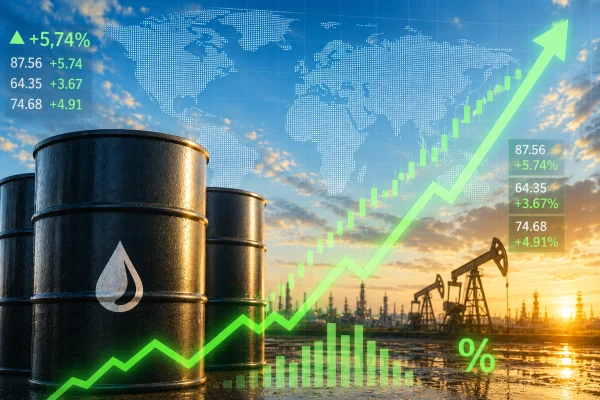
A few hours later, with the opening of trading on Monday morning, the price of Brent crude oil jumps nearly 2% — to about $111 per barrel. WTI, the American benchmark grade, rises to around $108 per barrel. Futures for the S&P 500 index drop more than 0.6%, while exchanges in Tokyo, Shanghai, and Taipei close deep in the red. One post, a few lines of pathos, and trillions in market value are set in motion.
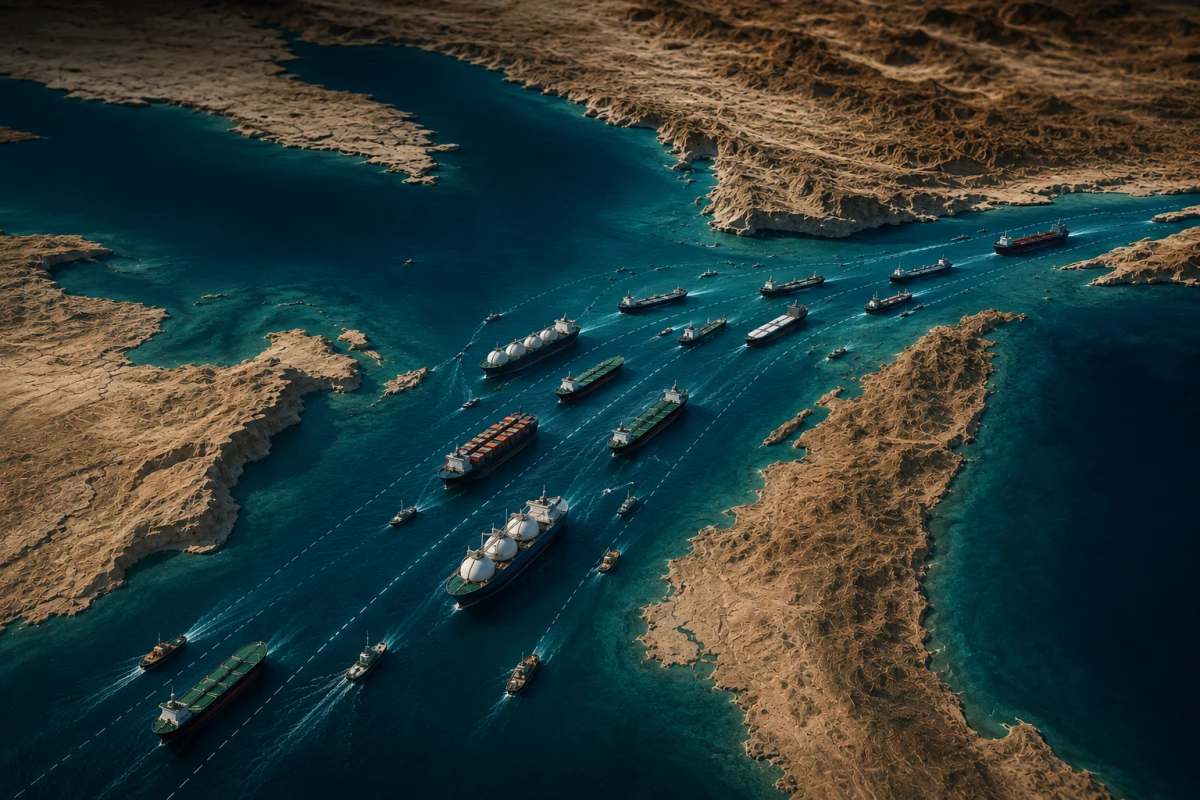
This picture speaks volumes about this war: a fragile truce between Washington and Tehran exists only on paper, the Strait of Hormuz, the narrow waterway through which a significant portion of the world's oil and gas supplies pass, remains closed.
And while the price of a gallon of oil at American gas stations hovers around $4.51, more than 50% higher than before the conflict began, the president sits in the White House, who two days later will say live on air that the financial situation of his fellow citizens "does not interest him one bit."
This is the moment when geopolitics, energy markets, and political insensitivity converge into one ugly equation. And Europe watches as if it does not concern them. However, behind this phrase lies not only the lack of empathy of the billionaire president. It is a symptom of the geopolitical landscape in which energy once again becomes a weapon, and conflict — fuel prices and grocery bills — literally invades the living rooms of people around the world. And Europe appears as a spectator who has forgotten: the performance they are watching is also about themselves.
The Strait of Hormuz: kilometers that determine the world
Let’s start with some simple numbers. On Monday, Brent was trading at about $111 per barrel, WTI at around $108. Both grades gained more than 2% in a single trading day due to one single post by Trump on Truth Social (“TIME IS RUNNING OUT!”). This is no longer market dynamics but managing sentiments in capital letters.
The Strait of Hormuz, about 30 kilometers of narrow bottleneck between the Persian Gulf and the Gulf of Oman, has been effectively closed since February. Typically, about 20% of all the oil traded on the market passes through it, along with a significant share of liquefied natural gas (LNG). When this bottleneck is closed, much more disappears — the illusion of reliability of global supplies in a globalized economy. No country suffers from this as much as Qatar. The desert state, which derives more than 60% of its budget revenues from gas and related products, has hardly shipped any LNG for over two months. QatarEnergy is reducing production in Ras Laffan.
The $600 billion sovereign fund, dreams of diversifying revenues towards tourism and becoming a financial center — all of this comes to a halt. Anyone wanting to understand how vulnerable oil-dependent states are when their only safety valve breaks should look at Doha. And this is the key point: energy is never just energy. It is foreign policy in liquid form. Whoever turns the tap on — or off — changes the balance of power faster than any UN Security Council resolution. Iran knows this. Trump understands it. Vladimir Putin understood it in 2022. Only in Berlin does it seem they are forced to learn this lesson over and over again.
What happens if the Strait of Hormuz is blocked?
If the strait is blocked, the world faces a massive energy supply disruption. The current price dynamics show: even statements and threats to close the strait already lead to spikes and price increases.
A prolonged blockade means not only interruptions in oil and LNG supplies. The security of maritime routes in the Persian Gulf will also be at risk. Europe will feel the impact most severely: the energy crisis could worsen as key supply chains for oil and gas are severed. As a result, prices in the markets — and at gas stations — will quickly rise.
Consequences of rising oil prices: a crisis in everyday life
Geopolitics seems abstract until it stops being so. The inflation rate in the U.S. in April was 3.8%, the sharpest rise in three years — it has ceased to be mere statistics, turning into a tomato that suddenly costs 30 cents more. Gas prices have risen by more than 40% since the start of the war, diesel fuel by more than 50%. Food prices have shown the fastest monthly growth in nearly four years.
According to a recent CNN poll, 77% of Americans, including a majority of Republicans, say that Trump's policies have raised the cost of living in their cities and counties. This is no longer a partisan abstraction but an economic reality that turns against Trump’s supporters across political divides. Germany and Europe: silencing the problem
For Germany and Europe, the picture is structurally similar, but in public rhetoric, it seems invisible. The rise in oil prices takes two to three weeks to reach gas stations in cities. The European Central Bank, just emerging from the inflation trauma of 2022–2023, faces imported inflation again. Electricity prices for industry, already the Achilles' heel of the German economy, will come under additional pressure due to rising LNG prices from alternative sources. The energy needs of data centers using artificial intelligence (which now consume as much electricity as average industrialized countries) will exacerbate the situation.
The state of the German economy and high gasoline prices
The current dynamics of oil prices and uncertainty surrounding the Strait of Hormuz lead to noticeable consequences for the German economy. For consumers, the high price of gasoline means direct additional expenses in everyday life and increased transportation costs for goods.
The logistics sector faces rising costs, which in turn reflects on the prices of food and consumer goods. Companies have to prepare for more expensive imports of energy resources and disruptions in LNG supply chains, meaning the risk of a new energy crisis in Europe is increasing. Meanwhile, dependence on oil imports remains one of the key risks to economic stability. But does anyone in Berlin or Brussels hear a decisive voice these days saying, "This concerns us — here and now?"
Trump's Doctrine as a Reflection of Geopolitical Risks
Trump's phrase "does not interest me one bit" is not just a lack of character. It is a political program. An open statement that the people are a cost to power that must endure "short-term pain" while the president simultaneously builds ballrooms, renovates the White House, and goes to a state banquet in Beijing with his son Eric Trump, who runs the family business (on the menu — lobster in tomato soup, fried chicken).
The symbolism is overwhelming. While Transportation Secretary Sean Duffy glorifies the "great American road trip" in a YouTube video, at gas stations with the highest prices in years, FBI Director Kash Patel dives into VIP tours with a pipe at Pearl Harbor. The government creates its own image while the country outside its borders experiences an economic crisis.
The historical comparison made by former White House chief economist during Bush's presidency, Douglas Holtz-Eakin, in a New York Times article is telling. George W. Bush, despite his questionable economic sensitivity, said in the Rose Garden in 2008:
"The words used to describe the economy do not reflect the concerns of ordinary Americans." Before him, Bill Clinton articulated the now-famous "I feel your pain." Both understood: the authorities need a language of empathy, otherwise they turn into a caricature or autocracy.
Trump consciously breaks this norm. He governs in a mode of constant demonstrative toughness. Iran must hear: "There will be nothing left of them." Americans must hear: I am not thinking about your bank account. The message is the same — only the addressees change.
What is alarming is not that Trump says this. What is alarming is that if this style of governance proves effective, it will become a model for other officials. Politics without empathy as a principle of governance. Sovereignty as cynicism.
Europe's Energy Policy: From Dependence to Apathy
And here we come to the main, uncomfortable question: why is Europe silent? Why has Germany frozen in a state of political paralysis while fundamental coordinates of geopolitics shift around it?
Three diagnoses suggest themselves.
First: exhaustion. Since 2020, Europe has been living in a state of continuous crises: pandemic, conflict in Ukraine, energy shock, inflation, migration, now Iran. Political systems are structured like people: they can get used to a constant adrenaline rush — until they stop feeling it. The result is not activity but paralysis. When everything seems equally urgent, in the end, nothing seems urgent anymore. Second: structural dependence. After 2022, Europe did indeed replace Russian gas with Qatari, American, and Norwegian LNG, but essentially only redistributed dependencies. If Hormuz is blocked, 20% of the world’s oil disappears from the market. No amount of "diversification" will help. Only honest industrial policy, which views energy independence not as an unattainable green dream but as a key task for ensuring security, will help. Instead, the German government is desperately trying to implement the next gas price cap.
For Germany's and Europe's energy policy, one thing is clear: dependence on oil imports from the Middle East remains a strategic risk. The goal of European energy independence comes to the forefront, alternatives to Middle Eastern oil, and ensuring the security of maritime routes are becoming increasingly important in security policy. Without a sustainable and reliable energy policy, recurring shocks threaten the economy and society.
Third: the habit of "riding for free." For decades, Europe has grown accustomed to Washington maintaining order in the world while Berlin comments on the outcomes. This scheme no longer works. Why should a president who openly states that the well-being of his own citizens does not concern him be worried about the well-being of Europeans? The transatlantic security architecture has not collapsed, but it has lost its psychological foundation: the confidence that in the end, someone will take responsibility.
German politics reacts to this situation with what can be called "atmosphere management" in modern terminology: a little special fund here, a little rhetoric about military readiness there, a lot of Sunday speeches. But a genuine strategy in energy and security — one that would indicate the real cost, who it harms, and what it ensures in the long term — is lacking.
Preliminary Conclusion
Perhaps the most honest assessment of this crisis concerns not Trump, not oil, not inflation. But ourselves. Trump shows what happens when society stops demanding empathy from its president. Qatar shows what happens when a country ties its fate to one strait. And Europe shows what happens when a continent forgets: political apathy is a luxury of times when someone else pays for your security.
The width of the Strait of Hormuz is 30 kilometers, and the shipping channel is only a few kilometers wide. The gap between European self-perception and European reality has significantly widened.
According to the editorial board of bb.lv, the situation surrounding Iran and the Strait of Hormuz has once again shown how closely intertwined politics, energy, and the global economy are. The rise in oil prices is already beginning to reflect on the cost of living in various countries, and Europe risks finding itself once again at the center of an energy crisis. According to the author of the Berliner Zeitung, the main question today is not only about the actions of the U.S. or Iran but also about whether the European Union itself is ready to stop being a bystander and develop its own security and energy independence strategy.


Leave a comment