
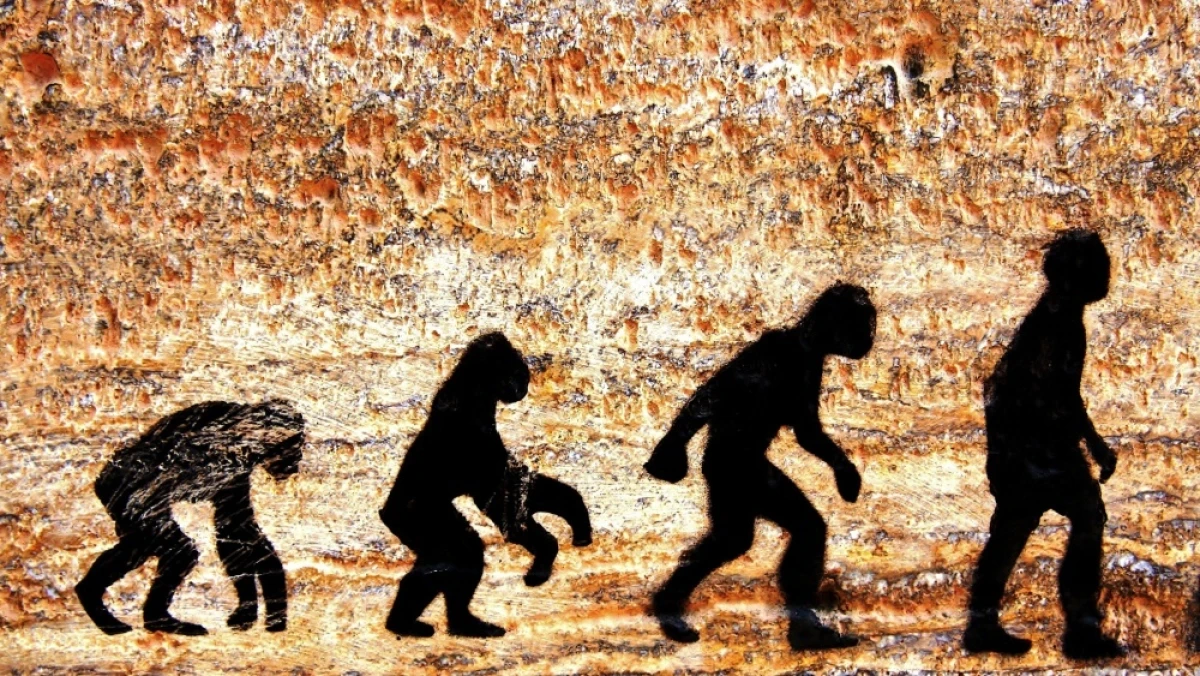
A study of 41 species of primates showed what led to the increase in asymmetry in the ancestors of humans.
Scientists have discovered that the overwhelming majority of people became right-handed due to two key changes in the bodies of our distant ancestors. This concerns the transition to bipedalism and a significant increase in brain size. The results of the scientific work were published in the journal PLOS Biology.
Researchers analyzed data on more than 2000 primates from 41 species. Using mathematical modeling methods, the researchers tested several fundamental theories about the origins of right-handedness and left-handedness. They studied a variety of factors: tool use, diet, habitat, body size, social structure, brain volume, and even movement characteristics.
Bipedalism and Brain Development
The data suggest that it is the unique combination of bipedalism and a large, complex brain that may explain why humans developed such a strong preference for the right hand. The earliest hominids, such as Ardipithecus and Australopithecus, likely favored their right hand only to a minor extent, much like modern apes do.
Apparently, this pattern began to strengthen only with the emergence of the genus Homo, to which we belong. In species such as Homo ergaster, Homo erectus, and Neanderthals, the preference for the right hand became increasingly pronounced over the course of evolution. Ultimately, this led to the complete dominance of the right hand, which is so characteristic of modern humans. The Story of the 'Hobbits'
The only exception to this general rule was one species of ancient humans: Homo floresiensis. This short-statured species, often referred to as 'hobbits' due to its tiny size, is believed by scientists to have had a much weaker right-sided bias than other hominids. This hypothesis fits perfectly into the overall evolutionary picture they reconstructed. The fact is that Homo floresiensis had a relatively small brain and retained many physical traits that allowed it to both easily climb trees and walk upright. It was not fully adapted exclusively to bipedalism like later Homo species.
The researchers described a two-stage evolutionary process that stretched over millions of years. First, the transition to bipedalism completely freed the hands from the need to participate in movement across the ground or branches. This created new conditions for more specialized, complex, and consequently asymmetrical use of the hands. Later, as the human brain became larger, more complex, and more strongly segmented, the preference for the right hand became much more pronounced and widespread among the population.
The Mystery of Left-Handedness
Scientists still do not fully understand why left-handedness, despite the dominance of the right hand, has persisted throughout the long evolution of humans. What is its role and why has it not disappeared entirely? The question remains open as to how exactly human culture may have contributed to the final establishment of right-handedness.
Additionally, researchers are interested in whether similar preferences for limb use observed in such distant animals as parrots and kangaroos might indicate deeper, universal evolutionary patterns common to a wide variety of unrelated species.














Leave a comment