
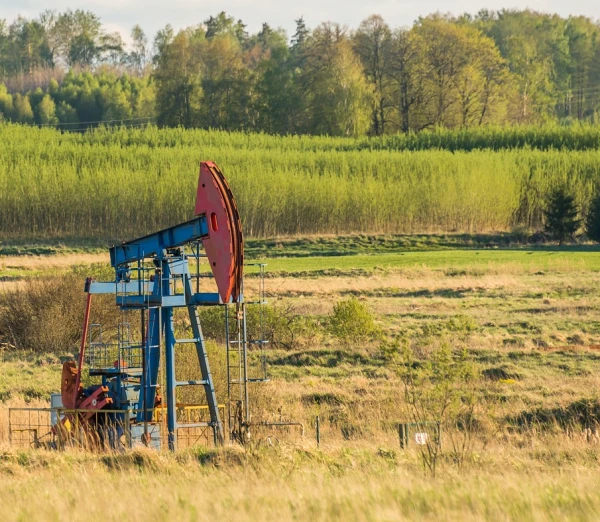
Last week, amendments to document No. 696 – "Procedure for issuing licenses for the use of subsoil and permits for the extraction of mineral resources, as well as the procedure for leasing land for the use of subsoil" were included in the agenda of the Cabinet of Ministers.
It was first adopted in the distant 2011. But perhaps Donald Trump with his oil enthusiasm influenced the executive power?
Many invited to the hydrocarbon banquet
In recent years, the state has been primarily focused on decarbonization – around renewable energy sources, the regulatory framework has been dancing. However, now the Ministry of Economics, led by Viktors Valainis, is returning, so to speak, to traditional national economic values:
"The draft regulations have been prepared to include legal norms regarding the calculation of rent for land of a public entity in relation to the exploration, extraction, and research of hydrocarbons."
It is worth noting that in his party affiliation, the head of the Ministry of Economics is united in two faces: on one hand, he is "green," i.e., he should supposedly prevent hydrocarbon development; but on the other hand, he is a "peasant," therefore interested in profits for landowners where oil deposits have been found.
"In the hydrocarbon sector, the strategic value of the resource is noted, – emphasizes the Ministry of Economics. – The legitimate goal will be achieved, while respecting the rights of landowners to receive fair compensation. Those conducting exploration, research, and extraction of hydrocarbons are partially in comparable conditions with other mineral extractors, however, there are significant differences that may justify different regulation or treatment."
"The draft regulations establish that the public entity and the merchant conducting exploration, research, and extraction of hydrocarbons must agree by December 31, 2025, 1) on the termination of the lease agreement concluded before May 1, 2025, and 2) on the conclusion of a new lease agreement."
Meetings on oil issues in Latvia have been held quietly but representatively – from February 26 to September 4 of this year in Riga, the following were convened: the Ministry of Finance, the Ministry of Justice, the Baltic Association of Hydrocarbon Exploration and Production, the Latvian Chamber of Commerce and Industry, the Kuldiga County municipality, the Energy and Environment Agency, the Latvian Association of Real Estate Appraisers, and the Competition Council.
"Regardless of the type of mineral resources, – it is stated in the annotation from the Ministry of Economics, – the property rights of the landowner are limited, however, there are various factual circumstances, as there are significant differences in the cost of resource extraction (hydrocarbon extraction is generally much more profitable, hydrocarbons have high, strategically important value, enhanced state supervision, and a system of permits), and hydrocarbon extraction projects are often long-term – according to the Subsoil Law, a license for hydrocarbon exploration is granted for a period of up to five years, and for exploration and extraction of hydrocarbons – for a total period of up to 50 years."
Is Kuldiga our Kuwait?
The appearance of high-ranking officials from the municipal authorities of Kurzeme can be explained by the fact that it is there that our oil province is located (the term in this case is from geology).
Cambrian and Ordovician deposits (538-486 million years ago) in the western part of Latvia and the Baltic Sea contain oil layers. By composition, Latvian oil belongs to the group of methane oils and contains more than 50% light fractions, of which 21% are gasoline fractions. In Latvia, individual geological uplifts have been identified, which geologists call oil traps. There are about 20 such promising uplifts in terms of oil extraction on the shelf.
Latvian onshore fields may contain about 100 million barrels of oil, while in the economic zone of the Baltic Sea – about 360 million barrels. According to other data, there may be about 250 million barrels of oil in total in Latvia. This is not too little – as the annual production of Kuwait is about 800 million barrels, and Norway – 650 million barrels.
As for the monetary assessment, at the current oil price of $60-65 per barrel, Latvian reserves could be worth around $150 billion. Considering the defense funding level in 2026, this money would be enough for the Latvian army for 75 years.
However, dreaming is not harmful. It should be remembered that it is technologically impossible to extract all oil reserves; something will remain in the depths of Kurzeme. Moreover, the cost of extraction may turn out to be higher than the value of the extracted oil – the effort may not be worth the result.
Countless diamonds in stone caves
The Ministry of Smart Administration and Regional Development (MSARR), meanwhile, contains the following information on its official portal:
"Currently, no metallic ores, metals, or diamonds are being extracted in Latvia, although geological mapping conducted in the second half of the last century (up to the 1990s) indicates that the mentioned valuable resources are potentially available in Latvia. However, a deeper study is necessary to assess the possibilities of their extraction. Geological maps published between 1998 and 2004 at a scale of 1:200,000 were compiled using geological mapping data conducted during the Soviet era."
"Unfortunately, – noted MSARR, – in a situation where any geological work directly depends on the landowner, it is impossible to conduct geological mapping or other systematic geological exploration work that would cover the entire territory of the state or a significant part of it. Therefore, to facilitate the study and use of subsoil potential, it is necessary to develop and improve the legal regulatory framework."
One thing is clear – the production association "Specgeophysics" from Moscow will no longer search for anything in Latvia, and the participation of global players will be required. And on a smaller scale – to amend the Civil Code of 1937, which, in terms of subsoil use, our lawyers recognized as archaic as early as the beginning of the 21st century.
Found in the LSSR
Oil was first discovered in Latvia during the Soviet era, in 1963 – in the current Gudenieki parish of Kuldiga County. Its reserves amount to about 770,000 tons (almost 6 million barrels).
Gudenieki oil is high-quality, so-called paraffinic oil. In particular, during the processing of raw materials, it is suitable for the production of cosmetic products. LLC Alīna, whose largest owner is Peters Šmidre, serviced a well with a depth of 983 m.








Leave a comment