
The conflict in the Middle East is not a short-term story; its consequences will be felt for a long time. Moreover, it is a signal that the economy is changing, and we need to adapt to this, so households must start acting now to mitigate the inevitable pressure on their wallets.
This is for the Long Term
The price of oil has been fluctuating in the range of 100-110 US dollars per barrel for the past couple of months, and it is unclear when the movement of the armada of tankers, which has accumulated in one of the largest "bottlenecks" in the world, will resume. However, it is already clear that nothing will magically resolve itself, says economist Raul Eamets.
As historical experience shows, such crises can significantly accelerate inflation – after the oil crisis of 1973, inflation in Europe tripled, and it may now rise to about 6%.
Europe and the Baltic States are particularly vulnerable in this situation, as, unlike the US, EU countries are largely dependent on imported energy resources and cannot influence global prices.
The consequences of rising energy prices are felt at every turn – fuel prices have increased, making transportation as a whole, including logistics and supply chains, more expensive. This, in turn, affects all other sectors and is reflected in rising prices for almost all goods and services.
Heating and electricity are also becoming more expensive, especially for households that still rely on fossil energy sources, such as natural gas. Firstly, because a significant portion of the world's natural gas usually comes through the now-blocked Strait of Hormuz. Secondly, gas fields and infrastructure in Qatar have been destroyed.
Qatar produces 20% of the world's liquefied natural gas (LNG), and 20% of that capacity has been destroyed. This is a huge shock for the entire industry. Recovery will take at least two to three years. Therefore, it can be confidently stated that this is not a short-term crisis.
Latvia May Suffer More Than Its Neighbors
The rise in prices and tariffs is a direct effect of the Baltic States' dependence on imports. Latvia may suffer from rising gas prices more than other Baltic countries, as a large portion of heat and electricity is produced using natural gas. However, there are other factors – economic and psychological.
The crisis in the Middle East and its consequences are widely covered in the media. People are forming inflationary expectations, that is, assumptions about further price increases, which makes consumer sentiment increasingly negative.
At the same time, inflationary expectations facilitate price increases – under the pretext that "everything has become more expensive." As a result, even those who currently do not need to raise prices begin to do so.
The Threat Comes from the ECB
Another long-term effect is related to the monetary policy of the central bank. The European Central Bank (ECB) has raised its inflation forecast for the eurozone to 2.6% (previously 1.9%), and this is unlikely to be the last increase. If prices rise faster than the desired 2%, the ECB will raise interest rates. The question is no longer whether they will raise them, but when and how many times.
It is expected that there may be at least three increases this year, and the Euribor rate will approach 2.8%. For households with floating rate loans or those planning to take out loans, this may mean an increase in monthly payments.
On the other hand, this also means that over time, interest rates on deposits may rise.
What to Do?
A number of important tips for households in the context of rising prices and economic unpredictability:
Firstly, it is worth paying attention to the state of savings. If money is just "sitting" in an account, inflation will gradually "eat" it away. It is time to choose solutions that allow money to earn – for example, a savings account or a checking account that accrues interest on the balance.
Secondly, existing credit obligations should be assessed, if any. And do not take on new loans – in case of rising interest rates, waiting may lead to higher costs in the future.
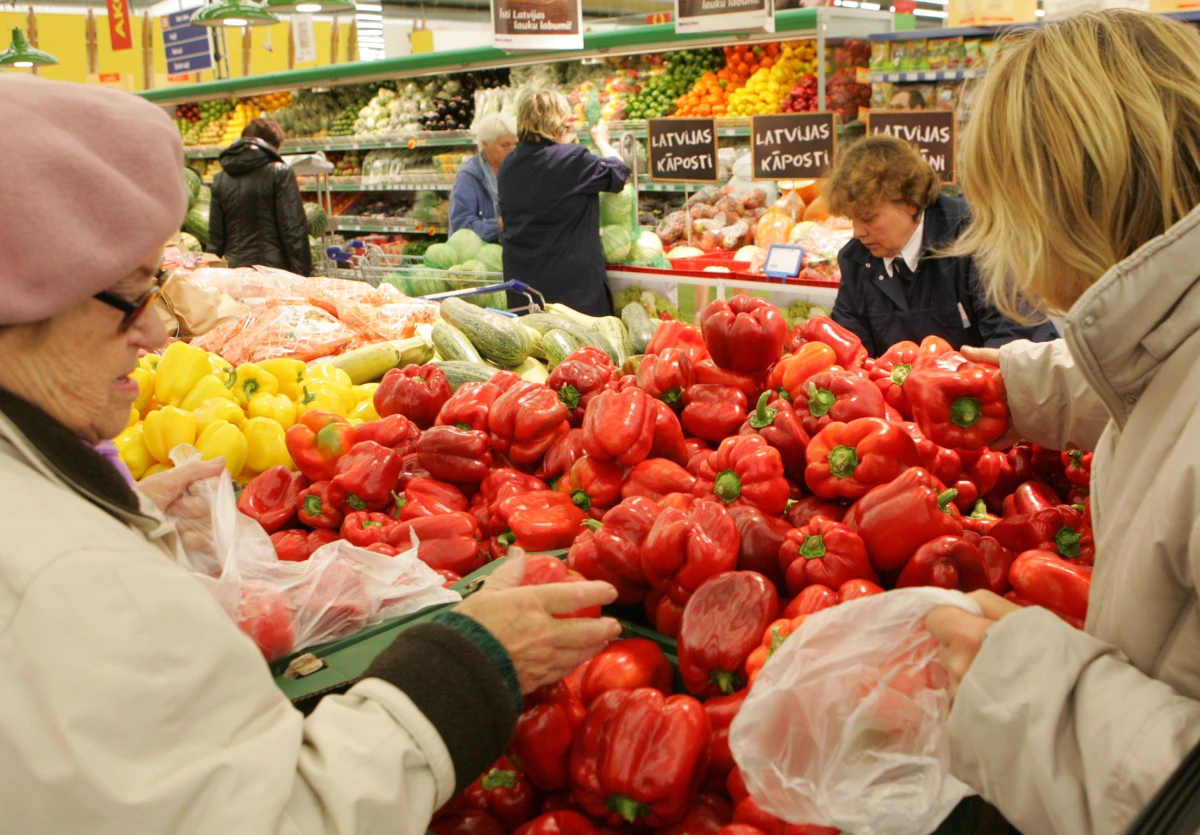
Thirdly, one should look at what money is being spent on. It is impossible to completely avoid price increases, but one can reduce their impact. For example, more often choose local products and services that are less dependent on global price fluctuations, thereby stimulating the local economy.
Fourthly, one should think about energy resources. The simple principle still applies – "buy sleds in summer." If possible, one should prepare in advance for the heating season by purchasing fuel or investing in the energy efficiency of housing.
It is also worth considering the terms of your electricity contract. Sometimes a fixed-price contract may be more advantageous, helping to avoid sharp price fluctuations.
Finally, it is necessary to create a financial safety cushion to prepare for possible crises.
At the same time, one should also think about how to strengthen their position in the labor market, that is, about developing new skills and the resilience of income sources. Because the likelihood of facing a new global economic recession today is much higher than that of recovery and growth.
Be Prepared!
In conclusion. High inflation is not a temporary manifestation of the oil crisis in the Middle East, but a new reality that we must acknowledge and adapt our actions to.







Leave a comment