
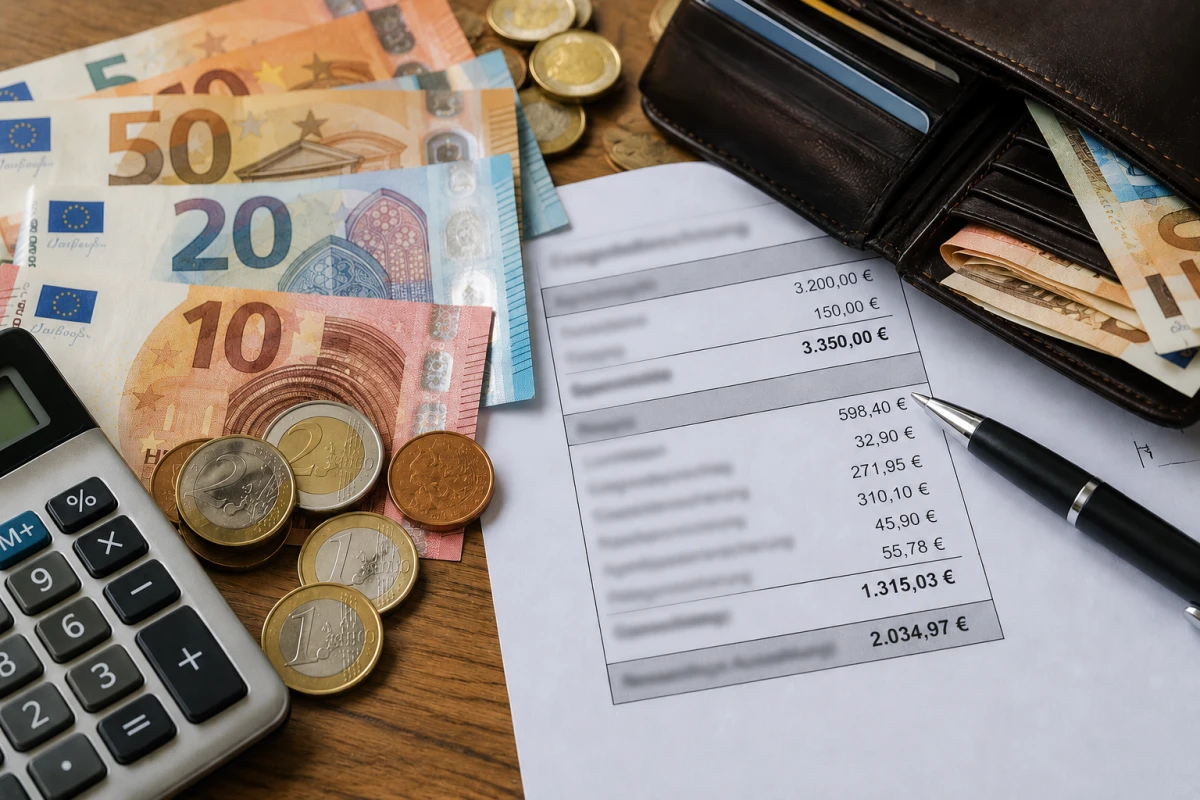
The Bank of Latvia believes that a timely increase in the minimum wage would help the economy adapt to income growth more smoothly. The discussion was triggered by the unions' proposal to raise the minimum wage to 835 euros in 2027.
In Latvia, discussions about the pace of increasing the minimum wage have resumed. The economist of the Bank of Latvia, Ieva Opmane, stated that a more timely review of the minimum wage would help avoid sharp jumps and reduce the burden on the economy in the future.
The comment came after the proposal from the Free Trade Union Confederation of Latvia to raise the minimum wage in 2027 to at least 835 euros per month — 55 euros more than what is currently planned by the government.
Currently, the minimum wage in the country is 780 euros.
According to Opmane, the existing rules of the Cabinet of Ministers stipulate that the minimum wage should be 46% of the average gross salary over the last 12 months.
At the same time, the average salary in Latvia continues to grow rapidly. In 2025, it reached 1815 euros before taxes.
Against this backdrop, the current minimum wage is only about 43% of last year's average salary.
According to already approved plans, the minimum wage is set to increase to 820 euros in 2027 and to 860 euros in 2028. However, trade unions believe that these rates are already insufficient.
What is important to understand is that the dispute is not only about the size of the minimum wage but also about the speed of its increase. The Bank of Latvia warns that if the review is delayed for too long, it will be necessary to raise wages more sharply, making it harder for businesses to adapt.
Opmane noted that gradual changes usually have a softer impact on the economy and the labor market.
On the other hand, trade unions emphasize that the previously established schedule for increasing the minimum wage has already begun to lag behind the overall growth of income in the country.
Moreover, they remind that the minimum wage should be considered together with the non-taxable minimum. This year, it has been increased from 510 to 550 euros per month.
The Free Trade Union Confederation of Latvia expects separate negotiations with the government regarding what the level of the minimum wage and non-taxable minimum should be in 2027.
Amid ongoing wage growth and inflation, the issue of minimum income is becoming increasingly sensitive for both workers and employers.
For some businesses, additional labor costs mean pressure on expenses, while trade unions insist that without faster growth of minimum incomes, low-wage workers will increasingly fall behind the overall standard of living.











Leave a comment