
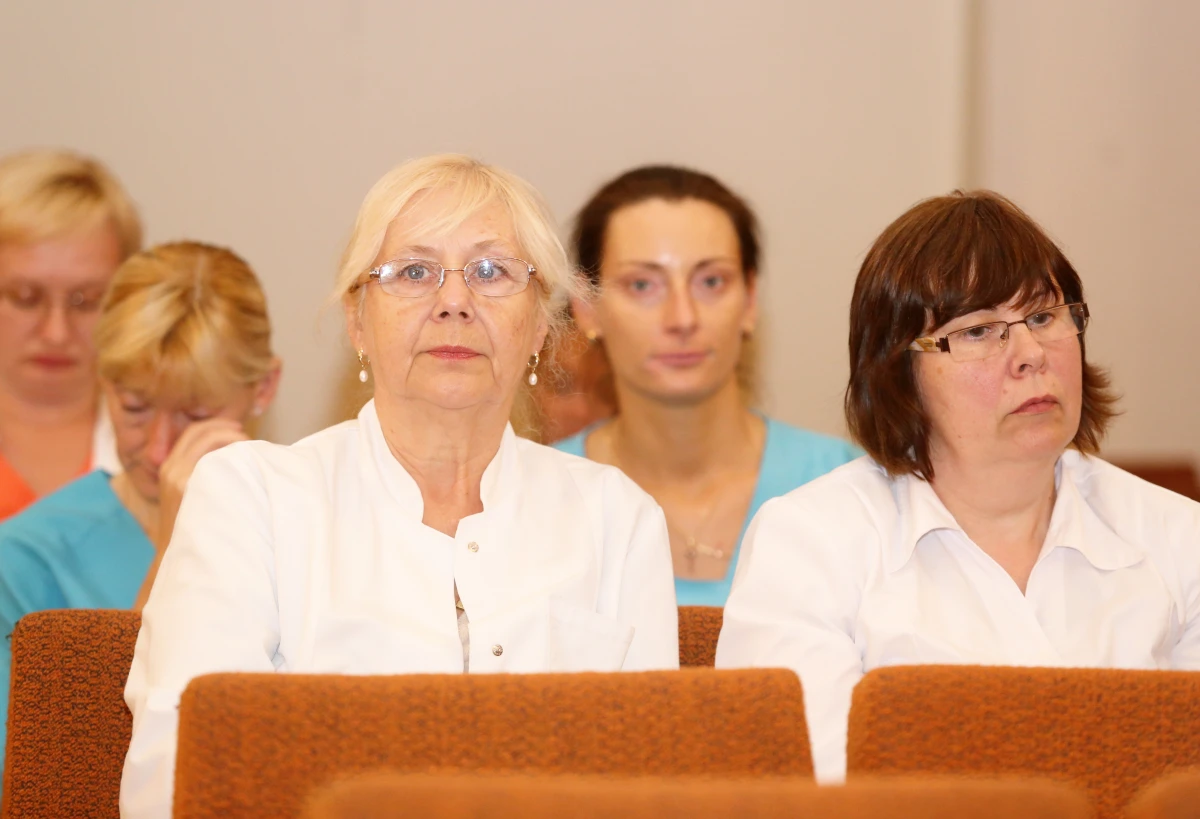
In hospitals, they are the first to notice changes in a patient's condition and the last to leave the ward.
On International Nurses Day, medical professionals remind us that the healthcare system is shaped not only by medicines and modern technologies. Its foundation is people. One of the most important pillars of this system is nurses. However, in Latvia, the number of experienced nurses is decreasing, and attracting new specialists is becoming increasingly difficult, reports TV3 News.
Laura Rolanda Belte, a junior nurse in the intensive care unit of the Children’s Clinical University Hospital, works the day shift.
As her mentor, the senior nurse of the department, Diana Grase, explains, Laura's first steps in the hospital began last summer: "At first as a junior assistant to get acquainted with the work, and then she showed herself well and became a junior nurse."
This was not a childhood dream. Laura realized in high school that being a nurse was a path she wanted to pursue: "I was asked many times why a nurse and not another profession? But I don’t know what to answer… I just feel that this is my calling."
And knowledge alone is not enough here. Endurance, quick reaction, and the ability to be with people every day during the most difficult moments of their lives are needed.
"The hardest part is the emotional aspect, when it’s difficult to see children about my age in such situations. And the most enjoyable part is that I really like working with infants and small children. I have a rattle attached to my badge that I use. Usually, I approach the little ones and try to calm them down. They are curious about what it is," Laura shares.
The presence of nurses in the hospital cannot be replaced by technology or the most modern equipment. However, in Latvia, this profession has been facing serious challenges for some time.
The average age of practicing nurses already exceeds 50 years, and more than a quarter of them are over 60. This means that in the coming years, the healthcare system will need a large number of new specialists.
The system is already feeling the shortage of nurses. In Latvia, there are only four nurses per 1,000 residents, while in many European countries, there are twice as many. Experts predict that in the future, it will become increasingly difficult to provide both emergency care and everyday patient care without this medical personnel.
"The prestige of the nursing profession plays a very significant role. The stereotype that has come from the past is that it’s just a sister or a little sister. But no! A nurse has a great responsibility, a large volume of knowledge, and she is a leader of the team that organizes patient care," says Diana Grase.
There is also increasing talk about salary, workload, and professional burnout. A significant number of nurses currently work in several places at once, but this pace of work is unacceptable for the younger generation. Moreover, not all young specialists are ready to work day shifts, which have long been considered the norm in healthcare.
"In the healthcare system, pressure comes from both sides because people are aging, and there are more diseases. The demand for healthcare will grow. If we think that there are fewer children, then we need fewer kindergartens. But here we understand that demographics will not affect this," says Linda Friedenberga, the director of nursing at the Children’s Clinical University Hospital.
Medical professionals emphasize: if we want to have safe and accessible healthcare in the future, we need to invest in the nursing profession today.
"Changes are impossible without funding. We see that when the budget is about to be adopted, educators demand funding. We need to follow the same path," Friedenberga believes.
Meanwhile, Laura is determined to continue not only her work in this field but also her studies in graduate school. She laughs that with patients who come to the hospital, she often has only a few years of age difference, so there are always common topics and interests for conversation.
"It’s easier and more pleasant to work this way. But with little children, I have to watch all the new cartoons to have something to talk about with them," Laura admits.







Leave a comment