
Riga residents of the older and middle generations still remember those blessed years when almost every family had "cable." Since the early 1990s, paid TV became a window to the world for people who had not yet acquired a video cassette recorder. In today’s media realities, this service has become an anachronism, as it has been undermined by both technology and politics.
Unfortunately, Minister of Communications Aitis Švinkis ("Progressives") has more bad news for today’s government meeting. The competition for the establishment of paid television in Latvia based on public frequencies has ended without results – no commercial entity submitted an application.
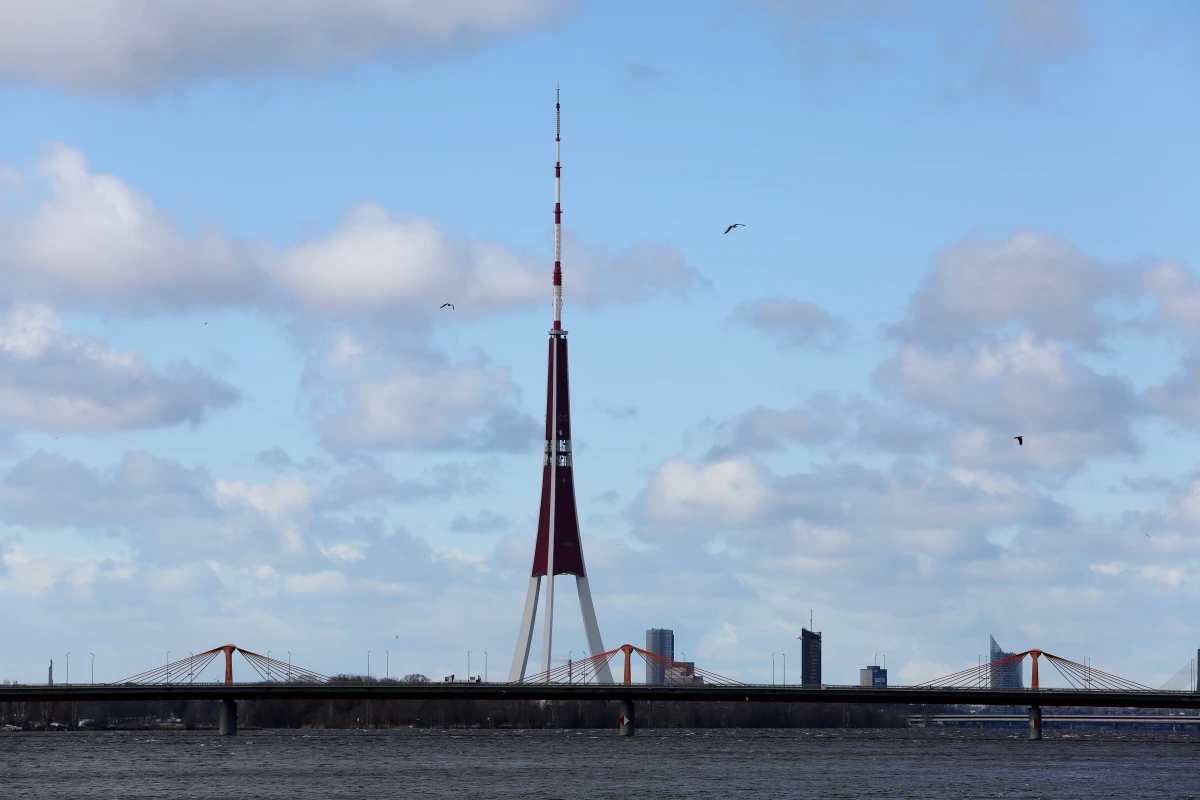
The Latvian State Radio and Television Centre (LVRTC), which owns the famous tower in Zakusala, was supposed to technically ensure digital terrestrial broadcasting starting January 1, 2027. On December 10 of last year, the Cabinet of Ministers led by Evika Silina ("New Unity") adopted Order No. 827.
"A regulation with appendices was developed, which defined the requirements for the provider of paid television services, evaluation criteria, the procedure for conducting the competition, and the term for which the rights to provide services were granted..."
The working group included representatives from several institutions, associations, and organizations: the Competition Council, the Ministry of Culture, the National Council of Electronic Media (NEPLP), the Council of Public Electronic Media, and a dozen other agencies.
The important gentlemen were already prepared for how they would evaluate the candidates – in four stages! But here’s the surprise, no one showed up for the rendezvous with the state.
The conclusion is that a new document needs to be written: "The Ministry of Transport, in cooperation with the Ministry of Culture, LVRTC, and NEPLP, will develop a strategy for 2027-2036 that defines the main principles for the further development of free and paid television services in terrestrial broadcasting, with the aim of promoting program diversity and media market pluralism."
Otherwise, warn the heads of state TV, in the absence of money from private investors, "public" broadcasting will wither. Because there will be no funds to deliver the signal to remote towns and villages of our vast Motherland. Meanwhile, the unaware public continues to watch prohibited content for free, taking advantage of YouTube and Telegram. After all, the channels there accounted for the largest share of popularity until 2022, and European and Ukrainian channels have unfortunately not been able to replace them. Thus, it turns out that there is absolutely nothing to catch in this business.





Leave a comment