
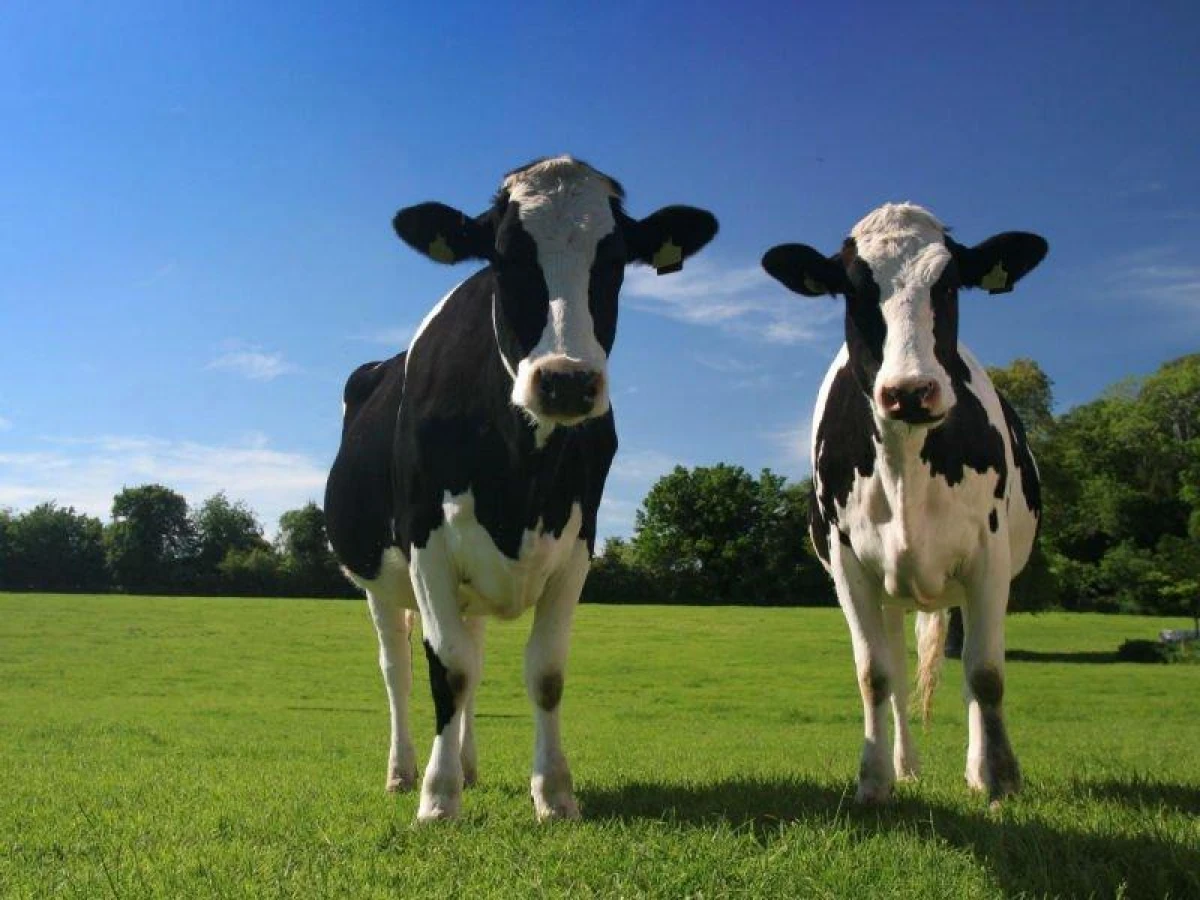
Humans and cattle share a long history. Domesticated about 10,500 years ago from an extinct species of wild bulls, cows have become one of the world's main sources of meat, dairy products, and leather.
Previous studies have shown that some domestic animals, such as sheep and pigs, are capable of recognizing individual people; however, these abilities in cows have not been tested until now.
Now, a study led by Lea Lansade, a specialist in cognitive abilities and animal welfare from the French National Research Institute for Agriculture, Food and Environment (INRAE), has demonstrated that cows can distinguish between familiar and unfamiliar human faces.
How It Works
Face perception is considered an important element of social recognition in primates, as faces carry significant information, such as age, gender, and personality of a specific individual.
Researchers note that people working with cattle often hold opposing views on the intelligence of cows. Some consider them to be rather "simple" animals, while others view them as very observant and socially developed. The scientists aimed to obtain scientific data to better understand what exactly cows are capable of perceiving, remembering, and understanding about humans.
The study involved 32 Prim-Holstein cows aged between 15 and 21 months. Since birth, each of them has been cared for and fed daily by four staff members, although the animals could occasionally meet other people, such as students or colleagues visiting the farm. The cows had not previously participated in similar experiments.
The researchers recorded videos of eight men aged between 30 and 60 years: four familiar caretakers and four unfamiliar staff members whom the animals had never seen before.
After that, the researchers conducted two tests: a visual preference test and a cross-modal test. During the first experiment, the cows were shown two silent videos simultaneously. One displayed the face of a familiar person, while the other showed an unfamiliar one.
By measuring the time the animals spent looking at the screens, the researchers found that cows gazed longer at the videos featuring unfamiliar people.
During the cross-modal test, the video recordings were accompanied by a voice that either matched the image or did not. Cows significantly spent more time looking at the video where the voice matched the person shown.
The results indicated that cows do not perceive all people as a single "indistinguishable category." They can distinguish familiar people from strangers and recognize those they have encountered before.
Furthermore, the animals can form cross-modal representations, integrating information about a person's face and voice into a cohesive model.
Observations suggest that cows create mental representations of familiar people and process social information in a much more complex manner than previously assumed.
The research group also measured the heart rates of the animals while watching the videos. Neither familiar nor unfamiliar faces and voices appeared to cause noticeable differences in the emotional responses of the cows.
The obtained data also indicate that cows are capable of integrating information received through different sensory modalities. This suggests a higher level of cognitive processing compared to, for example, recognition based solely on one type of sensory signal.













Leave a comment