
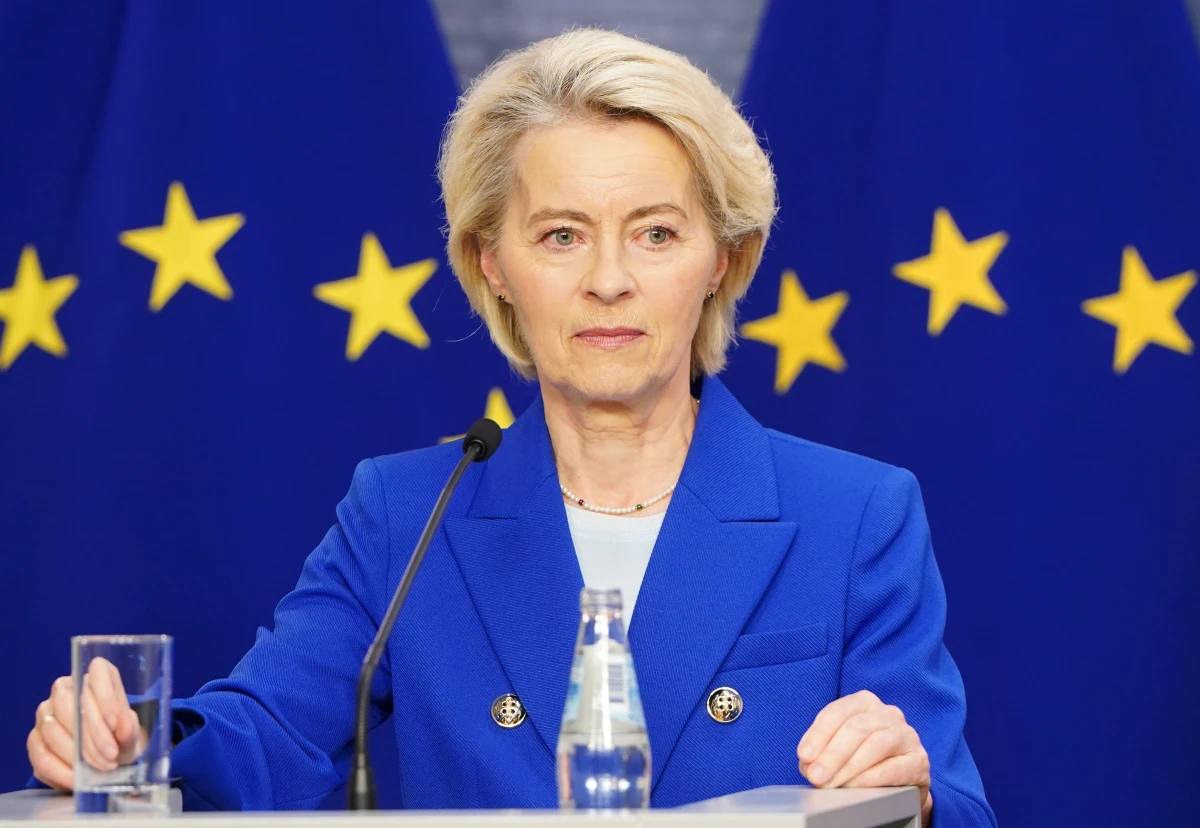
The head of the European Commission, Ursula von der Leyen, stated in Vilnius that the incidents involving drones in the Baltic countries are not random. According to her, this is a targeted hybrid strategy by Russia aimed at pressure and destabilization of the region.
European Commission President Ursula von der Leyen noted during a press conference in Vilnius that the instances of drones appearing in the Baltic countries are not a coincidence.
This is reported by bb.lv, citing LRT.
According to her, this is a deliberate strategy by Russia aimed at undermining the stability of democratic states in the region.
Ursula von der Leyen emphasized that the European Union views these actions as part of a broader hybrid pressure tactic.
The head of the European Commission stated that despite attempts at destabilization, Russia is not achieving its goals.
She specifically noted the resilience of Lithuania, Latvia, and Estonia, as well as expressed full support from the EU.
Von der Leyen reminded that the Baltic countries are already receiving additional assistance under European security programs, including funding and strengthening defense capabilities.
According to the European Commission President, the EU is actively investing in the development of drone countermeasures, modernization of air defense, and protection of critical infrastructure.
She highlighted the SAFE program, under which Lithuania has already signed the relevant plan, while Latvia and Estonia are preparing for similar agreements.
Overall, the Baltic countries may receive about 12 billion euros in additional support.
Additionally, 1.5 billion euros have been allocated from the Cohesion Fund to enhance defense readiness and border control.
Von der Leyen emphasized the need to create a more unified early warning system and strengthen cross-border information exchange.
Particular attention, she said, should be paid to the integration of national systems with the European space programs Copernicus and Galileo.
She also announced plans to conduct a joint comprehensive assessment with NATO of drone countermeasures in the region to identify weaknesses and expedite the mitigation of threats.
The European Union believes that threats involving drones require not only a national but also a collective European response. Brussels intends to strengthen air defense, early warning systems, and coordination with NATO, while the Baltic countries will receive additional financial and technical support to enhance the security of the region.










Leave a comment