In the final tally, the American raid in Caracas may bring more benefits to Russia and China than to the U.S. itself - The Telegraph.
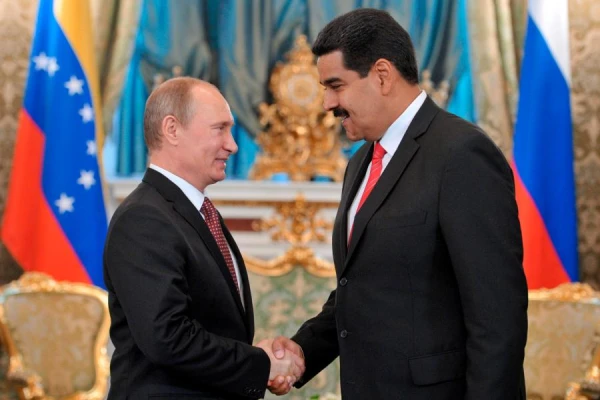
The lightning-fast military operation by the United States to capture the dictator of Venezuela, Nicolás Maduro, could become a strategic gift for Russia and China. Although Moscow and Beijing likely lost their key ally in Latin America, on a more global scale, they potentially gained something more significant. This is noted by international observer Adrian Blomfeld in The Telegraph.
Why Putin and Xi Are Not Happy About Maduro's Overthrow
Of course, the audacious American invasion of a sovereign nation has sparked outrage worldwide, particularly in Latin America. Moscow and Beijing also expressed their concerns, and for them, this is not just diplomatic rhetoric.
"The U.S. has just unexpectedly severed the main South American tentacle of the global anti-American connection with surprising ease. Of course, no autocrat likes to see one of their own being captured, shackled, and extradited - their fate left to the discretion of a foreign court," writes Blomfeld.
The author of the publication is convinced that these events could have personally frightened the Russian dictator. Rumor has it that Vladimir Putin was deeply affected by the death of Libyan dictator Muammar Gaddafi at the hands of rebels in 2011. At that time, the Kremlin's master realized that such a fate could potentially befall him as well.
Blomfeld notes that today Putin has even more reasons to worry about his personal safety, considering that the International Criminal Court has accused him of serious war crimes committed in Ukraine.
Why Putin and Xi Might Welcome Maduro's Overthrow
Despite the loss of an ally in the form of the Venezuelan dictator, Moscow and Beijing may view these events as an opportunity for themselves. On one hand, Trump has shown determination in conducting forceful actions on the global stage. On the other hand, this occurred in Latin America, which Trump explicitly refers to as a zone of American influence.
Thus, the overthrow of Maduro can be seen as the U.S. president's desire to focus on the "home" region rather than engage in global geopolitics. As the observer notes, in this context, Moscow and Beijing may feel emboldened rather than restrained on the international stage.
Although Russia and China will obviously lose access to strategically important oil reserves in Venezuela, doors to other Latin American countries, where U.S. actions have been perceived extremely negatively, are opening even wider for them.
"Outrage in South America and anger in developing countries may play into Russia's hands. Moscow quickly condemned the 'act of armed aggression' and will seek to portray the U.S. as a threat to the international order, using this operation to justify its own aggression in Ukraine," the analyst concludes.
U.S. Operation in Venezuela: Latest News
After the capture of Nicolás Maduro, the U.S. announced its intention to temporarily take over the management of Venezuela until power is transferred and to restore control over its oil industry. In the event of a loyal government being formed in Venezuela, Washington could gain access to a significant arsenal of Russian, Iranian, and Chinese weapons. For example, this includes Su-30 fighters.
We also reported that the UN Security Council, at the initiative of Colombia and with the support of Russia and China, will hold a meeting on January 5 regarding the American capture of Venezuelan President Nicolás Maduro. Venezuela's ambassador to the UN, Samuel Moncada, condemned Washington's actions in a letter to the Security Council, calling them a "colonial war" aimed at overthrowing the government and establishing a puppet regime to control natural resources.