
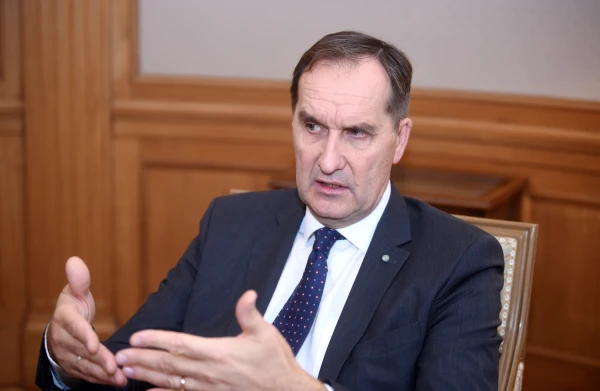
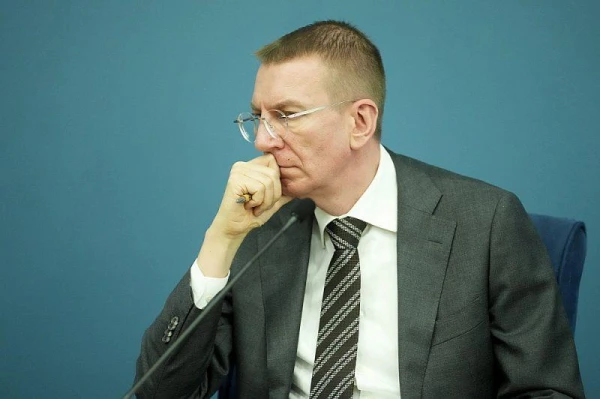
The overall understanding of threats among NATO countries remains unchanged, stated Latvia's ambassador to NATO Maris Riekstins in an interview on the Latvian Television program “Morning Panorama,” writes LETA.
He explained that the alliance regularly assesses the threats it faces along with its member states. “And so far, according to all 32 member countries, there are two main threats — international terrorism and an aggressive Russia,” he emphasized, adding that this common position was established not just as a slogan, but confirmed by unanimous decision. Based on this, defense plans are developed, necessary defense capabilities are improved, priorities in armament are adjusted if necessary, and forces and military are deployed.
“In this sense, unity is maintained, and I believe this is very important,” the ambassador reiterated.
Commenting on U.S. President Donald Trump's approach to various issues, Riekstins noted that there has been much discussion about whether other countries like his way of framing topics for discussion.
“I am not here as an advocate for the U.S. administration, but it cannot be denied that in many ways, such a very tough presentation of issues by the U.S. has also yielded positive results,” he said, citing the NATO summit in The Hague last year, where decisions were made to increase defense spending in all NATO member countries. In his opinion, this would not have been achieved if Trump had not raised the issue “in such a tough manner.”
Riekstins also expressed disagreement with Ukrainian President Volodymyr Zelensky's criticism of Europe for not being more prepared for its own defense over the past year.
As reported, NATO Secretary General Mark Rutte stated on Monday while speaking at the European Parliament that Europe is unable to defend itself without the U.S.
“If anyone thinks again that the European Union or Europe as a whole can defend itself without the U.S. — keep dreaming. You won’t be able to,” Rutte told Members of the European Parliament.
According to him, EU countries would have to double their defense spending from the current 5%, agreed upon last year within NATO, to 10%, as well as invest billions in developing nuclear weapons.
“You would lose the main guarantor of our freedom — the American nuclear shield,” the head of the alliance added.
He emphasized that the U.S. commitment to Article 5 of the North Atlantic Treaty (on mutual defense) remains “full,” however, Washington expects European countries to continue increasing funding for their military needs.
Speaking about Greenland, Rutte reported that he reached an agreement with the U.S. president that NATO “will take on greater responsibility for Arctic defense,” but the agreement on U.S. presence in Greenland depends on the leaders of Greenland and Denmark.
Trump previously caused unprecedented tension in relations with other NATO countries by threatening to seize Greenland — an autonomous territory of Denmark.
Last week in Davos, Trump stated that he would not use military force to gain control over Greenland, although he had not ruled out such a possibility earlier. After negotiations with Rutte, he confirmed that an agreement on a framework deal regarding Greenland had been reached. He also abandoned the intention to impose tariffs against countries that supported Denmark in the “Greenland crisis.”
The crisis caused by Trump has become an impetus for those calling for Europe to take a tougher stance towards Trump and to end military dependence on Washington.







Leave a comment