
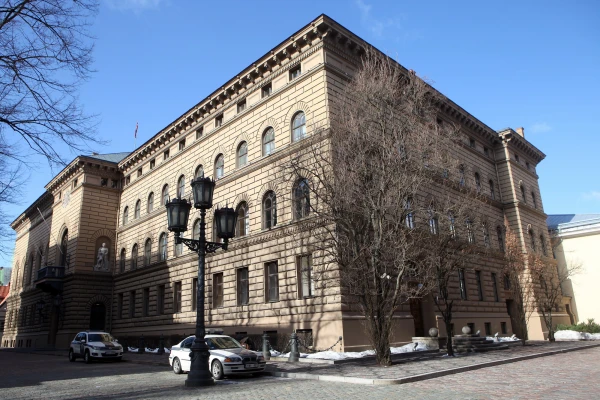
This time, the people's servants had a full winter break — more than three weeks of rest! But soon the parliamentarians will still get to work — the winter session of the Saeima will begin, lasting until April 2.
The winter session can be considered a kind of dress rehearsal before the decisive battle — that is, before the final part of the election campaign. Let us remind you that the elections to the 15th Saeima will take place in early October this year, and the official election campaign will start in June.
However, as we all know, the election campaign started unusually early — back in the autumn of last year. It is clear that during the winter session, deputies will try to be even more loud and scandalous — after all, they need to think not only about their party's rating but also about internal competition — that is, with other candidates for deputies within the list.
Two Investigations
During the winter session, two parliamentary investigative commissions created clearly for the elections will be actively working:
-
to study the reasons for the rise in heating tariffs in Riga;
-
to investigate the circumstances of what deputies claim is a mass influx of migrants from third countries into the country.
It is obvious that we should not expect any tangible results from the "deputy investigation" — parliamentarians cannot de facto or de jure influence the tariffs of the municipal enterprise "Rigas siltums" and certainly cannot influence the overall migration policy of the EU.
Yes, it is possible to tighten (to a certain extent) internal migration legislation — but this process is already underway: it is expected that this month the Saeima will consider as many as 130 proposals for the new immigration bill in its second reading!
Who is Banned from Entry?
The need for a new bill has arisen long ago, as the currently effective law was adopted back in 2003 and has become outdated — including due to geopolitical changes. Moreover, so many amendments have already been made to this "old" law that even experienced lawyers often find it difficult to navigate its provisions.
However, the new bill was submitted to the previous Saeima just as the election campaign began, and deputies urgently needed to restrict the rights of citizens of the Russian Federation and Belarus, so numerous amendments had to be made to the existing law. As a result, the document was only adopted in the first reading, that is, as a basis.
The new bill regulating visa and residence permit issuance issues was inherited by the current Saeima.
It should be noted that during the consideration of the bill, a political decision was reached to "not touch" citizens of Russia and Belarus in this bill. A separate law will be prepared for them — of course, with very strict conditions for obtaining the right to enter Latvia. The Ministry of the Interior is already ready to present this document soon.
But the paradox is that the current bill indeed does not mention citizens of the Russian Federation and Belarus, while in the process of working on the document, the mention of... the Russian language has disappeared. This means that now all forms, applications, and requests of a migration nature can only be submitted in Latvian or English.
What Will Change for Residence Permits
The bill gives the Cabinet of Ministers the right, if necessary, dictated, for example, by security considerations, to temporarily suspend the acceptance of documents for visa issuance for citizens of certain third countries.
It is noteworthy that the new bill retains the possibility of applying for a residence permit in the case of investments in production, in the creation of a company with a certain number of jobs. However, the bill does not currently provide for obtaining a temporary residence permit in exchange for purchasing real estate.
However, the Ministry of Economics has expressed interest in ensuring that such a right — to apply for a residence permit in exchange for investments in real estate — is retained in the new law. It cannot be ruled out that by the third reading — already in the second half of February, the corresponding amendment will appear.
Taxes on Roads
Immediately upon returning from vacation, deputies will consider the bill on road usage fees returned by the president.
Let us remind you: the head of state decided to return the bill due to a controversial amendment that provided for the introduction of a special fee for commercial vehicles weighing from 3 to 3.5 tons starting January 1. Farmers and other carriers of small cargo volumes categorically opposed such a fee.
Most likely, in the new version of the law, there will be no fees for this category of freight transport.
And Will They "Distribute" Pension Savings?
It is quite possible that during the winter session, deputies, keeping the elections in mind again, will attempt to start a discussion about... the "distribution" of pensions — following the example of Estonia and Lithuania, where residents were given the right to choose (at least partially) their savings in the second pension level.
In Latvia, residents have accumulated more than 10 billion euros in the second pension level, and periodically politicians and economists "remember" the ineffective use of these savings — in any case, only about 7-9 percent of these second pension level funds are invested in the Latvian economy. It is not a fact that the parliamentary majority will decide to "distribute" these savings, but it is clear that a discussion on this issue will take place.
Language and Changes
However, there is no doubt that the parliament will continue to limit the use of the Russian language in the public space to the utmost.
Upcoming amendments to the Education Law are on the way, and one of the amendments prepared for the third (final) reading prohibits teachers from communicating with each other and with students in any language other than the state language while performing their official duties.
The Coalition Has Gained Two Deputies
And what about the stability of the ruling coalition? As is known, during previous sessions, the opposition repeatedly "disrupted the quorum," that is, they chose voting cards when the ruling party simply did not have a majority of votes to advance its agenda.
Rumors from the corridors of power suggest that the coalition has managed to strengthen its ranks — both numerically and in terms of increasing coalition discipline. The fact is that just before the New Year, after a prolonged illness, deputy Edgars Zelderis passed away, who was elected from the "Progressives" party but later left the faction, becoming an independent deputy and thus reducing the number of coalition deputies. Now, instead of him, the parliamentary secretary of the Ministry of Defense, Liene Gatere, who does not intend to leave the "Progressives" party, will receive the mandate.
In addition, the "Green Farmers" managed to agree on cooperation with independent deputy Andrejs Celapiters.
Thus, the Silin government will have 54 votes in the Saeima, and those political scientists who believe that the current government — yes, with periodic scandals and infighting — will last until the elections are probably right. In any case, it will not be boring.




Leave a comment