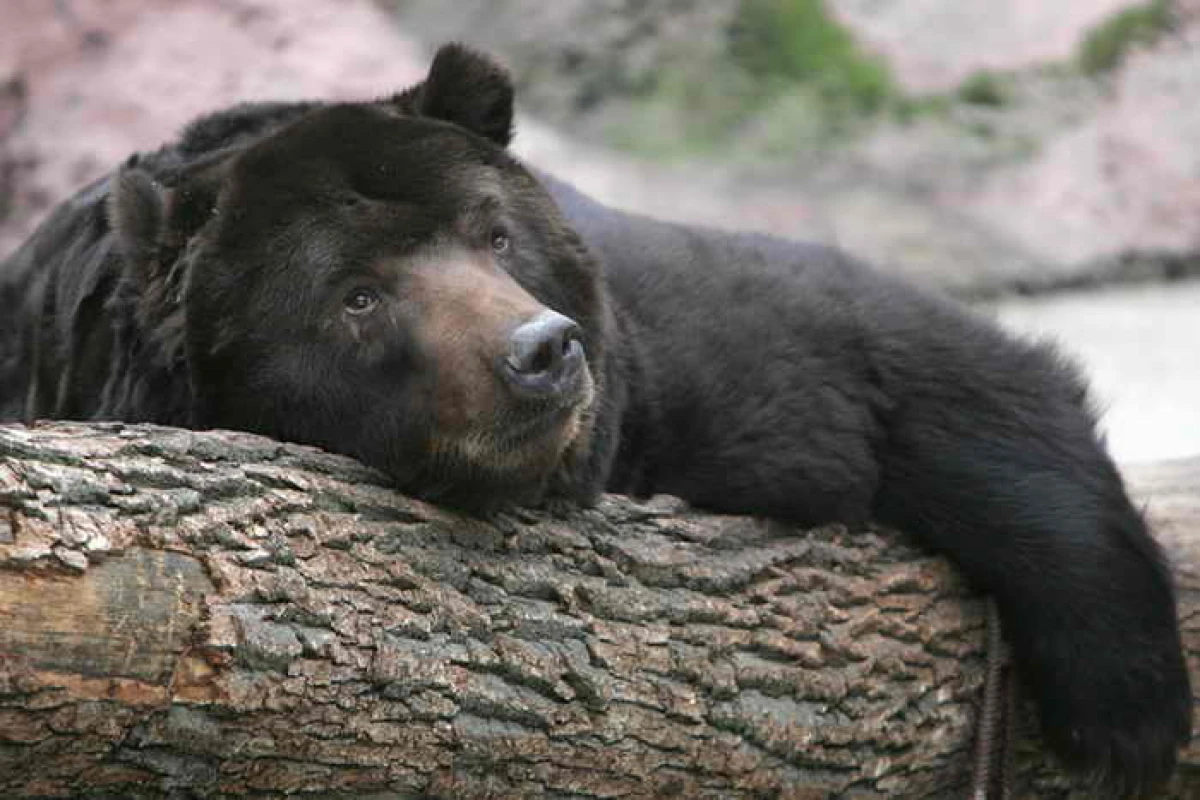
The topic of bears has resurfaced in public discourse. This is especially true because, in the past month, fatal bear attacks on humans have been recorded in Poland, Romania, and Bulgaria.
These are no longer isolated exotic cases somewhere on the other side of the world, but events in Europe, in quite densely populated areas and places where people are used to feeling safe in nature. Particularly alarming was the case in Bulgaria, where a young man died in the Vitosha Nature Park.
It is noteworthy that even before the tragedy, local specialists and hunting organizations publicly warned: bears are increasingly losing their natural caution towards humans, approaching populated areas, and conflicts are becoming more likely.
Similar discussions are increasingly heard in Estonia, which is often cited in Latvia as an example of successful coexistence with large predators. However, even there, hunters are beginning to sound the alarm. In this relatively small country, about 1,200 bears live, and conversations are increasingly heard not only about the population size but also about the behavior of the animals - how cautious they are towards humans and how long the current balance will last.
Discussions have intensified in Latvia, where the number of bears is steadily increasing every year. While some speak of the need for stricter protection of wolves, lynxes, and bears, others point to the increasing contacts between wild animals and humans. Very often, one significant aspect is overlooked - the natural behavior of wild animals, more precisely - their natural fear of humans. On May 19, a certain Kaspars Lusis (translated from Latvian as "lynx" - editor's note) began collecting signatures on the platform Manabalss.lv "For safety in the forests of Latvia and limiting the bear population."
The Estonian Hunters' Union has recently emphasized that the behavior of large predators has changed. Specialists often point out that predators must maintain caution towards humans. This does not mean terrorizing animals or their uncontrolled destruction. On the contrary - fear of humans is a normal part of a wild animal's behavior, formed through evolution over the centuries, helping to avoid conflicts and ensuring safety for both humans and the animals themselves.
Most large predators instinctively avoid encounters with humans. A human is an unpredictable and potentially dangerous creature for a wild animal. An animal that can avoid danger is likely to live longer and pass its genes to the next generations. Therefore, caution towards humans is not a problem but a natural survival strategy for the animal.
As long as predators keep their distance from humans, conflicts occur quite rarely. Animals mainly remain in their natural territories, avoid populated areas, and do not become accustomed to the presence of humans. It is this balance that allows humans and large predators to coexist, writes Latvijas Avīze.