

The swan song of the Silini government.
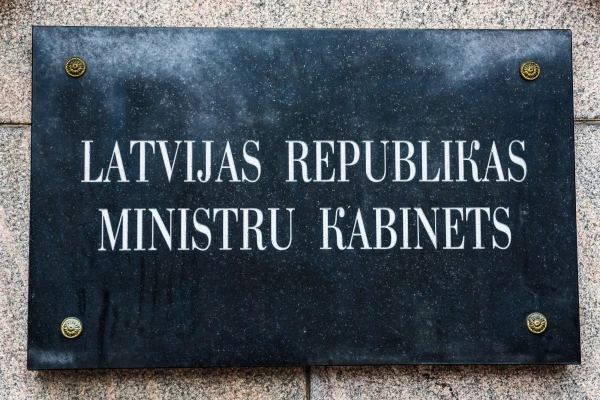
Next Tuesday, the Silini government will likely hold its last meeting. On Thursday, May 28, the Saeima may approve the new Kulbergs government, which, by tradition, will convene for a ceremonial meeting on the same day and listen to the president's exhortations.
But for now, the outgoing Silini government continues to work, and at its last meeting, symbolically, it will review the finance ministry's report that once caused a political scandal. Let us clarify immediately - the report has been significantly revised, and it almost no longer contains any "scandalous moments." It is an analytical report dedicated to the development of the capital market. This document consists of dozens of computer pages! Apparently, the finance ministry staff decided they were writing a doctoral dissertation in economics, or more precisely - on bringing state and municipal enterprises to the stock exchange.
The authors of the report acknowledge that Latvian legislation prohibits even partial alienation of capital of such state enterprises as:
“Latvenergo,” VAS “Latvijas Pasts,” VAS “Starptautiskā lidosta “Rīga”,” VAS “Latvijas dzelzceļš,” VAS “Latvijas gaisa satiksme,” AS “Latvijas valsts meži,” VAS “Latvijas Loto,” AS “Latvijas Valsts radio un televīzijas centrs” and the agency Altum.
So which state enterprises can go public? The report mentions Latvijas ceļu uzturētājs, Rīgas namu pārvaldnieks, and airBaltic as the most realistic candidates for going public. However, as we remember, the latter has already abandoned its initial plan to go public.
The report also expresses hope that within three years after the completion of the share buyback from Swedish shareholders, Tet and LMT may go public. Additionally, the possibility of not Latvenergo itself, but its subsidiaries going public is not excluded.
The authors of the report see several advantages in bringing part of the shares of state enterprises to the stock exchange. These include more efficient management of companies, attracting private investors, activating the capital market in Latvia, developing enterprises, and increasing their competitiveness...
One way or another, it is clear that this year no state enterprise will go public.








Leave a comment